Web Edition
Rail Transloading & Supply-Chain Flexibility
View Designed EditionOriginal publication artworkWhy Propane Supply Chains Need More Options
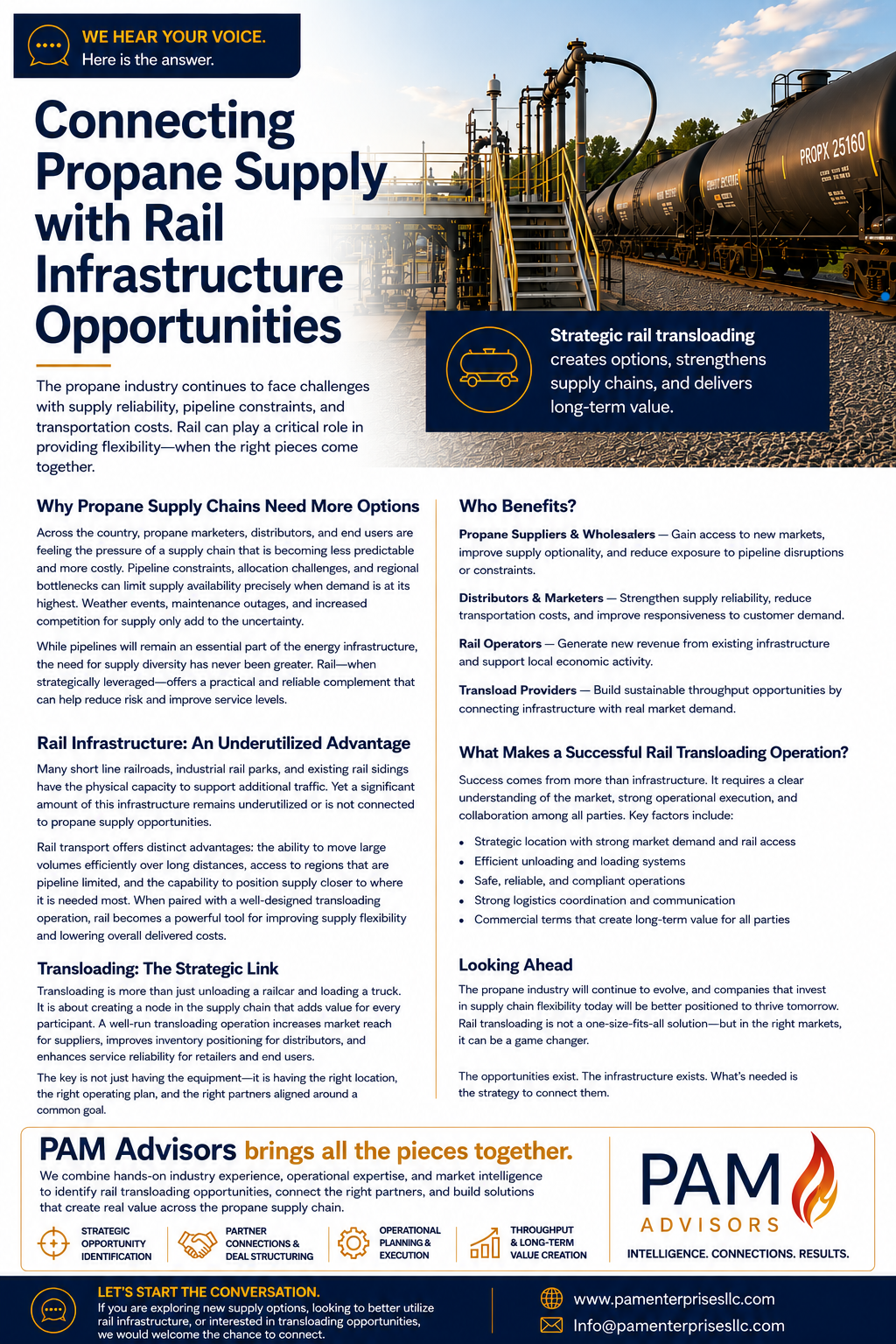
The propane industry continues to face challenges with supply reliability, pipeline constraints, and transportation costs. Rail can play a critical role in providing flexibility—when the right pieces come together.
Across the country, propane marketers, distributors, and end users are feeling the pressure of a supply chain that is becoming less predictable and more costly. Pipeline constraints, allocation challenges, and regional bottlenecks can limit supply availability precisely when demand is at its highest. Weather events, maintenance outages, and increased competition for supply only add to the uncertainty.
While pipelines will remain an essential part of the energy infrastructure, the need for supply diversity has never been greater. Rail—when strategically leveraged—offers a practical and reliable complement that can help reduce risk and improve service levels.
Rail Infrastructure: An Underutilized Advantage
Many short line railroads, industrial rail parks, and existing rail sidings have the physical capacity to support additional traffic. Yet a significant amount of this infrastructure remains underutilized or is not connected to propane supply opportunities.
Rail transport offers distinct advantages: the ability to move large volumes efficiently over long distances, access to regions that are pipeline limited, and the capability to position supply closer to where it is needed most. When paired with a well-designed transloading operation, rail becomes a powerful tool for improving supply flexibility and lowering overall delivered costs.
Transloading: The Strategic Link
Transloading is more than just unloading a railcar and loading a truck. It is about creating a node in the supply chain that adds value for every participant. A well-run transloading operation increases market reach for suppliers, improves inventory positioning for distributors, and enhances service reliability for retailers and end users.
The key is not just having the equipment—it is having the right location, the right operating plan, and the right partners aligned around a common goal.
Who Benefits?
- Propane Suppliers & Wholesalers: Gain access to new markets, improve supply optionality, and reduce exposure to pipeline disruptions or constraints.
- Distributors & Marketers: Strengthen supply reliability, reduce transportation costs, and improve responsiveness to customer demand.
- Rail Operators: Generate new revenue from existing infrastructure and support local economic activity.
- Transload Providers: Build sustainable throughput opportunities by connecting infrastructure with real market demand.
What Makes a Successful Rail Transloading Operation?
Success comes from more than infrastructure. It requires a clear understanding of the market, strong operational execution, and collaboration among all parties. Key factors include:
- Strategic location with strong market demand and rail access
- Efficient unloading and loading systems
- Safe, reliable, and compliant operations
- Strong logistics coordination and communication
- Commercial terms that create long-term value for all parties
Looking Ahead
The propane industry will continue to evolve, and companies that invest in supply-chain flexibility today will be better positioned to thrive tomorrow. Rail transloading is not a one-size-fits-all solution—but in the right markets, it can be a game changer.
The opportunities exist. The infrastructure exists. What’s needed is the strategy to connect them.