Web Edition
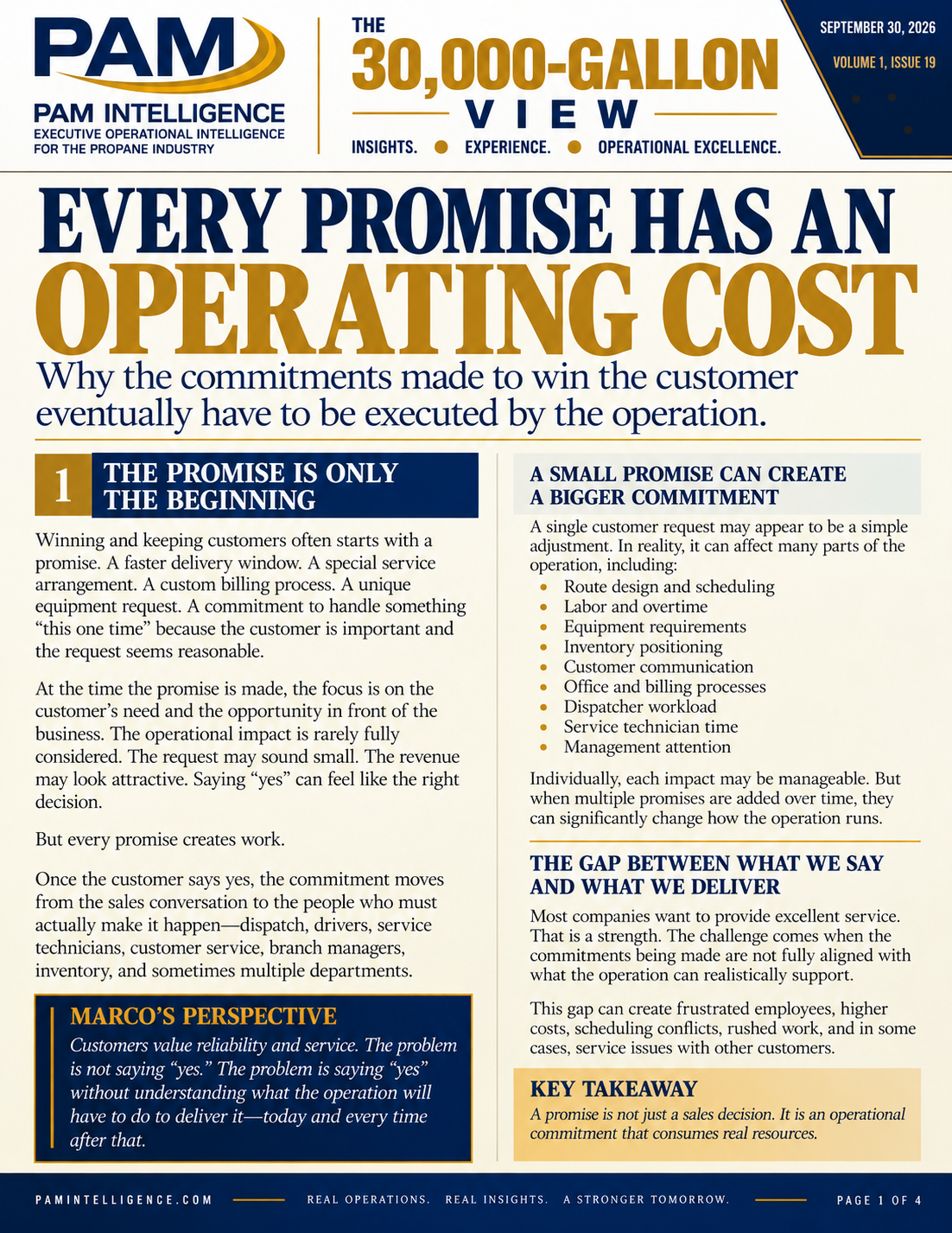
A promise is not just a sales decision. It is an operational commitment that consumes real resources.
View Designed Edition4 original publication pagesThe Promise Is Only the Beginning
Winning and keeping customers often starts with a promise. A faster delivery window. A special service arrangement. A custom billing process. A unique equipment request. A commitment to handle something “this one time” because the customer is important and the request seems reasonable.
At the time the promise is made, the focus is on the customer’s need and the opportunity in front of the business. The operational impact is rarely fully considered. The request may sound small. The revenue may look attractive. Saying “yes” can feel like the right decision.
But every promise creates work.
Once the customer says yes, the commitment moves from the sales conversation to the people who must actually make it happen—dispatch, drivers, service technicians, customer service, branch managers, inventory, and sometimes multiple departments.
A Small Promise Can Create a Bigger Commitment
A single customer request may appear to be a simple adjustment. In reality, it can affect many parts of the operation, including:
- Route design and scheduling
- Labor and overtime
- Equipment requirements
- Inventory positioning
- Customer communication
- Office and billing processes
- Dispatcher workload
- Service technician time
- Management attention
Individually, each impact may be manageable. But when multiple promises are added over time, they can significantly change how the operation runs.
The Gap Between What We Say and What We Deliver
Most companies want to provide excellent service. That is a strength. The challenge comes when the commitments being made are not fully aligned with what the operation can realistically support.
This gap can create frustrated employees, higher costs, scheduling conflicts, rushed work, and in some cases, service issues with other customers.
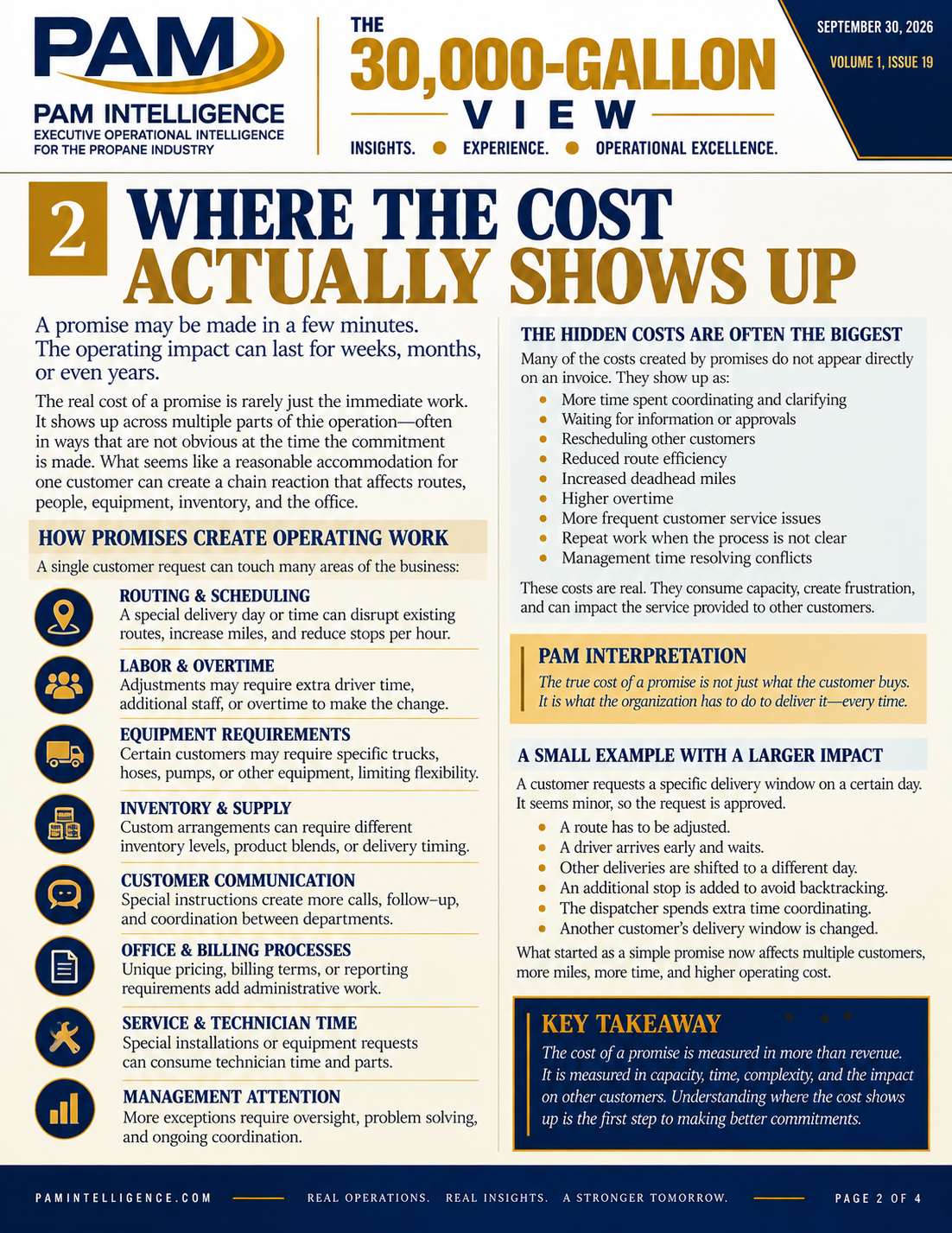
Where the Cost Actually Shows Up
A promise may be made in a few minutes. The operating impact can last for weeks, months, or even years.
The real cost of a promise is rarely just the immediate work. It shows up across multiple parts of the operation—often in ways that are not obvious at the time the commitment is made. What seems like a reasonable accommodation for one customer can create a chain reaction that affects routes, people, equipment, inventory, and the office.
How Promises Create Operating Work
A single customer request can touch many areas of the business:
Routing & Scheduling
A special delivery day or time can disrupt existing routes, increase miles, and reduce stops per hour.
Labor & Overtime
Adjustments may require extra driver time, additional staff, or overtime to make the change.
Equipment Requirements
Certain customers may require specific trucks, hoses, pumps, or other equipment, limiting flexibility.
Inventory & Supply
Custom arrangements may require different inventory levels, product blends, or delivery timing.
Customer Communication
Special instructions create more calls, follow-up, and coordination between departments.
Office & Billing Processes
Unique pricing, billing terms, or reporting requirements add administrative work.
Service & Technician Time
Special installations or equipment requests can consume technician time and parts.
Management Attention
More exceptions require oversight, problem solving, and ongoing coordination.
The Hidden Costs Are Often the Biggest
Many of the costs created by promises do not appear directly on an invoice. They show up as:
- More time spent coordinating and clarifying
- Waiting for information or approvals
- Rescheduling other customers
- Reduced route efficiency
- Increased deadhead miles
- Higher overtime
- More frequent customer service issues
- Repeat work when the process is not clear
- Management time resolving conflicts
These costs are real. They consume capacity, create frustration, and can impact the service provided to other customers.
A Small Example With a Larger Impact
A customer requests a specific delivery window on a certain day. It seems minor, so the request is approved.
- A route has to be adjusted.
- A driver arrives early and waits.
- Other deliveries are shifted to a different day.
- An additional stop is added to avoid backtracking.
- The dispatcher spends extra time coordinating.
- Another customer’s delivery window is changed.
What started as a simple promise now affects multiple customers, more miles, more time, and higher operating cost.
Before You Say Yes, Run the Operating Test
A good sales decision should still be a good operating decision after the customer says yes.
Not every customer request should be a problem. Many are a good fit for the business and can be handled efficiently. The challenge is making the right decision before the commitment is made. Once the customer expects it, the pressure to deliver increases, even if the request was not fully evaluated from an operational perspective.
Running an operating test does not slow down sales. It helps protect the customer, the operation, and the long-term relationship.
The Operating Test Checklist
Before saying yes, ask these questions.
- Do we have the capacity? Do we have the people, equipment, inventory, and time to handle the request without disrupting other customers?
- What resources will it consume? What will this require from routing, dispatch, drivers, technicians, customer service, or management?
- Will it disrupt other customers? Does this change routes, delivery windows, or service levels for existing customers?
- Is it a one-time request or a recurring expectation? Will this become the new normal? If so, are we prepared to support it long term?
- Does the revenue support the cost? Is the value of the customer and the request worth the operating impact and ongoing effort?
- Who owns it? Which department is responsible for making it happen, and is everyone aligned?
- What happens during peak demand? Can we still deliver this commitment during winter, high-volume periods, or when resources are tight?
- Is there a clear way to execute? Do we have a defined plan, communication process, and contingencies if something changes?
Get the Right People Involved
The best decisions are made when sales, customer service, and operations have a shared understanding of what the request requires. A short internal discussion can prevent bigger issues later.
| Role | What They Help Determine |
|---|---|
| Sales / Account Manager | Customer need, expectations, and commercial value |
| Customer Service | Account history, special requirements, and communication needs |
| Dispatch / Routing | Scheduling impact and route changes |
| Operations / Field Management | Equipment, labor, and execution feasibility |
| Inventory / Supply | Product availability and delivery timing |
| Finance / Management | Overall profitability and risk |
It Is Not About Saying No
The operating test is not designed to create new barriers. It is designed to make better decisions. In many cases, the answer will still be yes—just with a clear plan, the right resources, and realistic expectations.
When a request does not fit the current capacity, there may be other options: a different delivery window, a phased approach, additional pricing, or a future start date.
Customers respect honesty and realistic communication more than a promise that later becomes a problem.
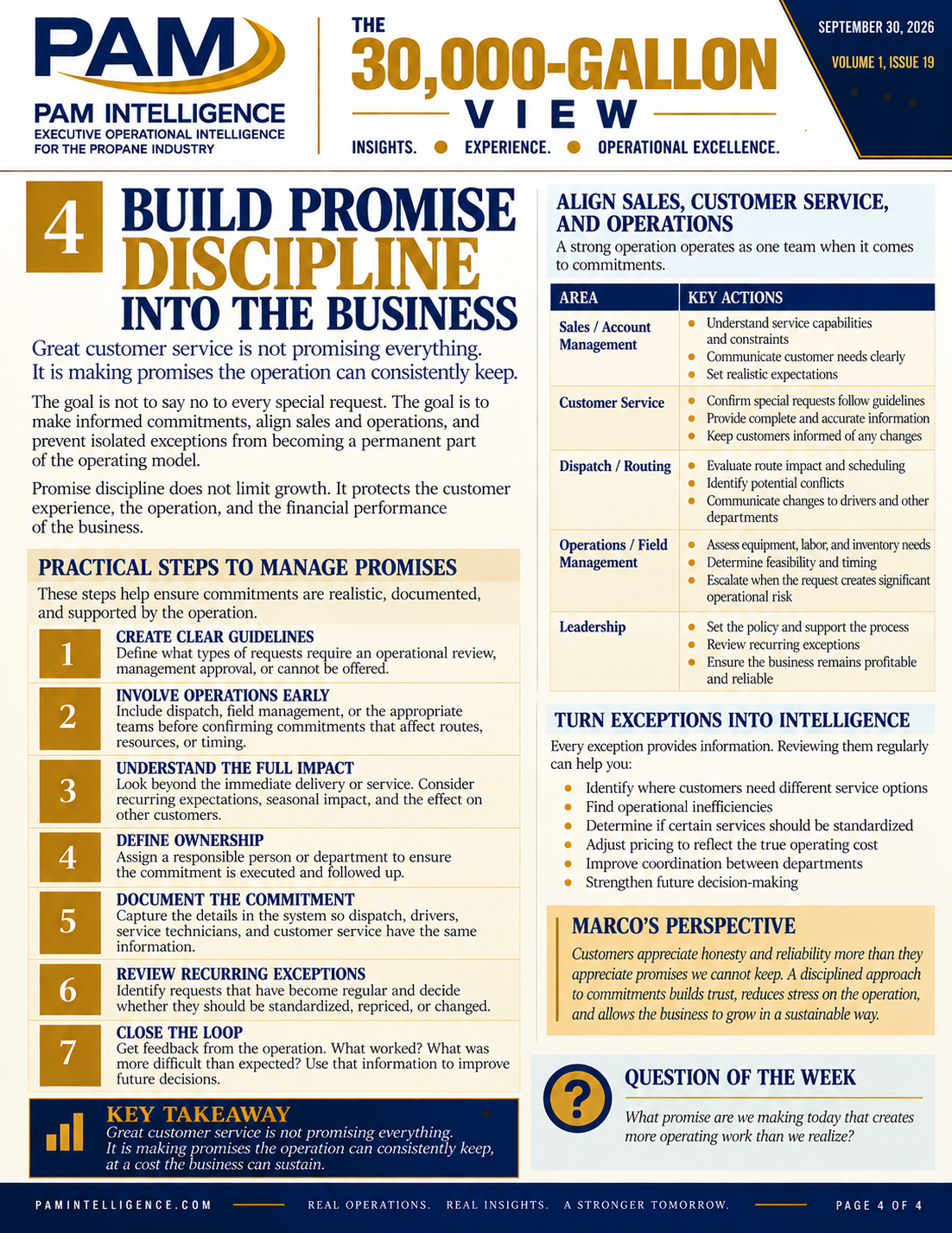
Build Promise Discipline Into the Business
Great customer service is not promising everything. It is making promises the operation can consistently keep.
The goal is not to say no to every special request. The goal is to make informed commitments, align sales and operations, and prevent isolated exceptions from becoming a permanent part of the operating model.
Promise discipline does not limit growth. It protects the customer experience, the operation, and the financial performance of the business.
Practical Steps to Manage Promises
These steps help ensure commitments are realistic, documented, and supported by the operation.
- Create Clear Guidelines. Define what types of requests require an operational review, management approval, or cannot be offered.
- Involve Operations Early. Include dispatch, field management, or the appropriate teams before confirming commitments that affect routes, resources, or timing.
- Understand the Full Impact. Look beyond the immediate delivery or service. Consider recurring expectations, seasonal impact, and the effect on other customers.
- Define Ownership. Assign a responsible person or department to ensure the commitment is executed and followed up.
- Document the Commitment. Capture the details in the system so dispatch, drivers, service technicians, and customer service have the same information.
- Review Recurring Exceptions. Identify requests that have become regular and decide whether they should be standardized, repriced, or changed.
- Close the Loop. Get feedback from the operation. What worked? What was more difficult than expected? Use that information to improve future decisions.
Align Sales, Customer Service, and Operations
A strong operation acts as one team when it comes to commitments.
| Area | Key Actions |
|---|---|
| Sales / Account Management |
|
| Customer Service |
|
| Dispatch / Routing |
|
| Operations / Field Management |
|
| Leadership |
|
Turn Exceptions Into Intelligence
Every exception provides information. Reviewing them regularly can help you:
- Identify where customers need different service options
- Find operational inefficiencies
- Determine if certain services should be standardized
- Adjust pricing to reflect the true operating cost
- Improve coordination between departments
- Strengthen future decision-making