Web Edition
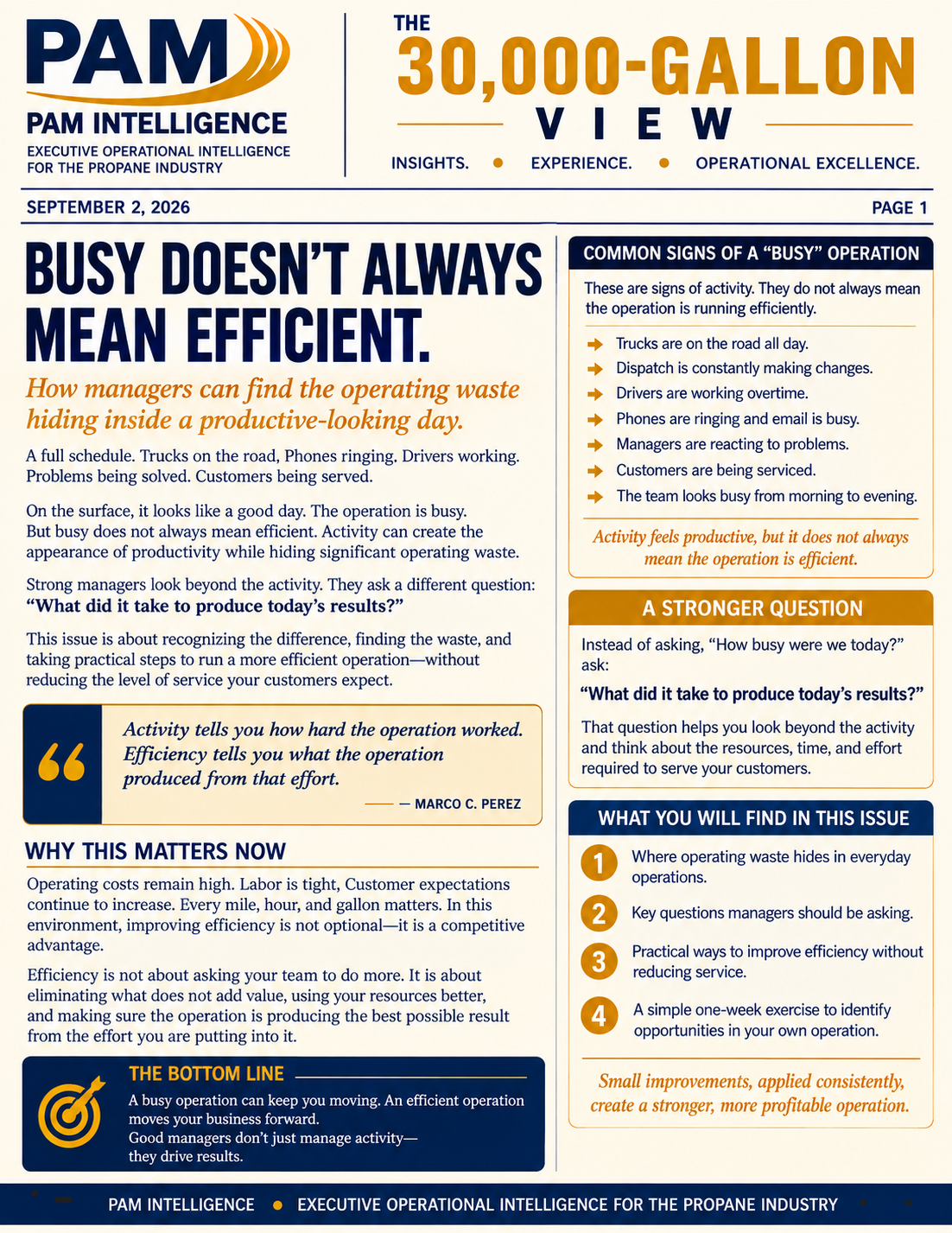
Activity tells you how hard the operation worked. Efficiency tells you what the operation produced from that effort.
View Designed Edition4 original publication pagesBusy Doesn’t Always Mean Efficient
A full schedule. Trucks on the road. Phones ringing. Drivers working. Problems being solved. Customers being served.
On the surface, it looks like a good day. The operation is busy. But busy does not always mean efficient. Activity can create the appearance of productivity while hiding significant operating waste.
Strong managers look beyond the activity. They ask a different question: “What did it take to produce today’s results?”
This issue is about recognizing the difference, finding the waste, and taking practical steps to run a more efficient operation—without reducing the level of service your customers expect.
Marco’s Perspective“Activity tells you how hard the operation worked. Efficiency tells you what the operation produced from that effort.” — Marco C. Perez
Why This Matters Now
Operating costs remain high. Labor is tight. Customer expectations continue to increase. Every mile, hour, and gallon matters. In this environment, improving efficiency is not optional—it is a competitive advantage.
Efficiency is not about asking your team to do more. It is about eliminating what does not add value, using resources better, and making sure the operation is producing the best possible result from the effort being put into it.
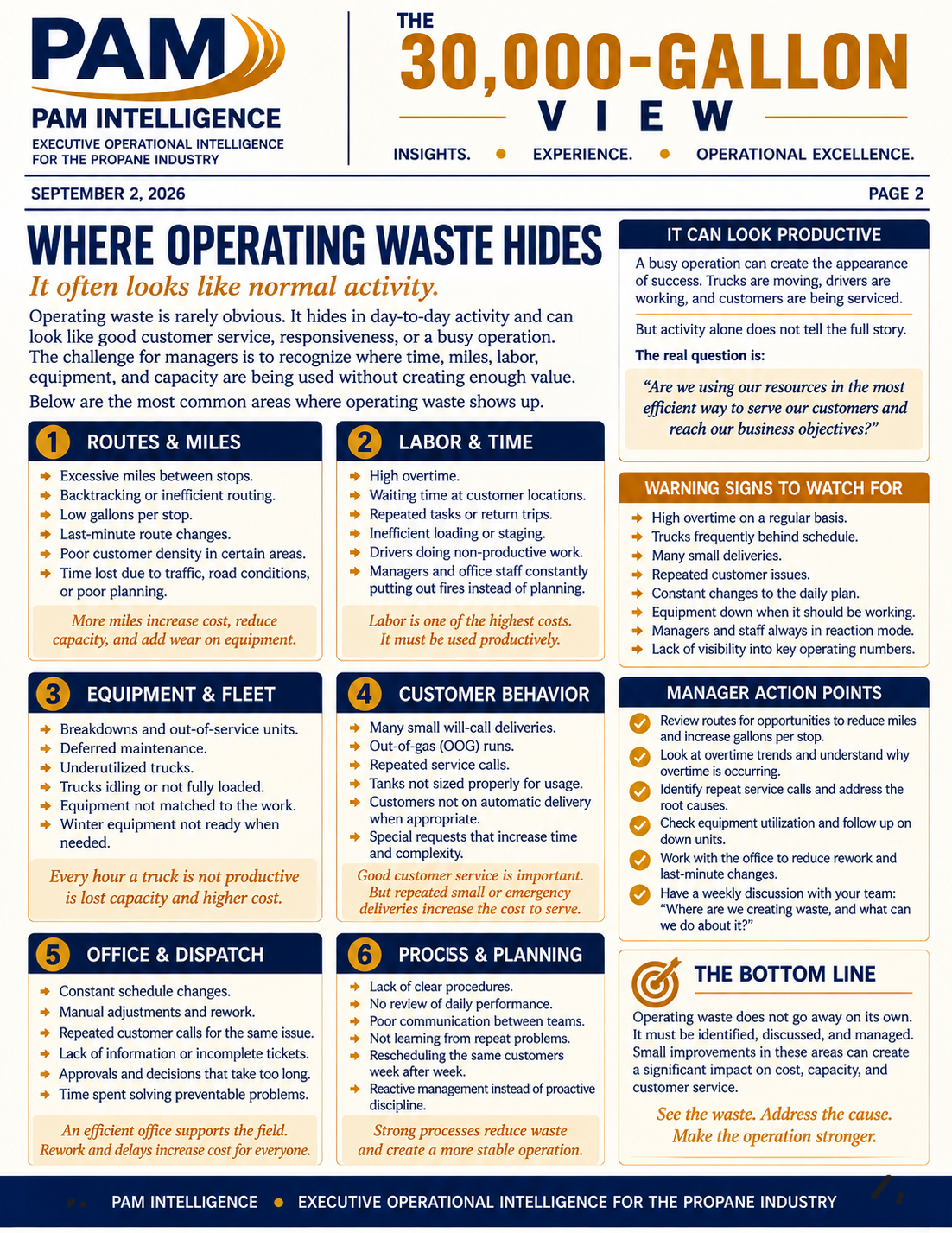
Where Operating Waste Hides
It often looks like normal activity.
Operating waste is rarely obvious. It hides in day-to-day activity and can look like good customer service, responsiveness, or a busy operation. The challenge for managers is to recognize where time, miles, labor, equipment, and capacity are being used without creating enough value.
Routes and Miles
- Excessive miles between stops
- Backtracking or inefficient routing
- Low gallons per stop
- Last-minute route changes
- Poor customer density in certain areas
- Time lost to traffic, road conditions, or poor planning
Labor and Time
- High overtime and waiting time at customer locations
- Repeated tasks or return trips
- Inefficient loading or staging
- Drivers doing non-productive work
- Managers and office staff constantly putting out fires instead of planning
Equipment and Fleet
- Breakdowns and out-of-service units
- Deferred maintenance
- Underutilized trucks
- Trucks idling or not fully loaded
- Equipment not matched to the work
- Winter equipment not ready when needed
Customer Behavior
- Many small will-call deliveries or out-of-gas runs
- Repeated service calls
- Tanks not sized properly for usage
- Customers not on automatic delivery when appropriate
- Special requests that increase time and complexity
Office and Dispatch
- Constant schedule changes
- Manual adjustments and rework
- Repeated customer calls for the same issue
- Incomplete tickets or missing information
- Approvals that take too long
- Time spent solving preventable problems
Process and Planning
- Lack of clear procedures
- No review of daily performance
- Poor communication between teams
- No learning from repeat problems
- Rescheduling the same customers week after week
- Reactive management instead of proactive discipline
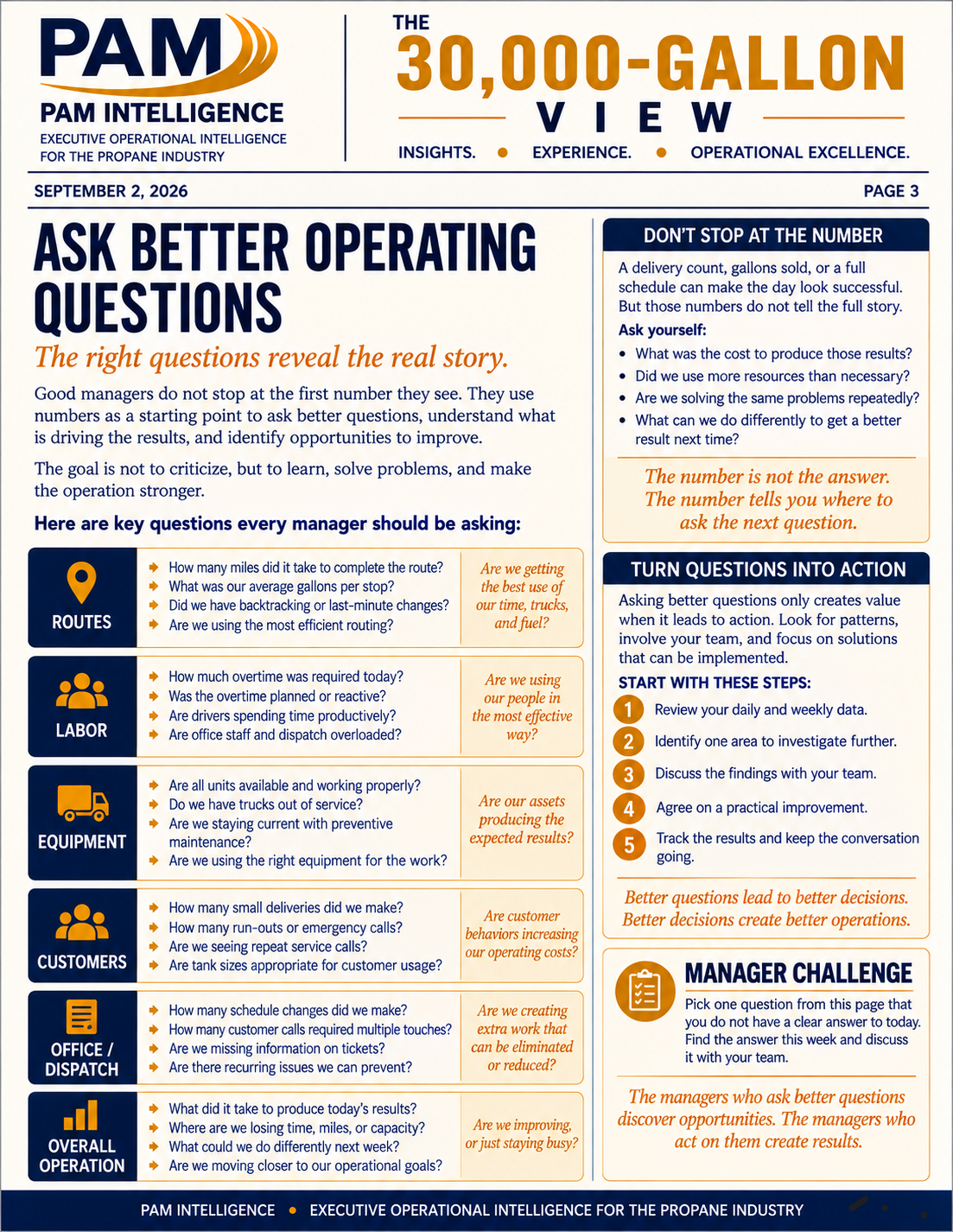
Ask Better Operating Questions
The right questions reveal the real story.
Good managers do not stop at the first number they see. They use numbers as a starting point to ask better questions, understand what is driving the results, and identify opportunities to improve. The goal is not to criticize, but to learn, solve problems, and make the operation stronger.
Routes
- How many miles did it take to complete the route?
- What was our average gallons per stop?
- Did we have backtracking or last-minute changes?
- Are we using the most efficient routing?
Labor
- How much overtime was required today?
- Was the overtime planned or reactive?
- Are drivers spending time productively?
- Are office staff and dispatch overloaded?
Equipment
- Are all units available and working properly?
- Do we have trucks out of service?
- Are we staying current with preventive maintenance?
- Are we using the right equipment for the work?
Customers
- How many small deliveries did we make?
- How many run-outs or emergency calls?
- Are we seeing repeat service calls?
- Are tank sizes appropriate for customer usage?
Office and Dispatch
- How many schedule changes did we make?
- How many customer calls required multiple touches?
- Are we missing information on tickets?
- Are there recurring issues we can prevent?
Overall Operation
- What did it take to produce today’s results?
- Where are we losing time, miles, or capacity?
- What could we do differently next week?
- Are we moving closer to our operational goals?
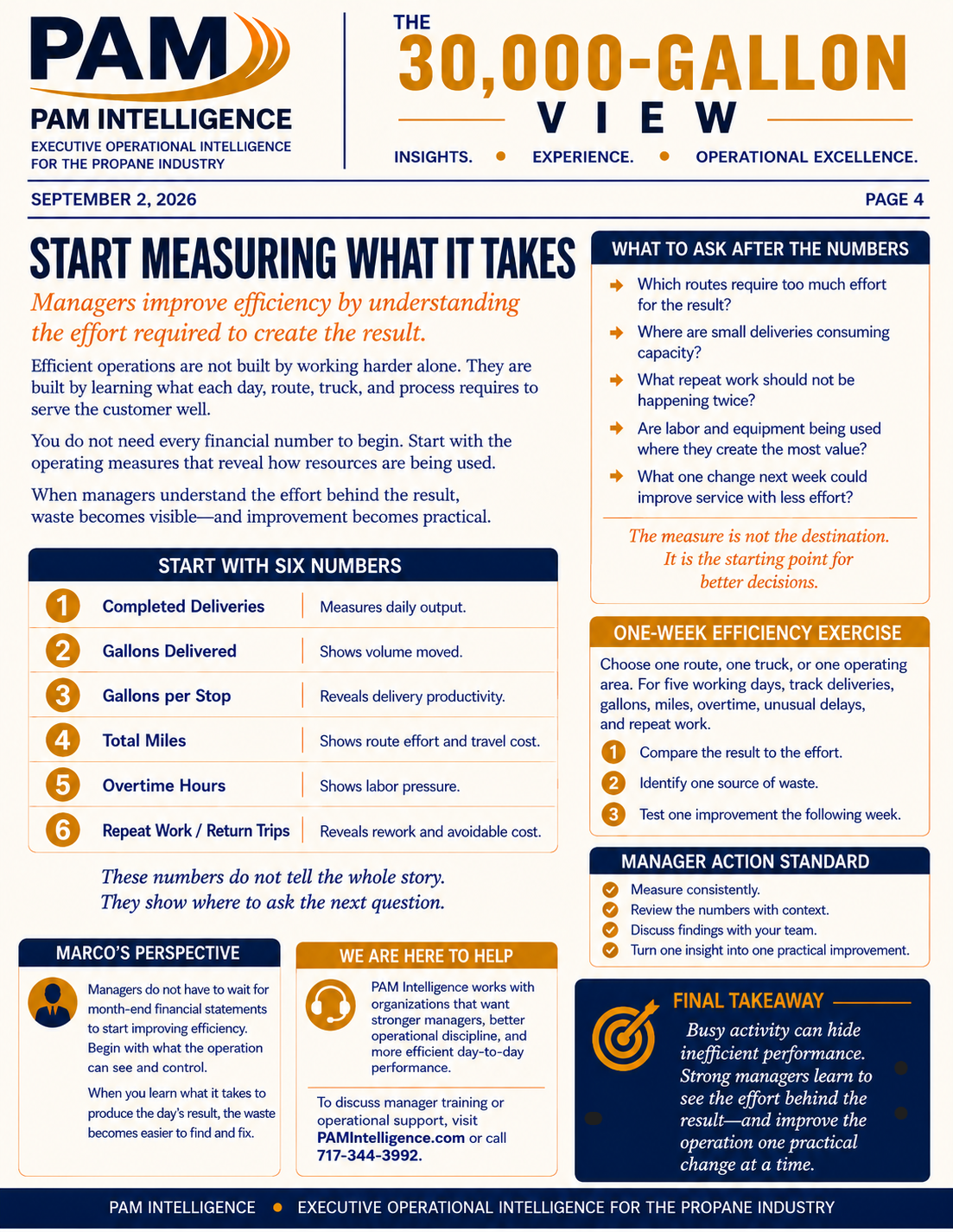
Start Measuring What It Takes
Managers improve efficiency by understanding the effort required to create the result.
Efficient operations are not built by working harder alone. They are built by learning what each day, route, truck, and process requires to serve the customer well.
You do not need every financial number to begin. Start with the operating measures that reveal how resources are being used. When managers understand the effort behind the result, waste becomes visible—and improvement becomes practical.
Start With Six Numbers
- Completed deliveries: measures daily output.
- Gallons delivered: shows volume moved.
- Gallons per stop: reveals delivery productivity.
- Total miles: shows route effort and travel cost.
- Overtime hours: shows labor pressure.
- Repeat work and return trips: reveals rework and avoidable cost.
These numbers do not tell the whole story. They show where to ask the next question.
What to Ask After the Numbers
- Which routes require too much effort for the result?
- Where are small deliveries consuming capacity?
- What repeat work should not be happening twice?
- Are labor and equipment being used where they create the most value?
- What one change next week could improve service with less effort?
One-Week Efficiency Exercise
Choose one route, one truck, or one operating area. For five working days, track deliveries, gallons, miles, overtime, unusual delays, and repeat work.
- Compare the result to the effort.
- Identify one source of waste.
- Test one improvement the following week.