Web Edition
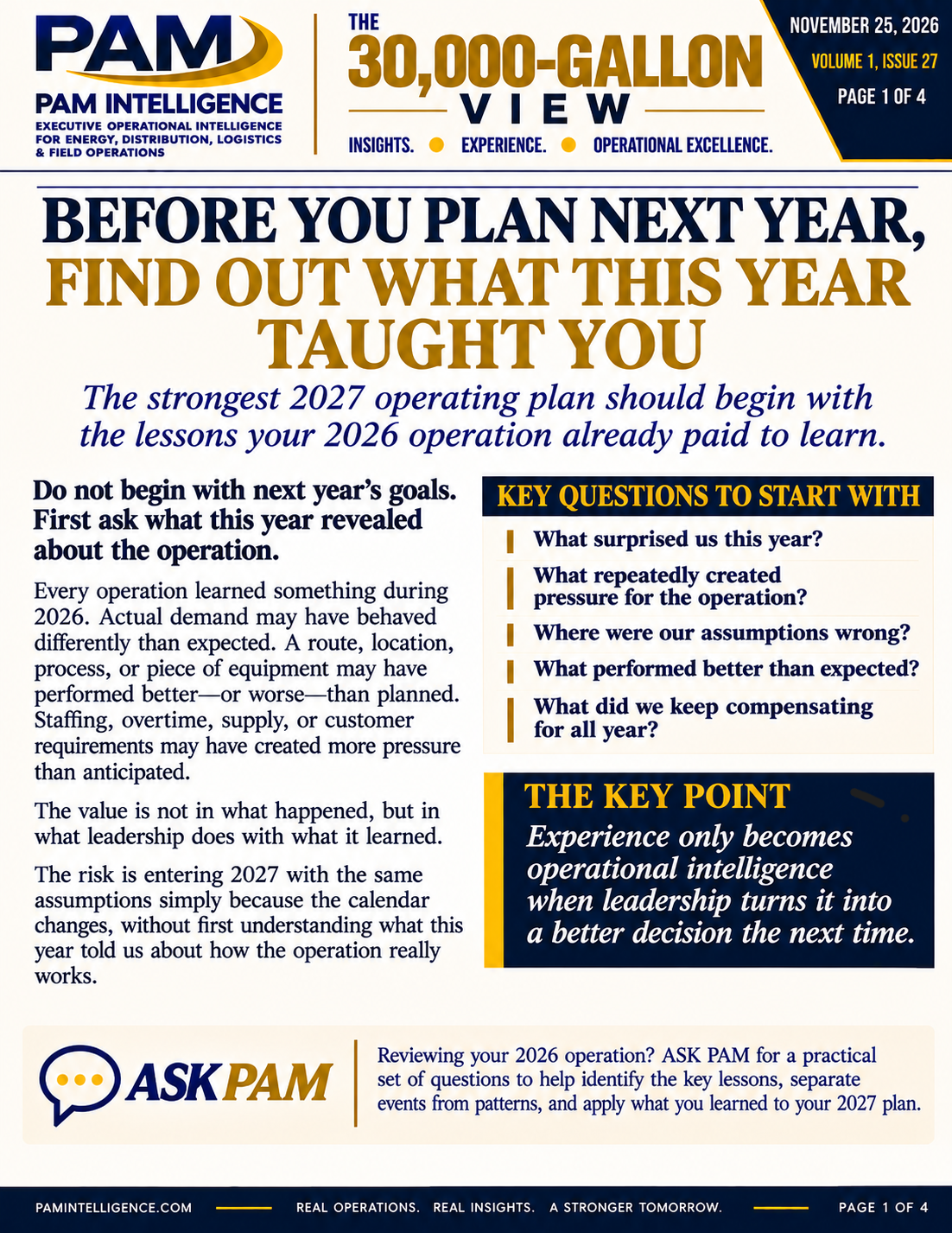
Do not begin with next year’s goals. First ask what this year revealed about the operation.
View Designed Edition4 original publication pagesBefore You Plan Next Year, Find Out What This Year Taught You
Do not begin with next year’s goals. First ask what this year revealed about the operation.
Every operation learned something during 2026. Actual demand may have behaved differently than expected. A route, location, process, or piece of equipment may have performed better—or worse—than planned. Staffing, overtime, supply, or customer requirements may have created more pressure than anticipated.
The value is not in what happened, but in what leadership does with what it learned.
The risk is entering 2027 with the same assumptions simply because the calendar changes, without first understanding what this year told us about how the operation really works.
Key Questions to Start With
- What surprised us this year?
- What repeatedly created pressure for the operation?
- Where were our assumptions wrong?
- What performed better than expected?
- What did we keep compensating for all year?
Separate the Event From the Lesson
Not everything that happened this year should drive next year’s plan.
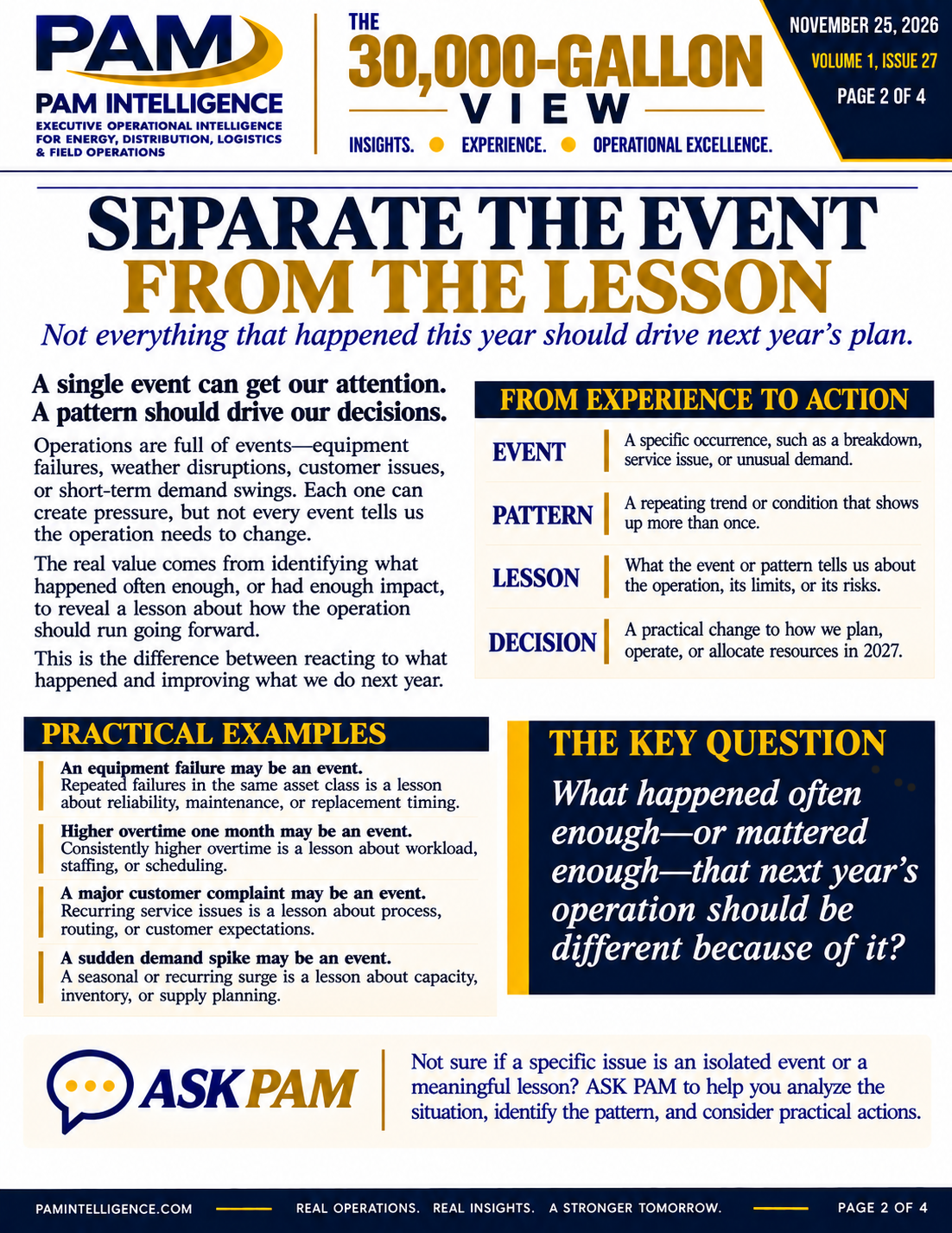
A single event can get our attention. A pattern should drive our decisions.
Operations are full of events—equipment failures, weather disruptions, customer issues, or short-term demand swings. Each one can create pressure, but not every event tells us the operation needs to change.
The real value comes from identifying what happened often enough, or had enough impact, to reveal a lesson about how the operation should run going forward.
This is the difference between reacting to what happened and improving what we do next year.
From Experience to Action
- Event
- A specific occurrence, such as a breakdown, service issue, or unusual demand.
- Pattern
- A repeating trend or condition that shows up more than once.
- Lesson
- What the event or pattern tells us about the operation, its limits, or its risks.
- Decision
- A practical change to how we plan, operate, or allocate resources in 2027.
Practical Examples
- An equipment failure may be an event. Repeated failures in the same asset class are a lesson about reliability, maintenance, or replacement timing.
- Higher overtime one month may be an event. Consistently higher overtime is a lesson about workload, staffing, or scheduling.
- A major customer complaint may be an event. Recurring service issues are a lesson about process, routing, or customer expectations.
- A sudden demand spike may be an event. A seasonal or recurring surge is a lesson about capacity, inventory, or supply planning.
The 2026 Operating Review
Turn this year’s experience into a clearer, stronger plan for 2027.
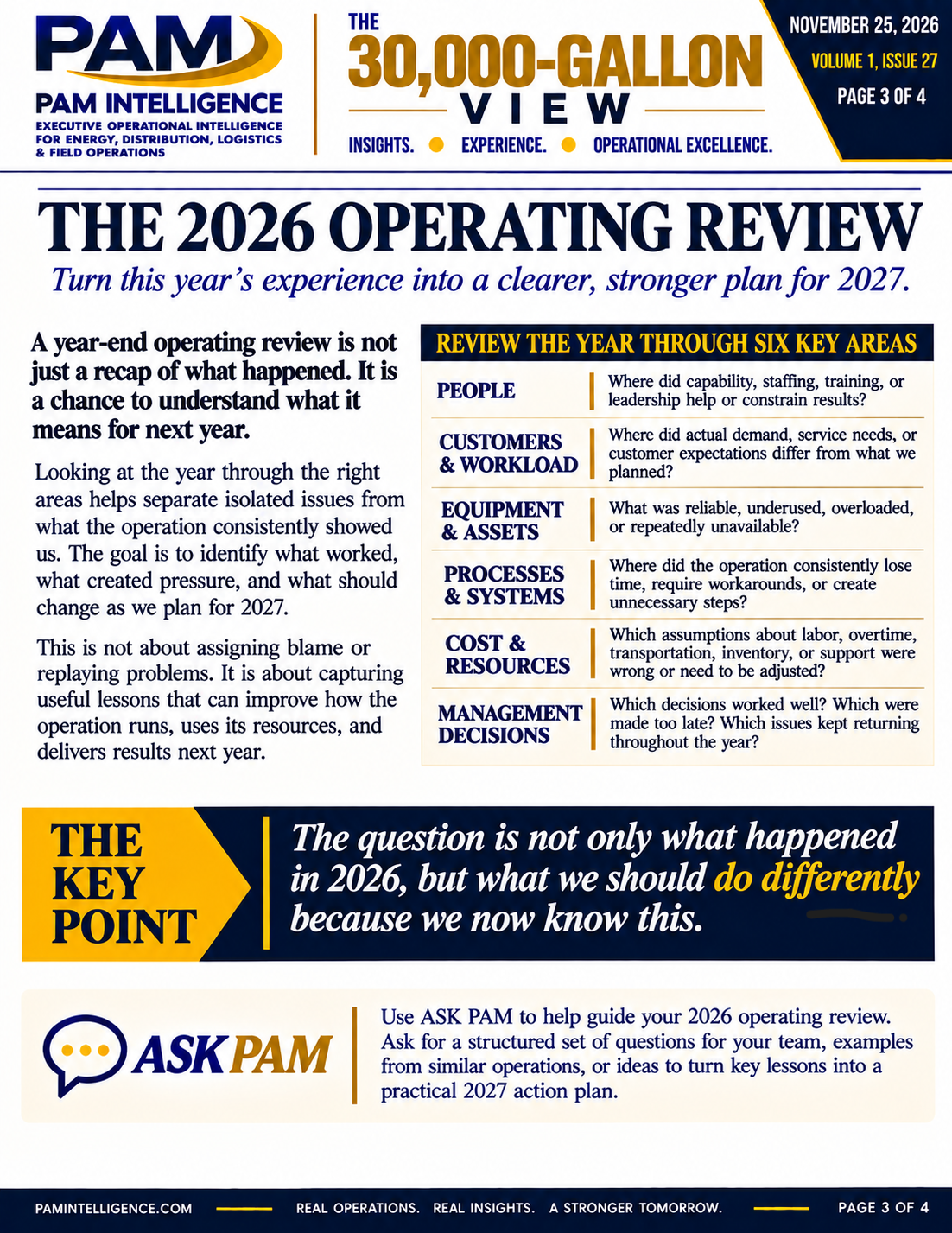
A year-end operating review is not just a recap of what happened. It is a chance to understand what it means for next year.
Looking at the year through the right areas helps separate isolated issues from what the operation consistently showed us. The goal is to identify what worked, what created pressure, and what should change as we plan for 2027.
This is not about assigning blame or replaying problems. It is about capturing useful lessons that can improve how the operation runs, uses its resources, and delivers results next year.
Review the Year Through Six Key Areas
- People. Where did capability, staffing, training, or leadership help or constrain results?
- Customers and workload. Where did actual demand, service needs, or customer expectations differ from what we planned?
- Equipment and assets. What was reliable, underused, overloaded, or repeatedly unavailable?
- Processes and systems. Where did the operation consistently lose time, require workarounds, or create unnecessary steps?
- Cost and resources. Which assumptions about labor, overtime, transportation, inventory, or support were wrong or need to be adjusted?
- Management decisions. Which decisions worked well? Which were made too late? Which issues kept returning throughout the year?
Turn the Lesson Into the Next Plan
Use what this year revealed to make stronger, more informed decisions for 2027.
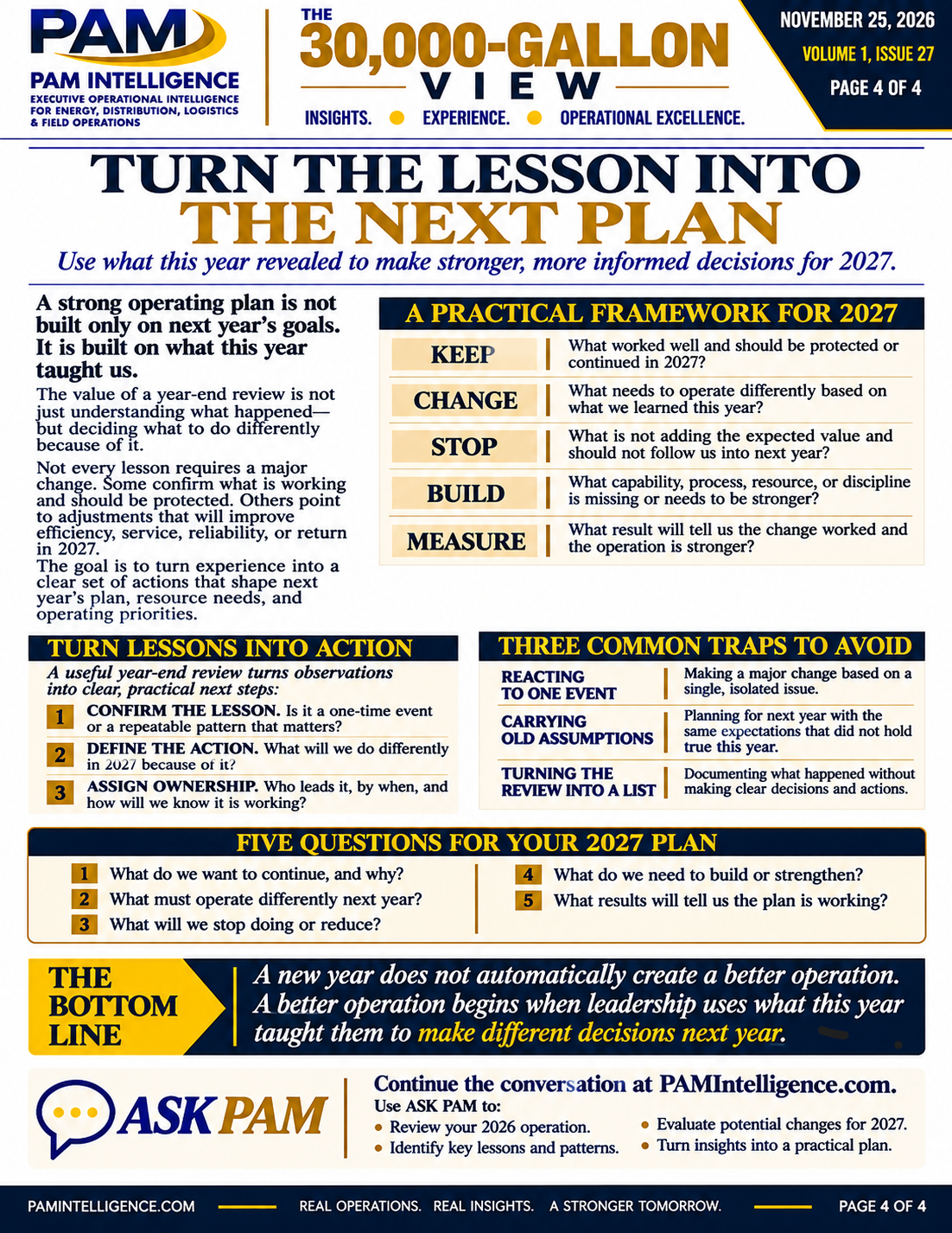
A strong operating plan is not built only on next year’s goals. It is built on what this year taught us.
The value of a year-end review is not just understanding what happened—but deciding what to do differently because of it.
Not every lesson requires a major change. Some confirm what is working and should be protected. Others point to adjustments that will improve efficiency, service, reliability, or return in 2027.
The goal is to turn experience into a clear set of actions that shape next year’s plan, resource needs, and operating priorities.
A Practical Framework for 2027
- Keep. What worked well and should be protected or continued in 2027?
- Change. What needs to operate differently based on what we learned this year?
- Stop. What is not adding the expected value and should not follow us into next year?
- Build. What capability, process, resource, or discipline is missing or needs to be stronger?
- Measure. What result will tell us the change worked and the operation is stronger?
Turn Lessons Into Action
- Confirm the lesson. Is it a one-time event or a repeatable pattern that matters?
- Define the action. What will we do differently in 2027 because of it?
- Assign ownership. Who leads it, by when, and how will we know it is working?
Three Common Traps to Avoid
- Reacting to one event. Making a major change based on a single, isolated issue.
- Carrying old assumptions. Planning for next year with the same expectations that did not hold true this year.
- Turning the review into a list. Documenting what happened without making clear decisions and actions.
Five Questions for Your 2027 Plan
- What do we want to continue, and why?
- What must operate differently next year?
- What will we stop doing or reduce?
- What do we need to build or strengthen?
- What results will tell us the plan is working?
Turn This Into Action
Continue With PAM Intelligence
ASK PAM remains Coming Soon during its protected launch. Use the public PAM Intelligence library to review planning, operating-performance, and leadership publications while preparing your 2027 operating plan.