Web Edition
Everything cannot be priority one. Leaders create clarity by recognizing resource costs, setting priorities through consistent criteria, and making deliberate trade-offs visible.
View Designed Edition4 original publication pagesEverything Cannot Be Priority One
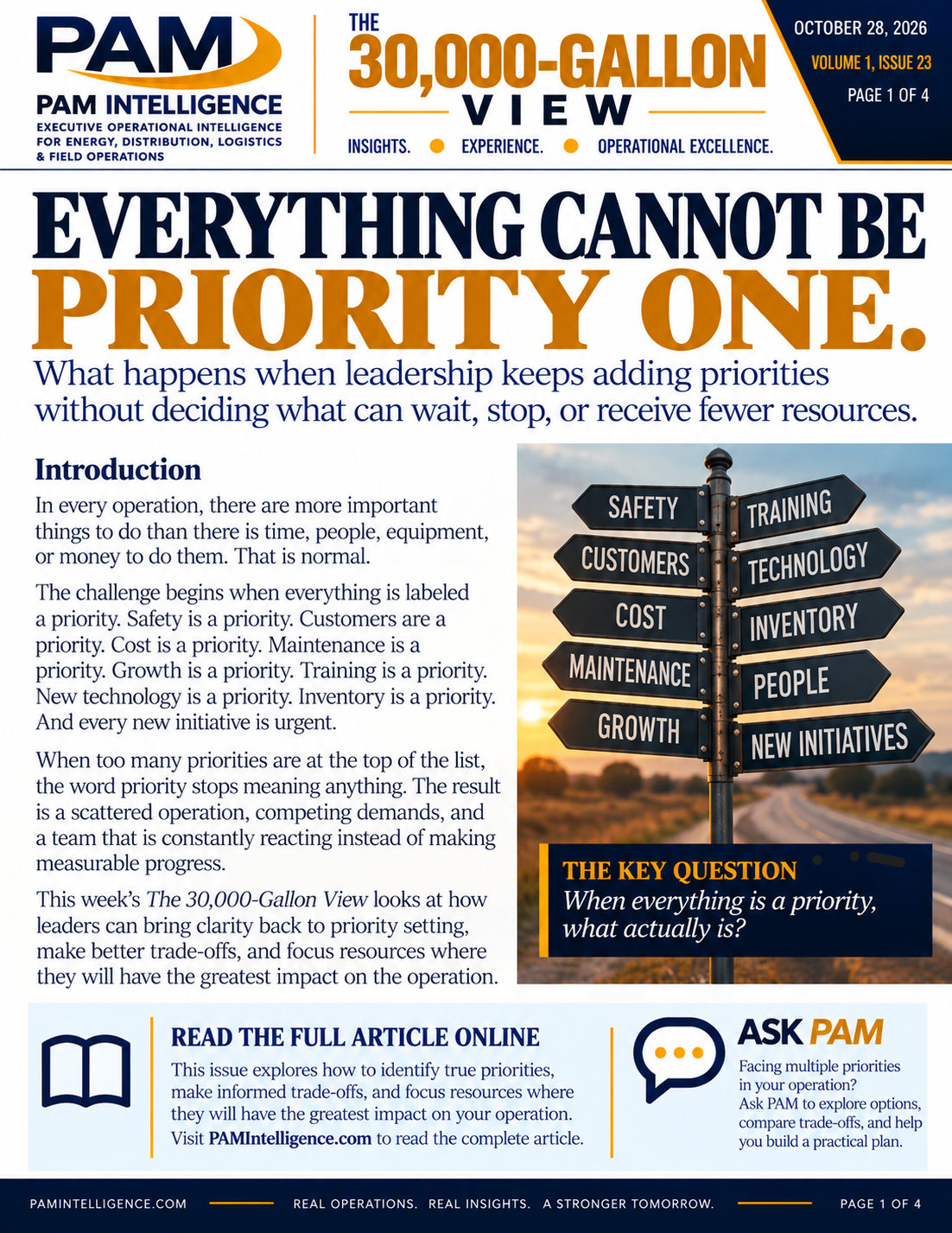
In every operation, there are more important things to do than there is time, people, equipment, or money to do them. That is normal.
The challenge begins when everything is labeled a priority. Safety is a priority. Customers are a priority. Cost is a priority. Maintenance is a priority. Growth is a priority. Training is a priority. New technology is a priority. Inventory is a priority. And every new initiative is urgent.
When too many priorities are at the top of the list, the word priority stops meaning anything. The result is a scattered operation, competing demands, and a team that is constantly reacting instead of making measurable progress.
This issue looks at how leaders can bring clarity back to priority setting, make better trade-offs, and focus resources where they will have the greatest impact on the operation.
Every Priority Consumes Something
Each priority requires resources. When priorities keep being added without trade-offs, something else always gets pushed aside.
A priority is not just a statement. It requires resources.
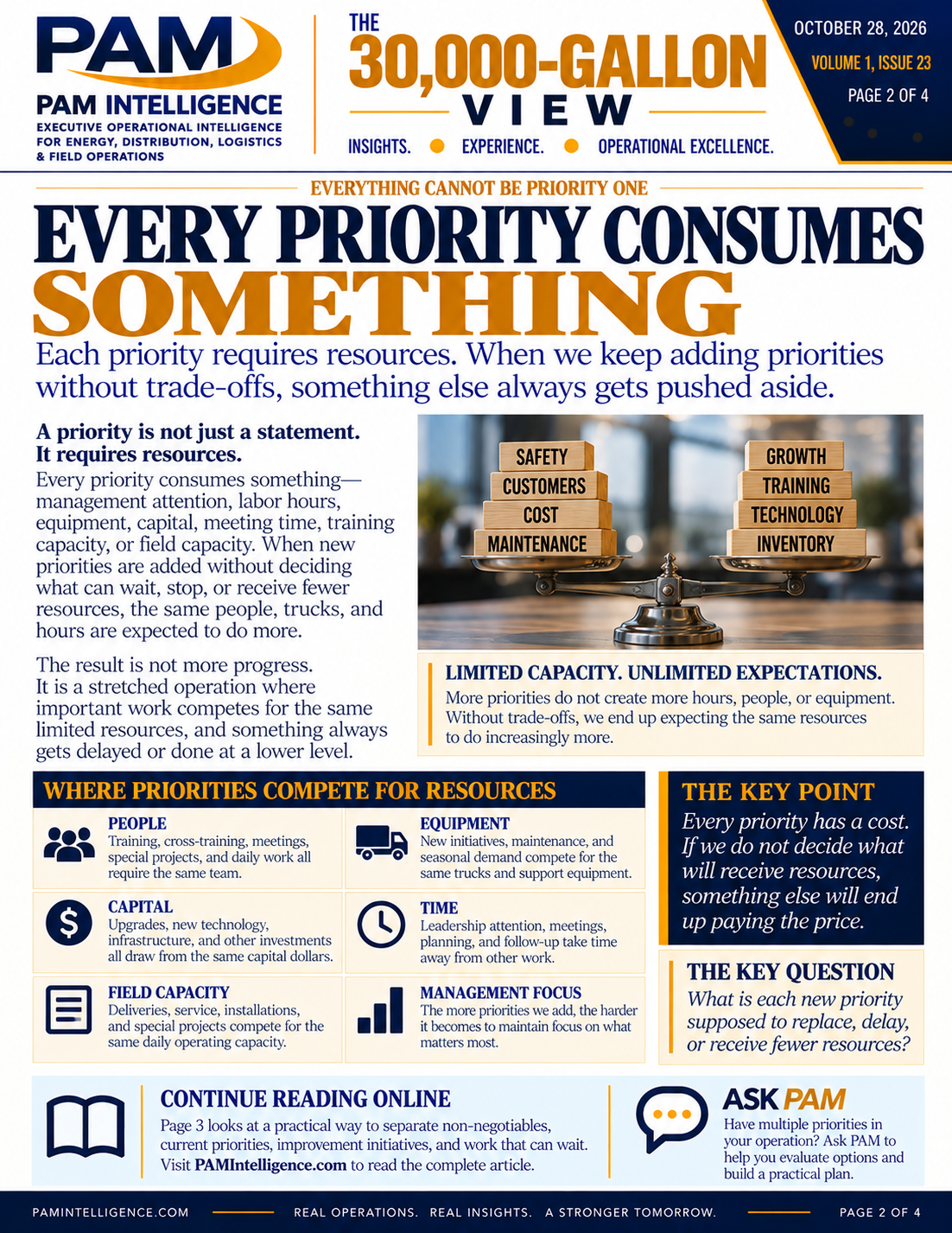
Every priority consumes something—management attention, labor hours, equipment, capital, meeting time, training capacity, or field capacity. When new priorities are added without deciding what can wait, stop, or receive fewer resources, the same people, trucks, and hours are expected to do more.
The result is not more progress. It is a stretched operation where important work competes for the same limited resources, and something always gets delayed or done at a lower level.
Where Priorities Compete for Resources
- People. Training, cross-training, meetings, special projects, and daily work all require the same team.
- Equipment. New initiatives, maintenance, and seasonal demand compete for the same trucks and support equipment.
- Capital. Upgrades, new technology, infrastructure, and other investments all draw from the same capital dollars.
- Time. Leadership attention, meetings, planning, and follow-up take time away from other work.
- Field capacity. Deliveries, service, installations, and special projects compete for the same daily operating capacity.
- Management focus. The more priorities are added, the harder it becomes to maintain focus on what matters most.
Limited capacity. Unlimited expectations. More priorities do not create more hours, people, or equipment. Without trade-offs, the same resources are expected to do increasingly more.
The management question: What is each new priority supposed to replace, delay, or receive fewer resources?
A Practical Way to Set and Manage Priorities
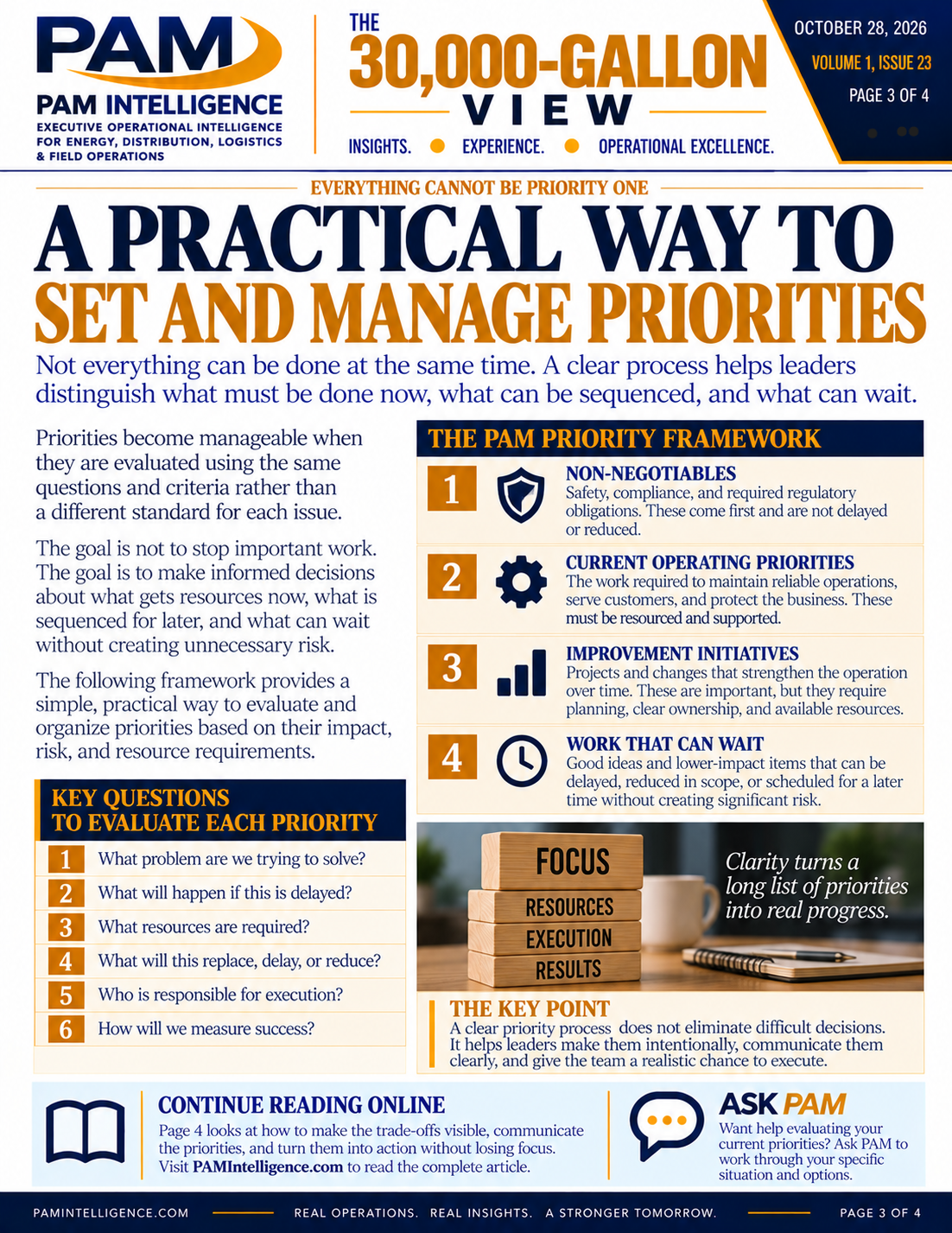
Not everything can be done at the same time. A clear process helps leaders distinguish what must be done now, what can be sequenced, and what can wait.
Priorities become manageable when they are evaluated using the same questions and criteria rather than a different standard for each issue. The goal is not to stop important work. The goal is to make informed decisions about what gets resources now, what is sequenced for later, and what can wait without creating unnecessary risk.
Key Questions to Evaluate Each Priority
- What problem are we trying to solve?
- What will happen if this is delayed?
- What resources are required?
- What will this replace, delay, or reduce?
- Who is responsible for execution?
- How will we measure success?
The PAM Priority Framework
- Non-Negotiables. Safety, compliance, and required regulatory obligations. These come first and are not delayed or reduced.
- Current Operating Priorities. The work required to maintain reliable operations, serve customers, and protect the business. These must be resourced and supported.
- Improvement Initiatives. Projects and changes that strengthen the operation over time. These are important, but require planning, clear ownership, and available resources.
- Work That Can Wait. Good ideas and lower-impact items that can be delayed, reduced in scope, or scheduled for a later time without creating significant risk.
Make the Trade-Off Visible and Move Forward
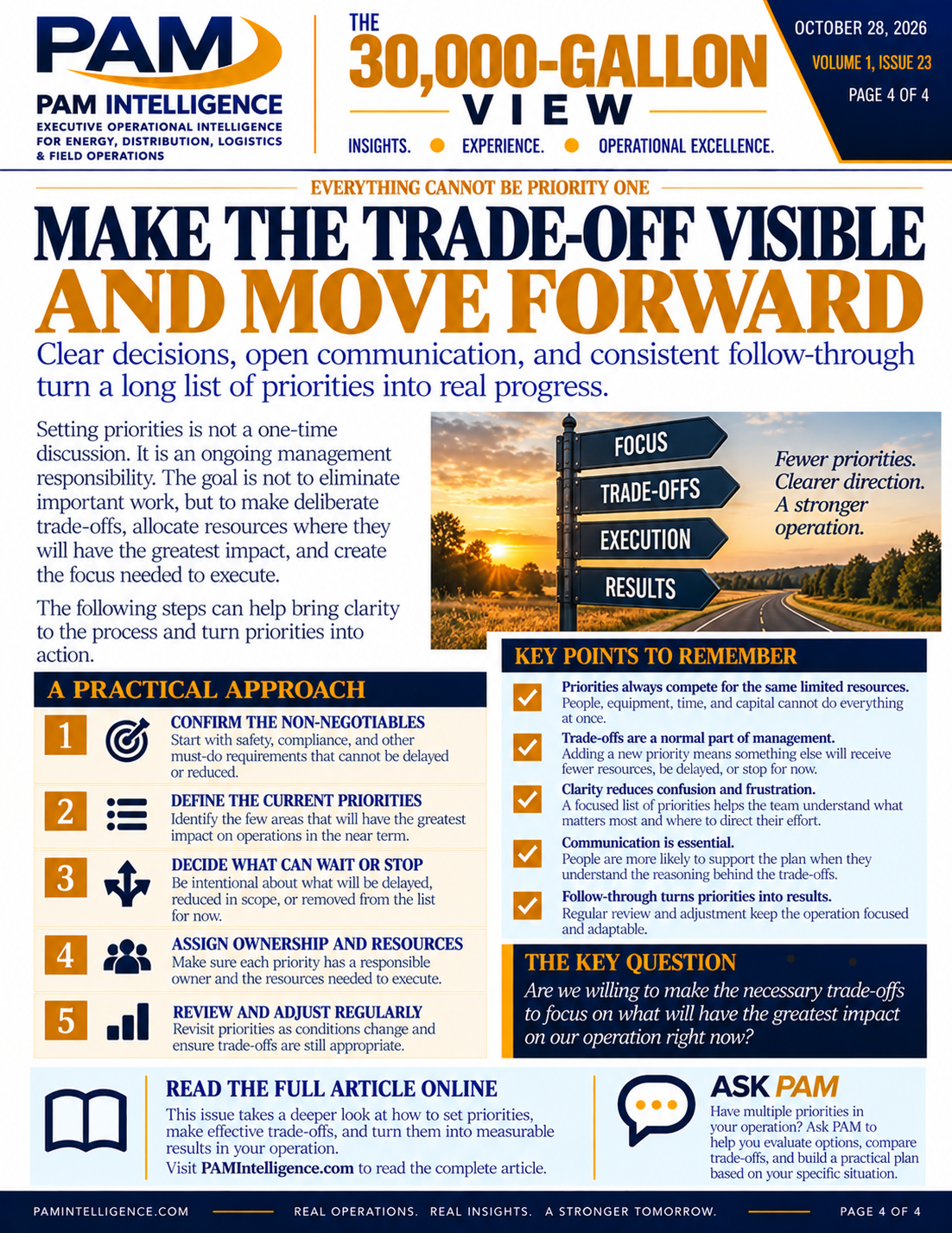
Clear decisions, open communication, and consistent follow-through turn a long list of priorities into real progress.
Setting priorities is not a one-time discussion. It is an ongoing management responsibility. The goal is not to eliminate important work, but to make deliberate trade-offs, allocate resources where they will have the greatest impact, and create the focus needed to execute.
A Practical Approach
- Confirm the Non-Negotiables. Start with safety, compliance, and other must-do requirements that cannot be delayed or reduced.
- Define the Current Priorities. Identify the few areas that will have the greatest impact on operations in the near term.
- Decide What Can Wait or Stop. Be intentional about what will be delayed, reduced in scope, or removed from the list for now.
- Assign Ownership and Resources. Make sure each priority has a responsible owner and the resources needed to execute.
- Review and Adjust Regularly. Revisit priorities as conditions change and ensure trade-offs are still appropriate.
Key Points to Remember
- Priorities always compete for the same limited resources. People, equipment, time, and capital cannot do everything at once.
- Trade-offs are a normal part of management. Adding a new priority means something else will receive fewer resources, be delayed, or stop for now.
- Clarity reduces confusion and frustration. A focused list helps the team understand what matters most and where to direct effort.
- Communication is essential. People are more likely to support the plan when they understand the reasoning behind the trade-offs.
- Follow-through turns priorities into results. Regular review and adjustment keep the operation focused and adaptable.
ASK PAM — Put This Issue to Work
Turn Competing Priorities into a Practical Plan
Facing multiple priorities in your operation? ASK PAM can help you evaluate the options, compare trade-offs, and build a practical plan based on your specific situation.
Use the PAM Priority Framework to separate non-negotiables, current operating priorities, improvement initiatives, and work that can wait. Be ready to describe the operating problem, the consequence of delay, the resources required, what the work would replace or reduce, the responsible owner, and how success will be measured.
ASK PAM remains a controlled beta. Access restrictions and privacy guidance continue to apply.