Web Edition
Build the operating picture early enough to influence the outcome.
View Designed Edition4 original publication pagesBefore the Day Gets Away from You
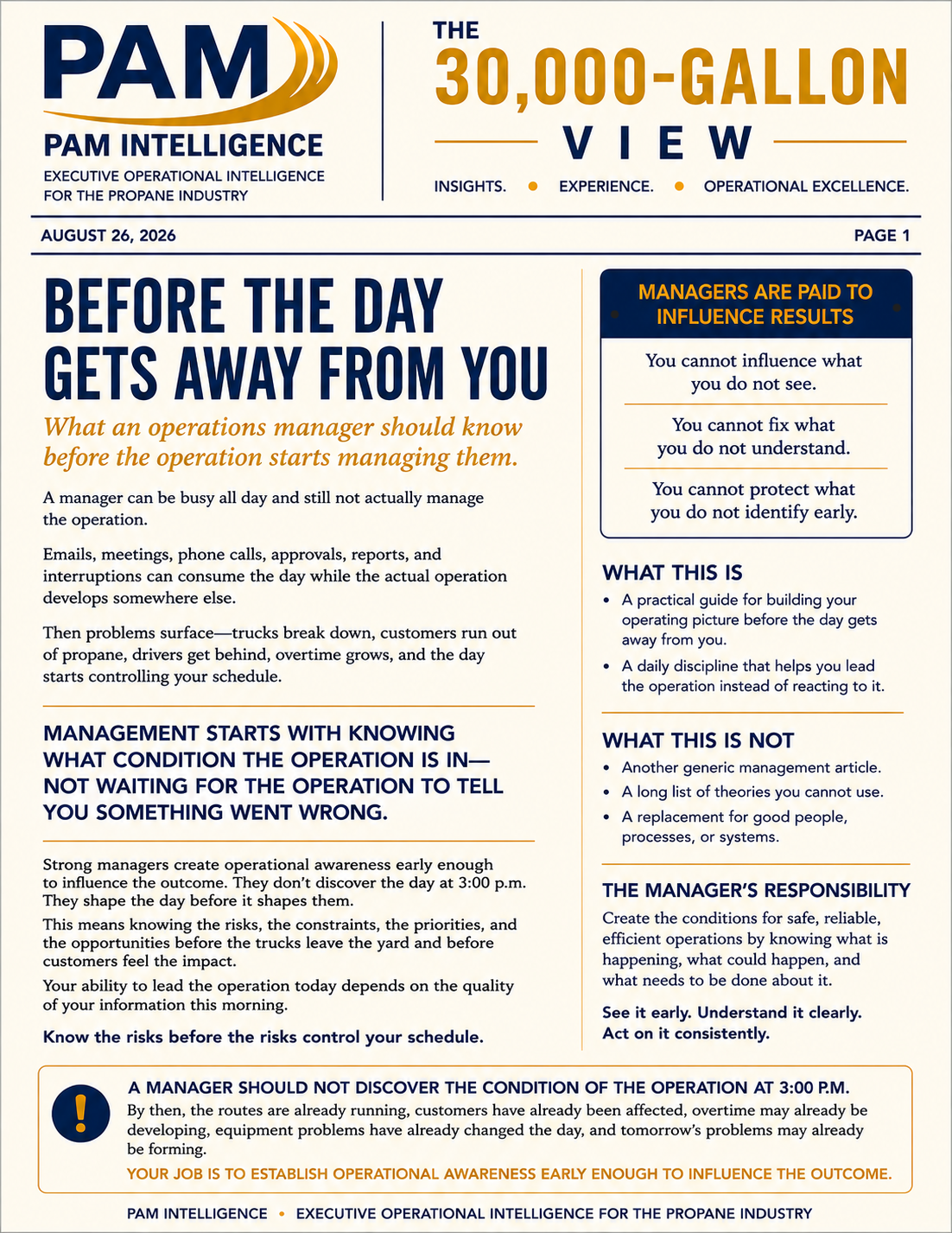
A manager can be busy all day and still not actually manage the operation.
Emails, meetings, phone calls, approvals, reports, and interruptions can consume the day while the actual operation develops somewhere else.
Then problems surface—trucks break down, customers run out of propane, drivers get behind, overtime grows, and the day starts controlling your schedule.
Management Starts with Knowing What Condition the Operation Is In—Not Waiting for the Operation to Tell You Something Went Wrong
Strong managers create operational awareness early enough to influence the outcome. They don’t discover the day at 3:00 p.m. They shape the day before it shapes them.
This means knowing the risks, the constraints, the priorities, and the opportunities before the trucks leave the yard and before customers feel the impact.
Your ability to lead the operation today depends on the quality of your information this morning.
Know the risks before the risks control your schedule.
What This Is
- A practical guide for building your operating picture before the day gets away from you.
- A daily discipline that helps you lead the operation instead of reacting to it.
What This Is Not
- Another generic management article.
- A long list of theories you cannot use.
- A replacement for good people, processes, or systems.
The Manager’s Responsibility
Create the conditions for safe, reliable, efficient operations by knowing what is happening, what could happen, and what needs to be done about it.
See it early. Understand it clearly. Act on it consistently.
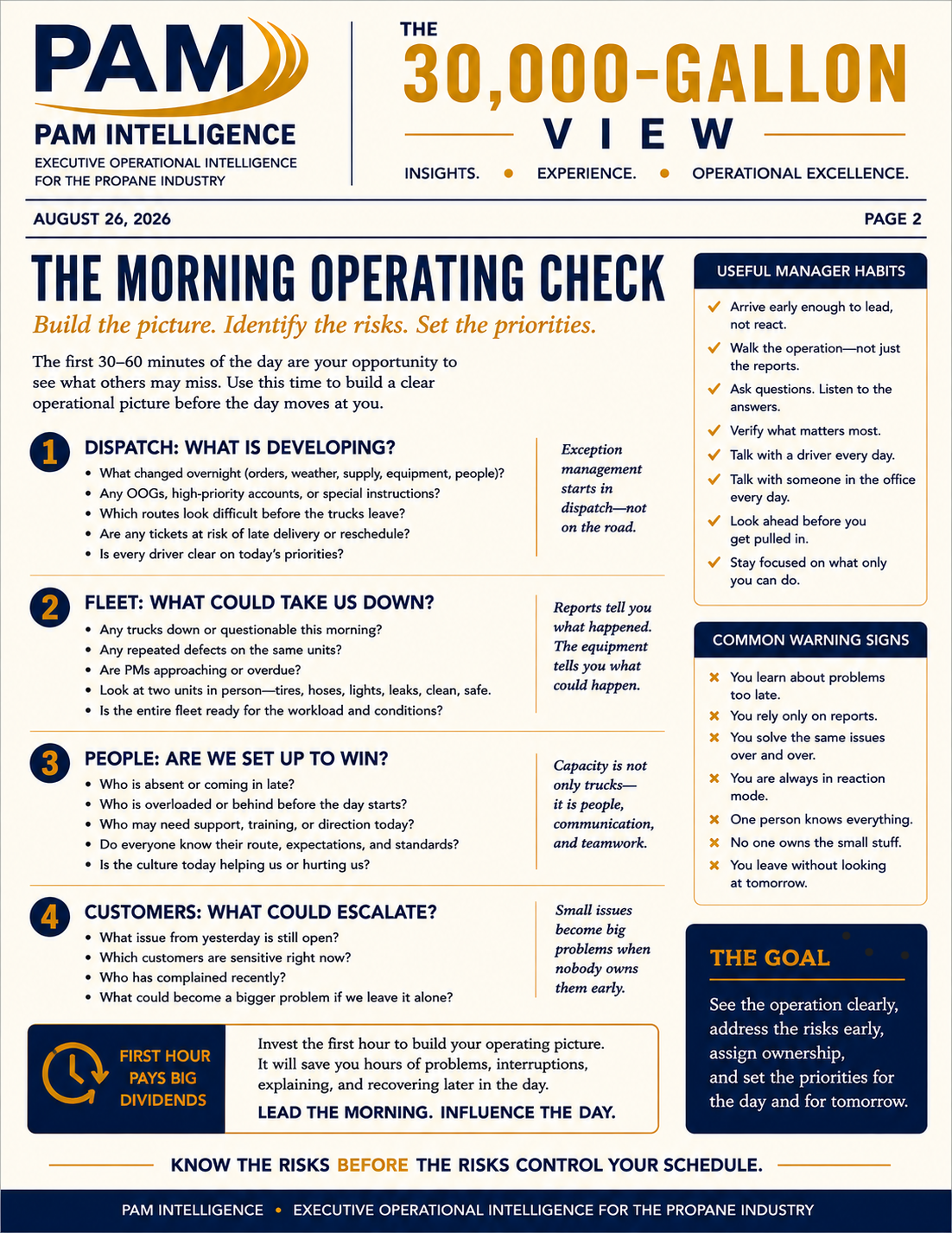
The Morning Operating Check
Build the picture. Identify the risks. Set the priorities.
The first 30–60 minutes of the day are your opportunity to see what others may miss. Use this time to build a clear operational picture before the day moves at you.
Dispatch: What Is Developing?
- What changed overnight—orders, weather, supply, equipment, or people?
- Any OOGs, high-priority accounts, or special instructions?
- Which routes look difficult before the trucks leave?
- Are any tickets at risk of late delivery or reschedule?
- Is every driver clear on today’s priorities?
Fleet: What Could Take Us Down?
- Any trucks down or questionable this morning?
- Any repeated defects on the same units?
- Are PMs approaching or overdue?
- Look at two units in person—tires, hoses, lights, leaks, clean, safe.
- Is the entire fleet ready for the workload and conditions?
People: Are We Set Up to Win?
- Who is absent or coming in late?
- Who is overloaded or behind before the day starts?
- Who may need support, training, or direction today?
- Do everyone know their route, expectations, and standards?
- Is the culture today helping us or hurting us?
Customers: What Could Escalate?
- What issue from yesterday is still open?
- Which customers are sensitive right now?
- Who has complained recently?
- What could become a bigger problem if we leave it alone?
Useful Manager Habits
- Arrive early enough to lead, not react.
- Walk the operation—not just the reports.
- Ask questions. Listen to the answers.
- Verify what matters most.
- Talk with a driver every day.
- Talk with someone in the office every day.
- Look ahead before you get pulled in.
- Stay focused on what only you can do.
Operating Lessons
- Management starts in the office and on the road.
- Reports tell you what happened.
- The equipment tells you what could happen.
- Capacity is not only trucks—it is people, communication, and teamwork.
- Small issues become big problems when nobody owns them early.
Common Warning Signs
- You learn about problems too late.
- You rely only on reports.
- You solve the same issues over and over.
- You are always in reaction mode.
- One person knows everything.
- No one owns the small stuff.
- You leave without looking at tomorrow.
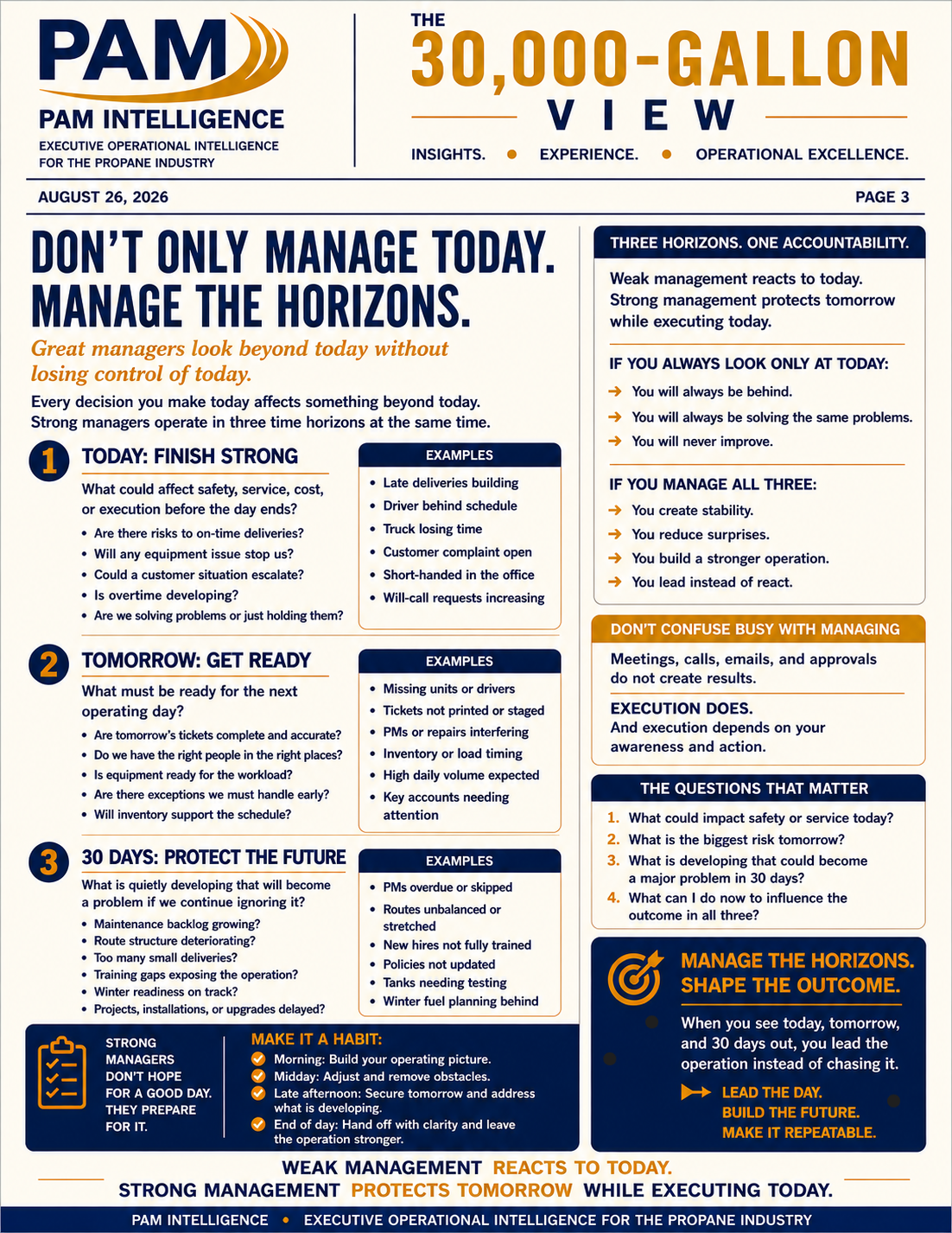
Don’t Only Manage Today. Manage the Horizons.
Great managers look beyond today without losing control of today. Every decision you make today affects something beyond today.
Strong managers operate in three time horizons at the same time.
Today: Finish Strong
What could affect safety, service, cost, or execution before the day ends?
- Are there risks to on-time deliveries?
- Will any equipment issue stop us?
- Could a customer situation escalate?
- Is overtime developing?
- Are we solving problems or just holding them?
Tomorrow: Get Ready
What must be ready for the next operating day?
- Are tickets complete and accurate?
- Do we have the right people in the right places?
- Is equipment ready for the workload?
- Are there exceptions we must handle early?
- Will inventory support the schedule?
30 Days: Protect the Future
What is quietly developing that will become a problem if we continue ignoring it?
- Maintenance backlog growing?
- Route structure deteriorating?
- Too many small deliveries?
- Training gaps exposing the operation?
- Winter readiness on track?
- Projects, installations, or upgrades delayed?
Examples Across the Three Horizons
Today: Late deliveries building; driver behind schedule; truck losing time; customer complaint open; short-handed in the office; will-call requests increasing.
Tomorrow: Missing units or drivers; tickets not printed or staged; preventive maintenance or repairs interfering; inventory or load timing; high daily volume expected; key accounts needing attention.
30 days: Preventive maintenance overdue or skipped; routes unbalanced or stretched; new hires not fully trained; policies not updated; tanks needing testing; winter fuel planning behind.
If You Always Look Only at Today
- You will always be behind.
- You will always be solving the same problems.
- You will never improve.
If You Manage All Three
- You create stability.
- You reduce surprises.
- You build a stronger operation.
- You lead instead of react.
Don’t Confuse Busy with Managing
Meetings, calls, emails, and approvals do not create results. Execution does. And execution depends on your awareness and action.
Strong managers don’t hope for a good day. They prepare for it.
Make It a Habit
- Morning: Build your operating picture.
- Midday: Adjust and remove obstacles.
- Late afternoon: Secure tomorrow and address what is developing.
- End of day: Hand off with clarity and leave the operation stronger.
The Questions That Matter
- What could impact safety or service today?
- What is the biggest risk tomorrow?
- What is developing that could become a major problem in 30 days?
- What can I do now to influence the outcome in all three?
Manage the horizons. Shape the outcome.
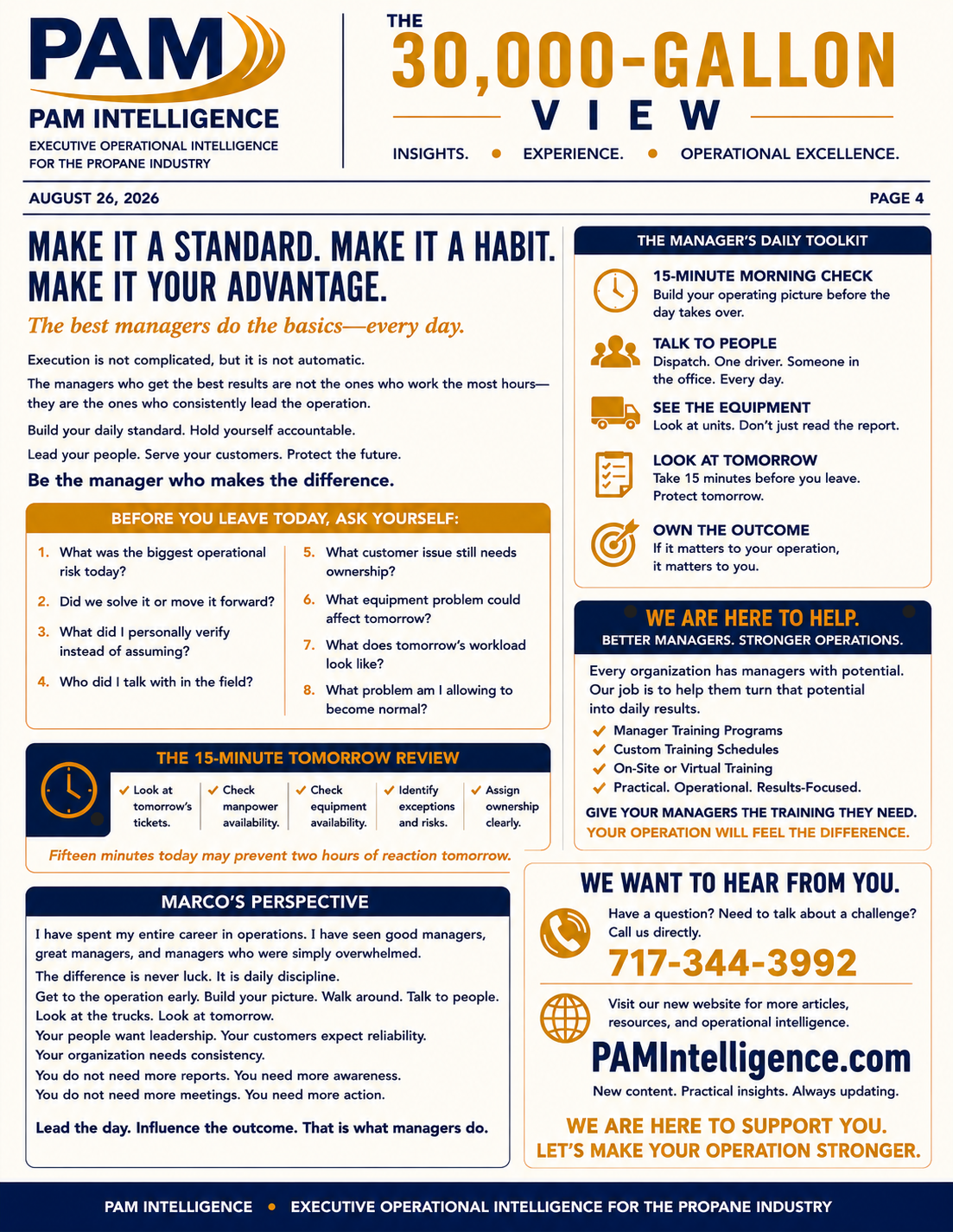
Make It a Standard. Make It a Habit. Make It Your Advantage.
The best managers do the basics—every day.
Execution is not complicated, but it is not automatic. The managers who get the best results are not the ones who work the most hours—they are the ones who consistently lead the operation.
Build your daily standard. Hold yourself accountable. Lead your people. Serve your customers. Protect the future. Be the manager who makes the difference.
The Manager’s Daily Toolkit
- 15-minute morning check: Build your operating picture before the day takes over.
- Talk to people: Dispatch. One driver. Someone in the office. Every day.
- See the equipment: Look at units. Don’t just read the report.
- Look at tomorrow: Take 15 minutes before you leave. Protect tomorrow.
- Own the outcome: If it matters to your operation, it matters to you.
Before You Leave Today, Ask Yourself
- What was the biggest operational risk today?
- Did we solve it or move it forward?
- What did I personally verify instead of assuming?
- Who did I talk with in the field?
- What customer issue still needs ownership?
- What equipment problem could affect tomorrow?
- What does tomorrow’s workload look like?
- What problem am I allowing to become normal?
The 15-Minute Tomorrow Review
- Look at tomorrow’s workload.
- Check manpower availability.
- Check equipment availability.
- Review exceptions and risks.
- Assign ownership clearly.
Fifteen minutes today may prevent two hours of reaction tomorrow.