Web Edition
Repeat work often looks like normal activity until leaders measure what it costs.
View Designed Edition 4 original publication pagesHow Many Times Are You Paying to Finish the Same Job?
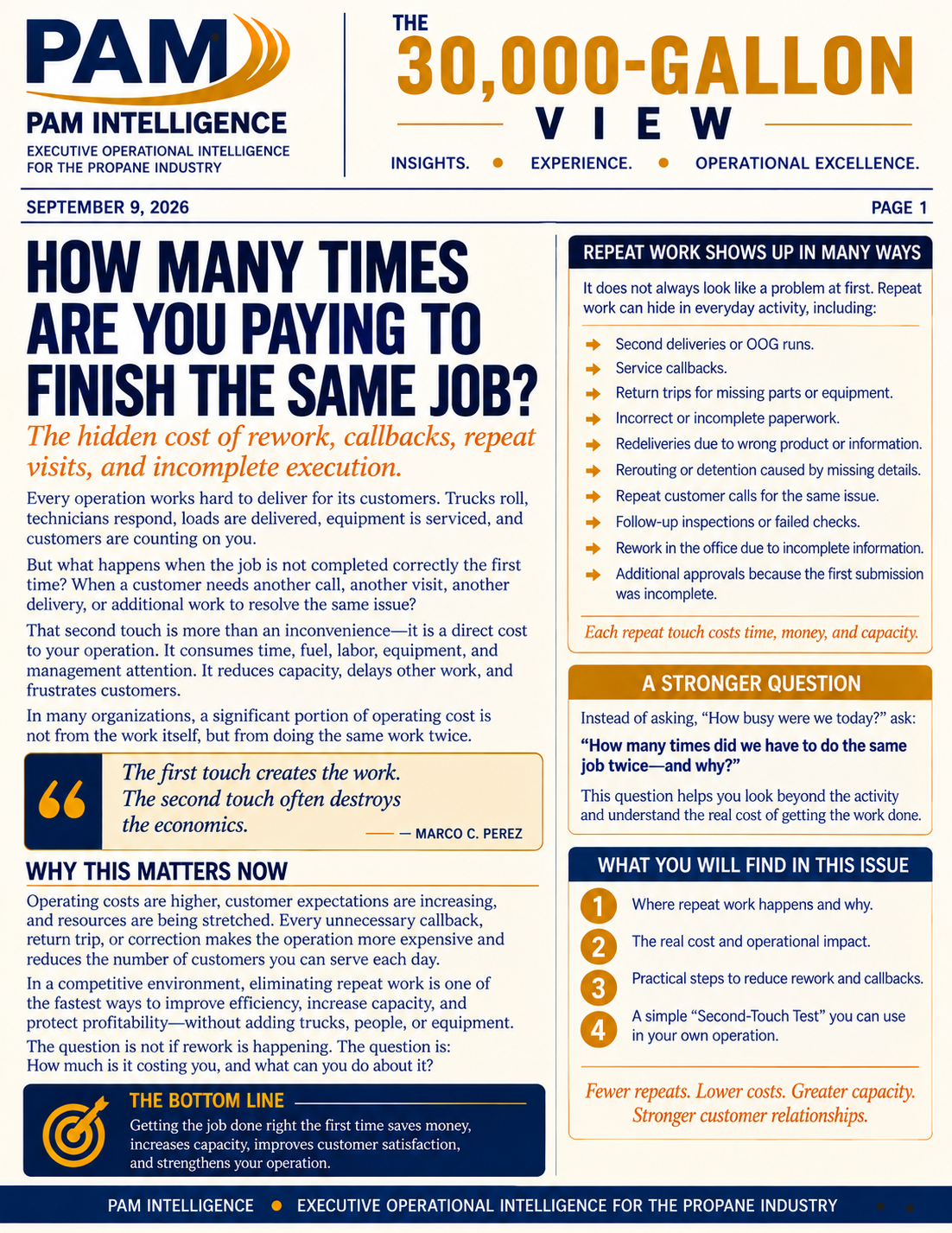
Every operation works hard to deliver for its customers. Trucks roll, technicians respond, loads are delivered, equipment is serviced, and customers are counting on you.
But what happens when the job is not completed correctly the first time? When a customer needs another call, another visit, another delivery, or additional work to resolve the same issue?
That second touch is more than an inconvenience—it is a direct cost to your operation. It consumes time, fuel, labor, equipment, and management attention. It reduces capacity, delays other work, and frustrates customers.
In many organizations, a significant portion of operating cost is not from the work itself, but from doing the same work twice.
Why This Matters Now
Operating costs are higher, customer expectations are increasing, and resources are being stretched. Every unnecessary callback, return trip, or correction makes the operation more expensive and reduces the number of customers you can serve each day.
In a competitive environment, eliminating repeat work is one of the fastest ways to improve efficiency, increase capacity, and protect profitability—without adding trucks, people, or equipment.
The question is not if rework is happening. The question is: How much is it costing you, and what can you do about it?
Repeat Work Shows Up in Many Ways
- Second deliveries or OOG runs
- Service callbacks
- Return trips for missing parts or equipment
- Incorrect or incomplete paperwork
- Redeliveries due to wrong product or information
- Rerouting or detention caused by missing details
- Repeat customer calls for the same issue
- Follow-up inspections or failed checks
- Rework in the office due to incomplete information
- Additional approvals because the first submission was incomplete
Each repeat touch costs time, money, and capacity.
A Stronger Question
Instead of asking, “How busy were we today?” ask: “How many times did we have to do the same job twice—and why?”
This question helps you look beyond the activity and understand the real cost of getting the work done.
What You Will Find in This Issue
- Where repeat work happens and why.
- The real cost and operational impact.
- Practical steps to reduce rework and callbacks.
- A simple “Second-Touch Test” you can use in your own operation.
Fewer repeats. Lower costs. Greater capacity. Stronger customer relationships.
Where Repeat Work Comes From
Different industries. Same root causes.
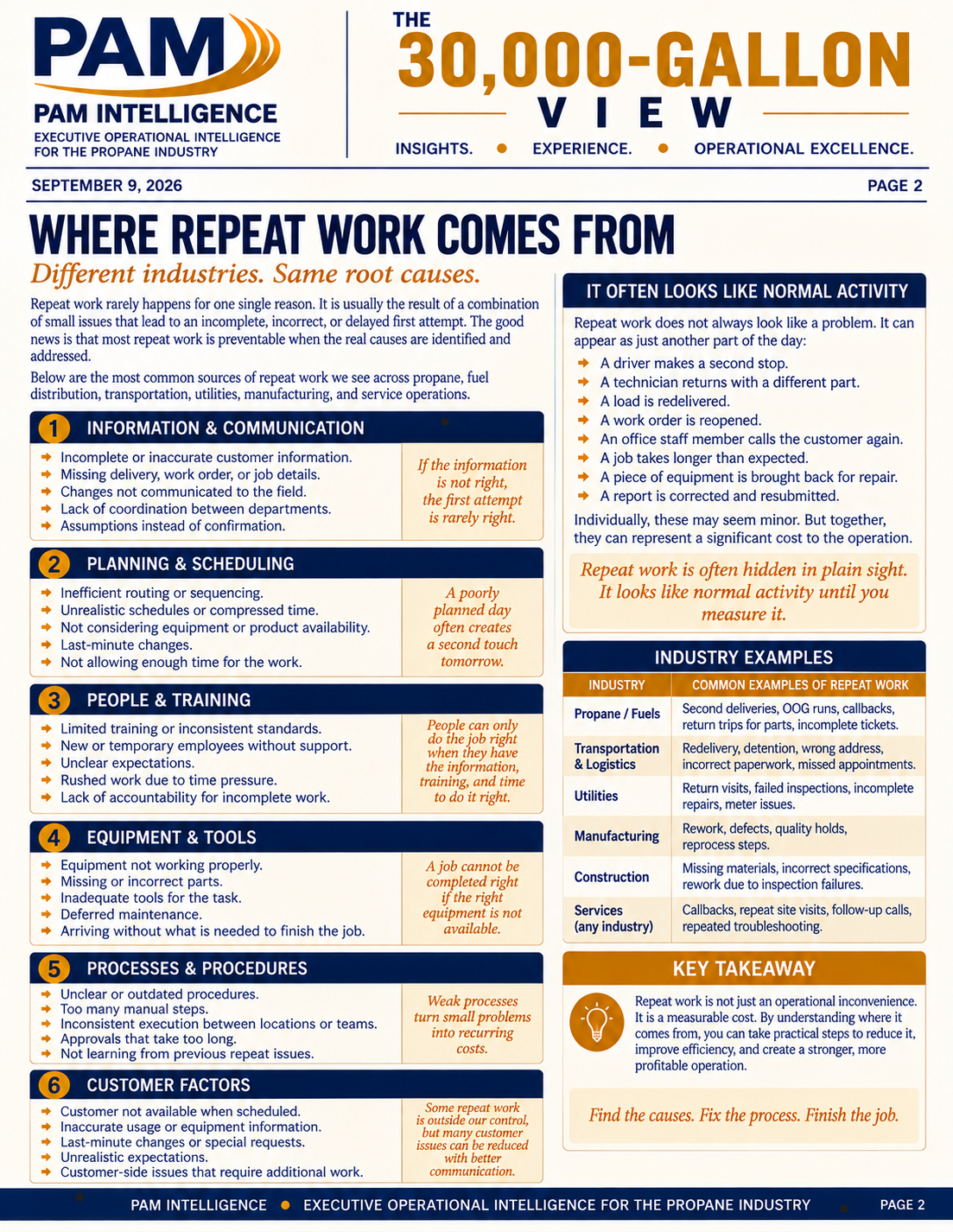
Repeat work rarely happens for one single reason. It is usually the result of a combination of small issues that lead to an incomplete, incorrect, or delayed first attempt. The good news is that most repeat work is preventable when the real causes are identified and addressed.
Below are the most common sources of repeat work we see across propane, fuel distribution, transportation, utilities, manufacturing, and service operations.
Information and Communication
- Incomplete or inaccurate customer information
- Missing delivery, work-order, or job details
- Changes not communicated to the field
- Lack of coordination between departments
- Assumptions instead of confirmation
Planning and Scheduling
- Inefficient routing or sequencing
- Unrealistic schedules or compressed time
- Not considering equipment or product availability
- Last-minute changes
- Not allowing enough time for the work
People and Training
- Limited training or inconsistent standards
- New or temporary employees without support
- Unclear expectations
- Rushed work due to time pressure
- Lack of accountability for incomplete work
Equipment and Tools
- Equipment not working properly
- Missing or incorrect parts
- Inadequate tools for the task
- Deferred maintenance
- Arriving without what is needed to finish the job
Processes and Procedures
- Unclear or outdated procedures
- Too many manual steps
- Inconsistent execution between locations or teams
- Approvals that take too long
- Not learning from previous repeat issues
Customer Factors
- Customer not available when scheduled
- Inaccurate usage or equipment information
- Last-minute changes or special requests
- Unrealistic expectations
- Customer-side issues that require additional work
Repeat work is often hidden in plain sight. It looks like normal activity until you measure it.
It Often Looks Like Normal Activity
Repeat work does not always look like a problem. It can appear as just another part of the day:
- A driver makes a second stop.
- A technician returns with a different part.
- A load is redelivered.
- A work order is reopened.
- An office staff member calls the customer again.
- A job takes longer than expected.
- A piece of equipment is brought back for repair.
- A report is corrected and resubmitted.
Individually, these may seem minor. But together, they can represent a significant cost to the operation.
Industry Examples
- Propane / Fuels: Second deliveries, OOG runs, callbacks, return trips for parts, incomplete tickets.
- Transportation & Logistics: Redelivery, detention, wrong address, incorrect paperwork, missed appointments.
- Utilities: Return visits, failed inspections, incomplete repairs, meter issues.
- Manufacturing: Rework, defects, quality holds, reprocess steps.
- Construction: Missing materials, incorrect specifications, rework due to inspection failures.
- Services (any industry): Callbacks, repeat site visits, follow-up calls, repeated troubleshooting.
The Second-Touch Test
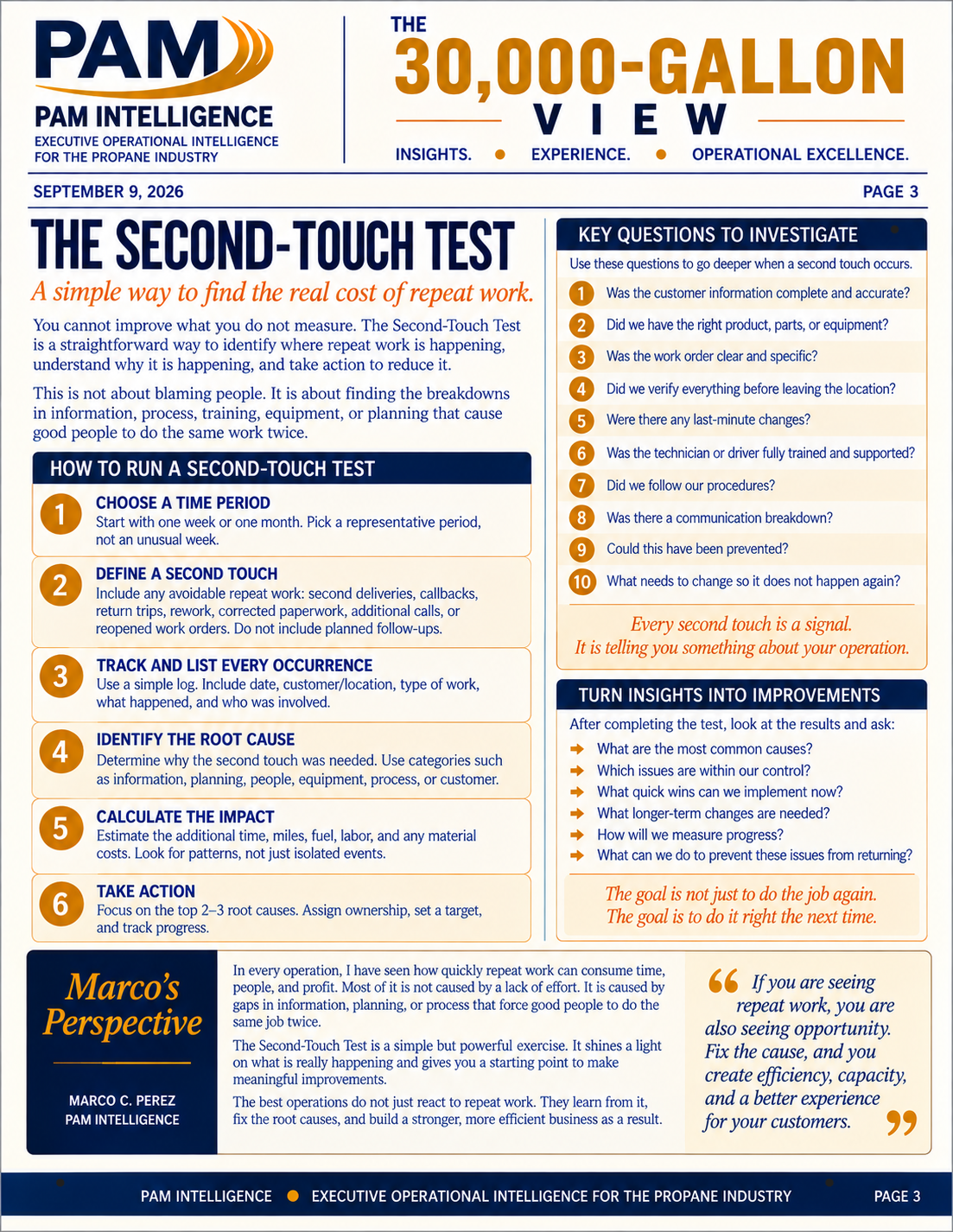
You cannot improve what you do not measure. The Second-Touch Test is a straightforward way to identify where repeat work is happening, understand why it is happening, and take action to reduce it.
This is not about blaming people. It is about finding the breakdowns in information, process, training, equipment, or planning that cause good people to do the same work twice.
- Choose a time period. Start with one week or one month. Pick a representative period, not an unusual week.
- Define a second touch. Include any avoidable repeat work: second deliveries, callbacks, return trips, rework, corrected paperwork, additional calls, or reopened work orders. Do not include planned follow-ups.
- Track and list every occurrence. Use a simple log. Include date, customer/location, type of work, what happened, and who was involved.
- Identify the root cause. Use categories such as information, planning, people, equipment, process, or customer.
- Calculate the impact. Estimate the additional time, miles, fuel, labor, and material costs. Look for patterns, not just isolated events.
- Take action. Focus on the top 2–3 root causes. Assign ownership, set a target, and track progress.
Questions to Investigate
- Was the customer information complete and accurate?
- Did we have the right product, parts, or equipment?
- Was the work order clear and specific?
- Did we verify everything before leaving the location?
- Were there any last-minute changes?
- Was the technician or driver fully trained and supported?
- Did we follow our procedures?
- Was there a communication breakdown?
- Could this have been prevented?
- What needs to change so it does not happen again?
Every second touch is a signal. It is telling you something about your operation.
Turn Insights into Improvements
After completing the test, look at the results and ask:
- What are the most common causes?
- Which issues are within our control?
- What quick wins can we implement now?
- What longer-term changes are needed?
- How will we measure progress?
- What can we do to prevent these issues from returning?
The goal is not just to do the job again. The goal is to do it right the next time.
Practical Ways to Reduce Repeat Work
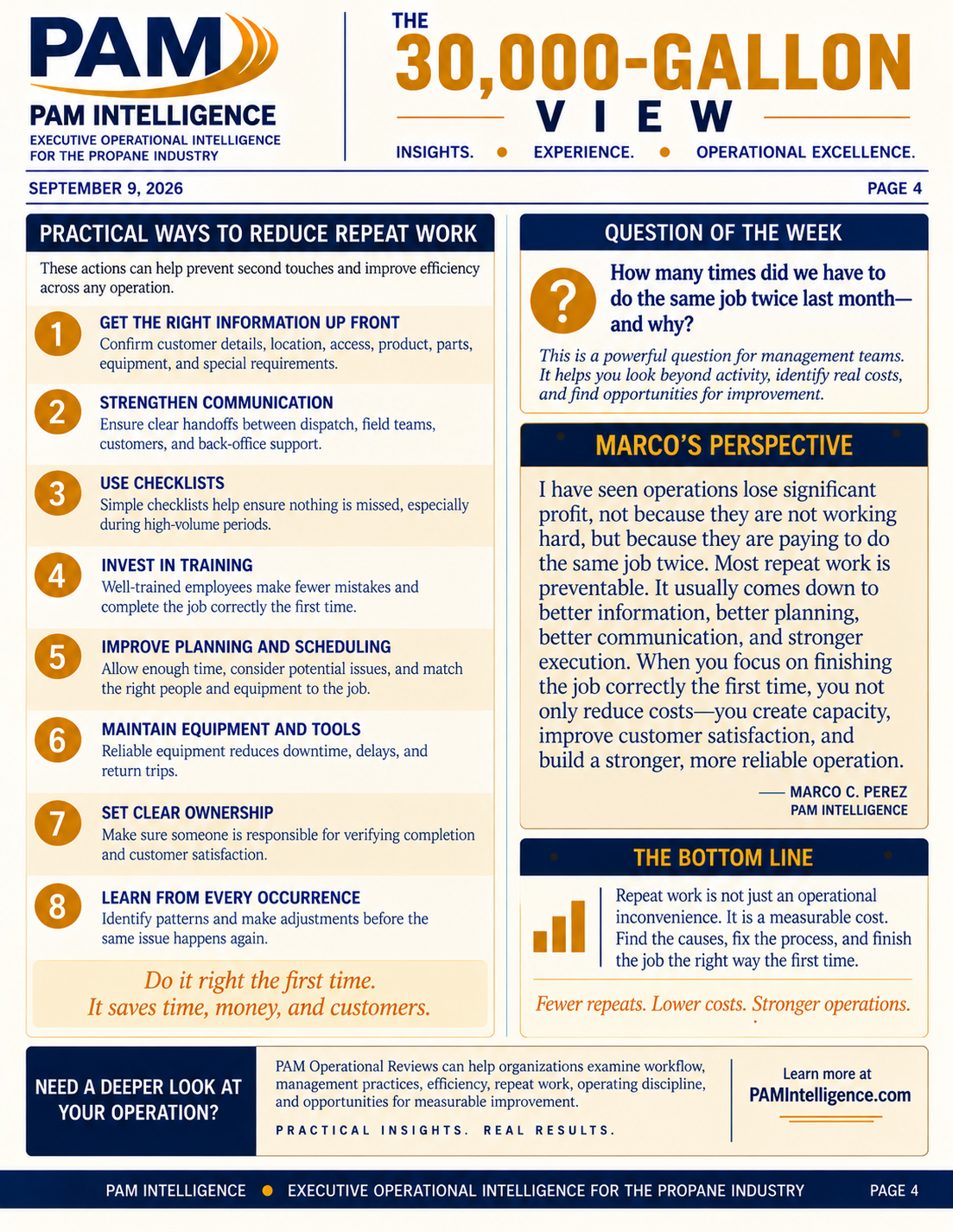
- Get the right information up front. Confirm customer details, location, access, product, parts, equipment, and special requirements.
- Strengthen communication. Ensure clear handoffs between dispatch, field teams, customers, and back-office support.
- Use checklists. Simple checklists help ensure nothing is missed, especially during high-volume periods.
- Invest in training. Well-trained employees make fewer mistakes and complete the job correctly the first time.
- Improve planning and scheduling. Allow enough time, consider potential issues, and match the right people and equipment to the job.
- Maintain equipment and tools. Reliable equipment reduces downtime, delays, and return trips.
- Set clear ownership. Make someone responsible for verifying completion and customer satisfaction.
- Learn from every occurrence. Identify patterns and adjust before the same issue happens again.
Do it right the first time. It saves time, money, and customers.