Web Edition
PAM Intelligence translates major industry developments into practical operational guidance for propane leaders.
View Designed Edition4 original publication pagesSituation Assessment
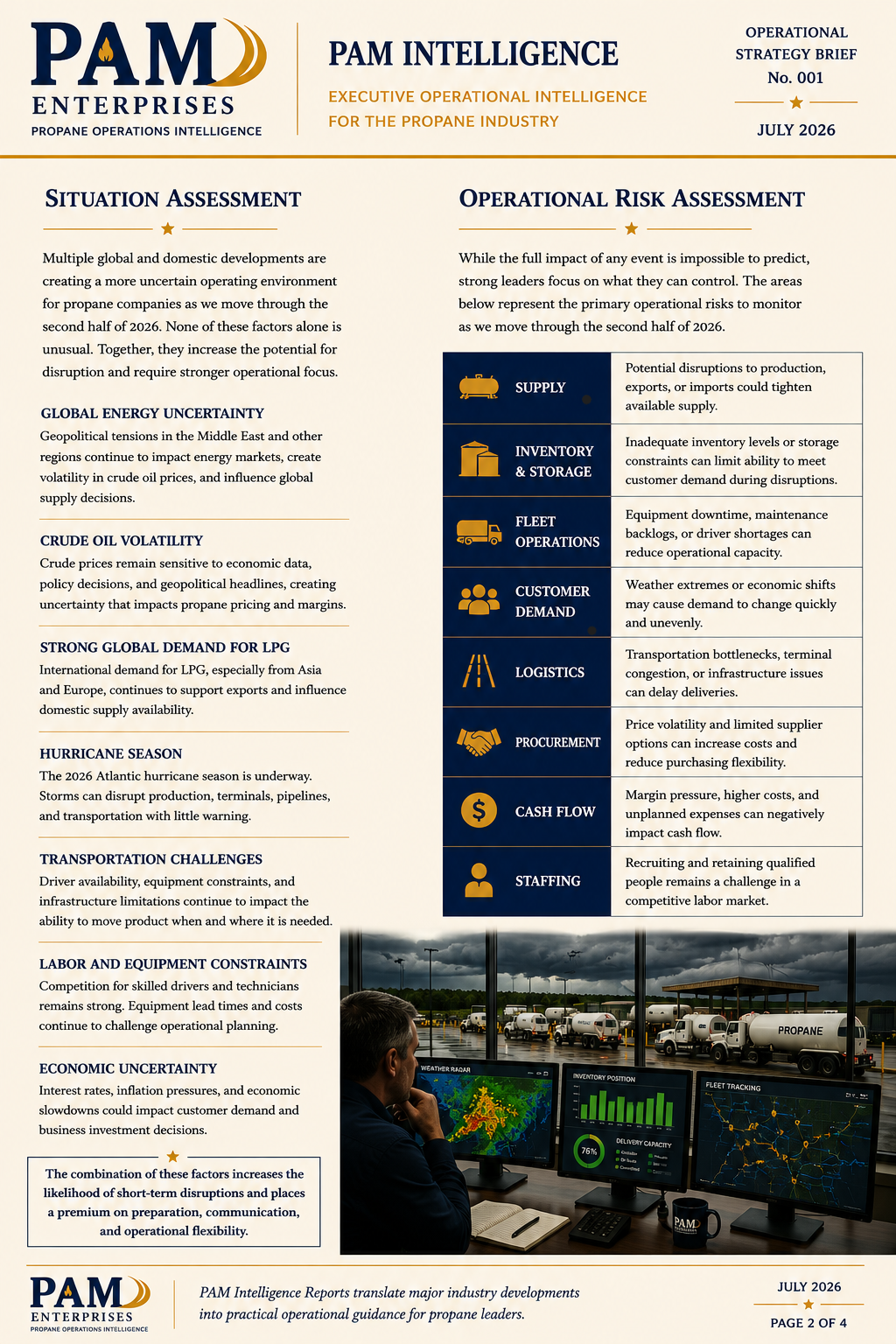
Multiple global and domestic developments are creating a more uncertain operating environment for propane companies as we move through the second half of 2026. None of these factors alone is unusual. Together, they increase the potential for disruption and require stronger operational focus.
Global Energy Uncertainty
Geopolitical tensions in the Middle East and other regions continue to impact energy markets, create volatility in crude oil prices, and influence global supply decisions.
Crude Oil Volatility
Crude prices remain sensitive to economic data, policy decisions, and geopolitical headlines, creating uncertainty that impacts propane pricing and margins.
Strong Global Demand for LPG
International demand for LPG, especially from Asia and Europe, continues to support exports and influence domestic supply availability.
Hurricane Season
The 2026 Atlantic hurricane season is underway. Storms can disrupt production, terminals, pipelines, and transportation with little warning.
Transportation Challenges
Driver availability, equipment constraints, and infrastructure limitations continue to impact the ability to move product when and where it is needed.
Labor and Equipment Constraints
Competition for skilled drivers and technicians remains strong. Equipment lead times and costs continue to challenge operational planning.
Economic Uncertainty
Interest rates, inflation pressures, and economic slowdowns could impact customer demand and business investment decisions.
The combination of these factors increases the likelihood of short-term disruptions and places a premium on preparation, communication, and operational flexibility.
Operational Risk Assessment
While the full impact of any event is impossible to predict, strong leaders focus on what they can control. The areas below represent the primary operational risks to monitor as we move through the second half of 2026.
Supply
Potential disruptions to production, exports, or imports could tighten available supply.
Inventory & Storage
Inadequate inventory levels or storage constraints can limit ability to meet customer demand during disruptions.
Fleet Operations
Equipment downtime, maintenance backlogs, or driver shortages can reduce operational capacity.
Customer Demand
Weather extremes or economic shifts may cause demand to change quickly and unevenly.
Logistics
Transportation bottlenecks, terminal congestion, or infrastructure issues can delay deliveries.
Procurement
Price volatility and limited supplier options can increase costs and reduce purchasing flexibility.
Cash Flow
Margin pressure, higher costs, and unplanned expenses can negatively impact cash flow.
Staffing
Recruiting and retaining qualified people remains a challenge in a competitive labor market.
PAM Intelligence Reports translate major industry developments into practical operational guidance for propane leaders.
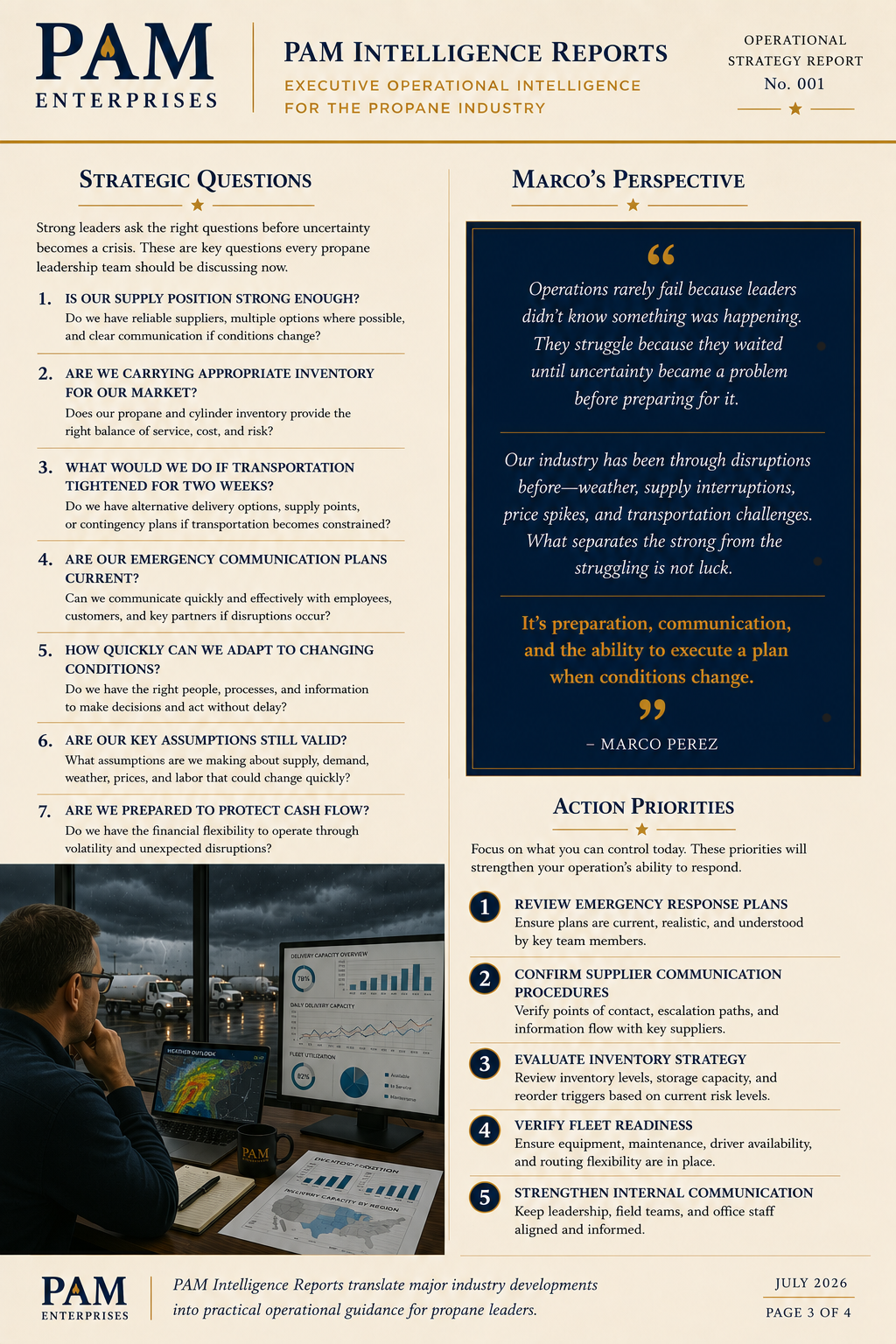
Strategic Questions
Strong leaders ask the right questions before uncertainty becomes a crisis. These are key questions every propane leadership team should be discussing now.
- Is our supply position strong enough?
Do we have reliable suppliers, multiple options where possible, and clear communication if conditions change?
- Are we carrying appropriate inventory for our market?
Does our propane and cylinder inventory provide the right balance of service, cost, and risk?
- What would we do if transportation tightened for two weeks?
Do we have alternative delivery options, supply points, or contingency plans if transportation becomes constrained?
- Are our emergency communication plans current?
Can we communicate quickly and effectively with employees, customers, and key partners if disruptions occur?
- How quickly can we adapt to changing conditions?
Do we have the right people, processes, and information to make decisions and act without delay?
- Are our key assumptions still valid?
What assumptions are we making about supply, demand, weather, prices, and labor that could change quickly?
- Are we prepared to protect cash flow?
Do we have the financial flexibility to operate through volatility and unexpected disruptions?
Marco’s Perspective“Operations rarely fail because leaders didn’t know something was happening.
They struggle because they waited until uncertainty became a problem before preparing for it.
Our industry has been through disruptions before—weather, supply interruptions, price spikes, and transportation challenges.
What separates the strong from the struggling is not luck.
It’s preparation, communication, and the ability to execute a plan when conditions change.”
— MARCO PEREZ
Action Priorities
Focus on what you can control today. These priorities will strengthen your operation’s ability to respond.
- Review Emergency Response Plans. Ensure plans are current, realistic, and understood by key team members.
- Confirm Supplier Communication Procedures. Verify points of contact, escalation paths, and information flow with key suppliers.
- Evaluate Inventory Strategy. Review inventory levels, storage capacity, and reorder triggers based on current risk levels.
- Verify Fleet Readiness. Ensure equipment, maintenance, driver availability, and routing flexibility are in place.
- Strengthen Internal Communication. Keep leadership, field teams, and office staff aligned and informed.
PAM Intelligence Reports translate major industry developments into practical operational guidance for propane leaders.
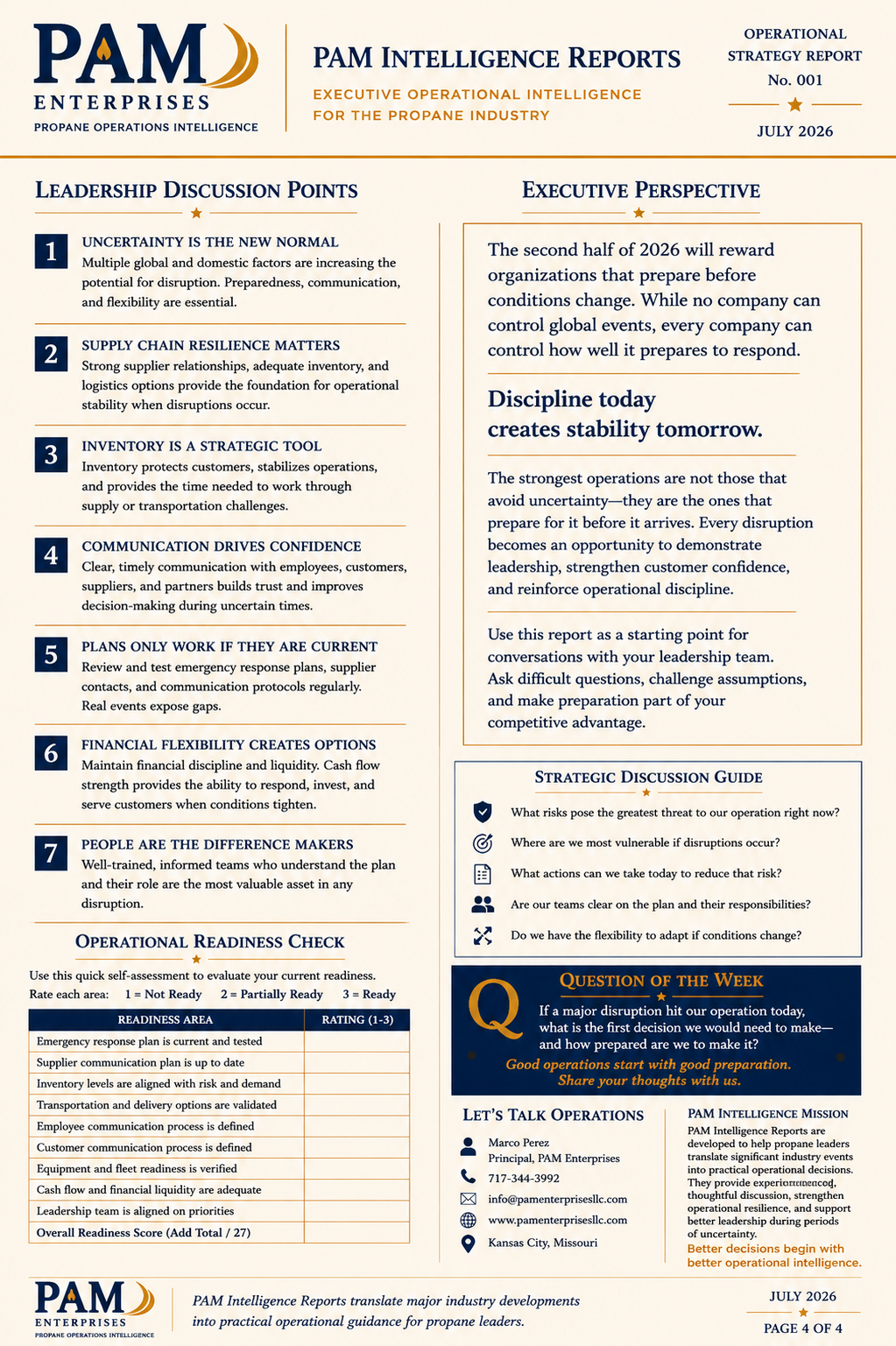
Leadership Discussion Points
- Uncertainty Is the New Normal. Multiple global and domestic factors are increasing the potential for disruption. Preparedness, communication, and flexibility are essential.
- Supply Chain Resilience Matters. Strong supplier relationships, adequate inventory, and logistics options provide the foundation for operational stability when disruptions occur.
- Inventory Is a Strategic Tool. Inventory protects customers, stabilizes operations, and provides the time needed to work through supply or transportation challenges.
- Communication Drives Confidence. Clear, timely communication with employees, customers, suppliers, and partners builds trust and improves decision-making during uncertain times.
- Plans Only Work If They Are Current. Review and test emergency response plans, supplier contacts, and communication protocols regularly. Real events expose gaps.
- Financial Flexibility Creates Options. Maintain financial discipline and liquidity. Cash flow strength provides the ability to respond, invest, and serve customers when conditions tighten.
- People Are the Difference Makers. Well-trained, informed teams who understand the plan and their role are the most valuable asset in any disruption.
Operational Readiness Check
Use this quick self-assessment to evaluate your current readiness.
Rate each area:
- 1 = Not Ready
- 2 = Partially Ready
- 3 = Ready
Readiness Area
- Emergency response plan is current and tested.
- Supplier communication plan is up to date.
- Inventory levels are aligned with risk and demand.
- Transportation and delivery options are validated.
- Employee communication process is defined.
- Customer communication process is defined.
- Equipment and fleet readiness is verified.
- Cash flow and financial liquidity are adequate.
- Leadership team is aligned on priorities.
- Overall Readiness Score (Add Total / 27)
Executive Perspective
The second half of 2026 will reward organizations that prepare before conditions change.
While no company can control global events, every company can control how well it prepares to respond.
Discipline today creates stability tomorrow.
The strongest operations are not those that avoid uncertainty—they are the ones that prepare for it before it arrives.
Every disruption becomes an opportunity to demonstrate leadership, strengthen customer confidence, and reinforce operational discipline.
Use this report as a starting point for conversations with your leadership team.
Ask difficult questions, challenge assumptions, and make preparation part of your competitive advantage.
Strategic Discussion Guide
- What risks pose the greatest threat to our operation right now?
- Where are we most vulnerable if disruptions occur?
- What actions can we take today to reduce that risk?
- Are our teams clear on the plan and their responsibilities?
- Do we have the flexibility to adapt if conditions change?
Historical Let’s Talk Operations Panel
Marco Perez
Principal, PAM Enterprises
717-344-3992
info@pamenterprisesllc.com
www.pamenterprisesllc.com
Kansas City, Missouri
PAM Intelligence Mission
PAM Intelligence Reports are developed to help propane leaders translate significant industry events into practical operational decisions.
They provide experience, thoughtful discussion, strengthen operational resilience, and support better leadership during periods of uncertainty.
Better decisions begin with better operational intelligence.
PAM Intelligence Reports translate major industry developments into practical operational guidance for propane leaders.