Web Edition
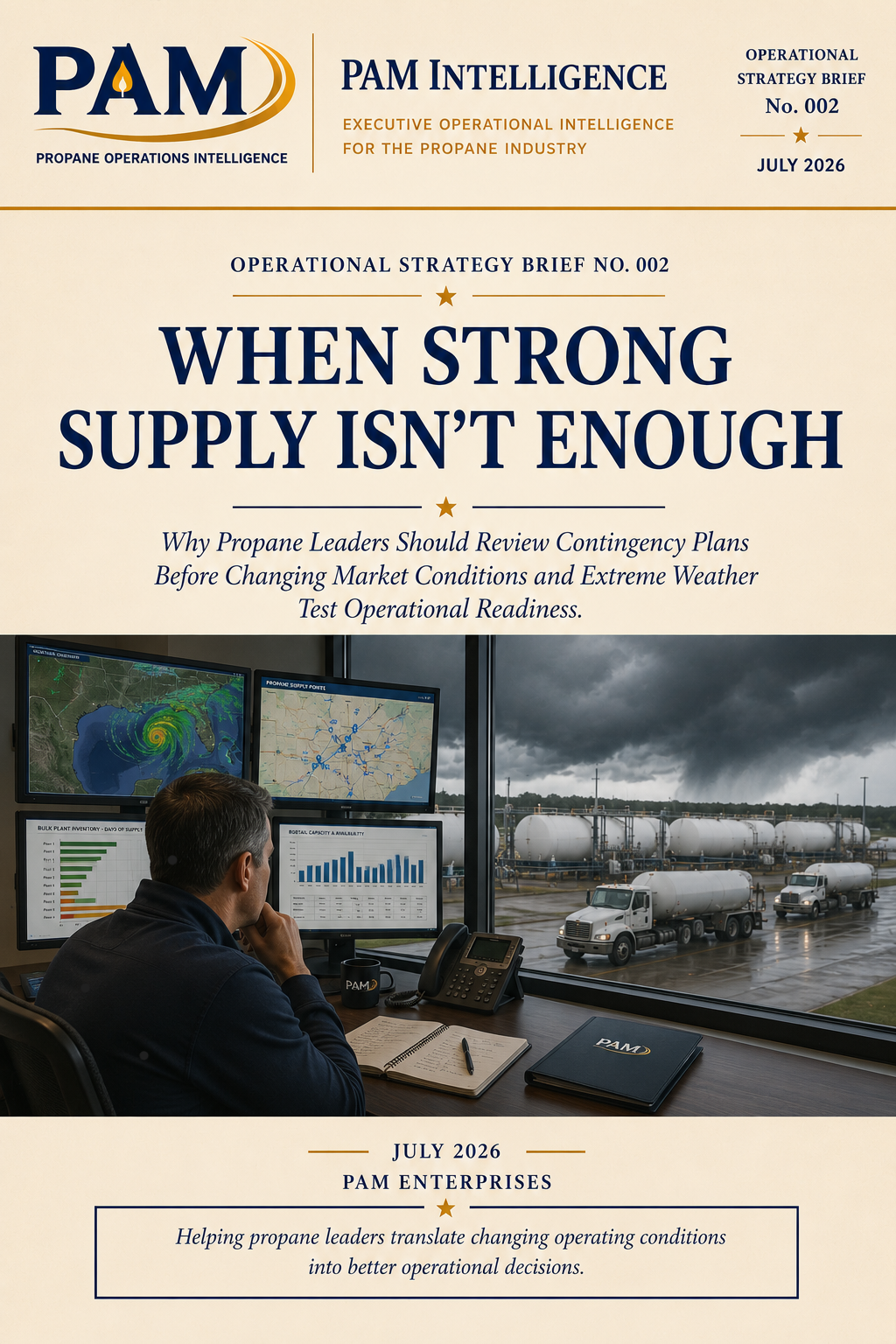
Helping propane leaders translate changing operating conditions into better operational decisions.
View Designed Edition4 original publication pagesExecutive Summary
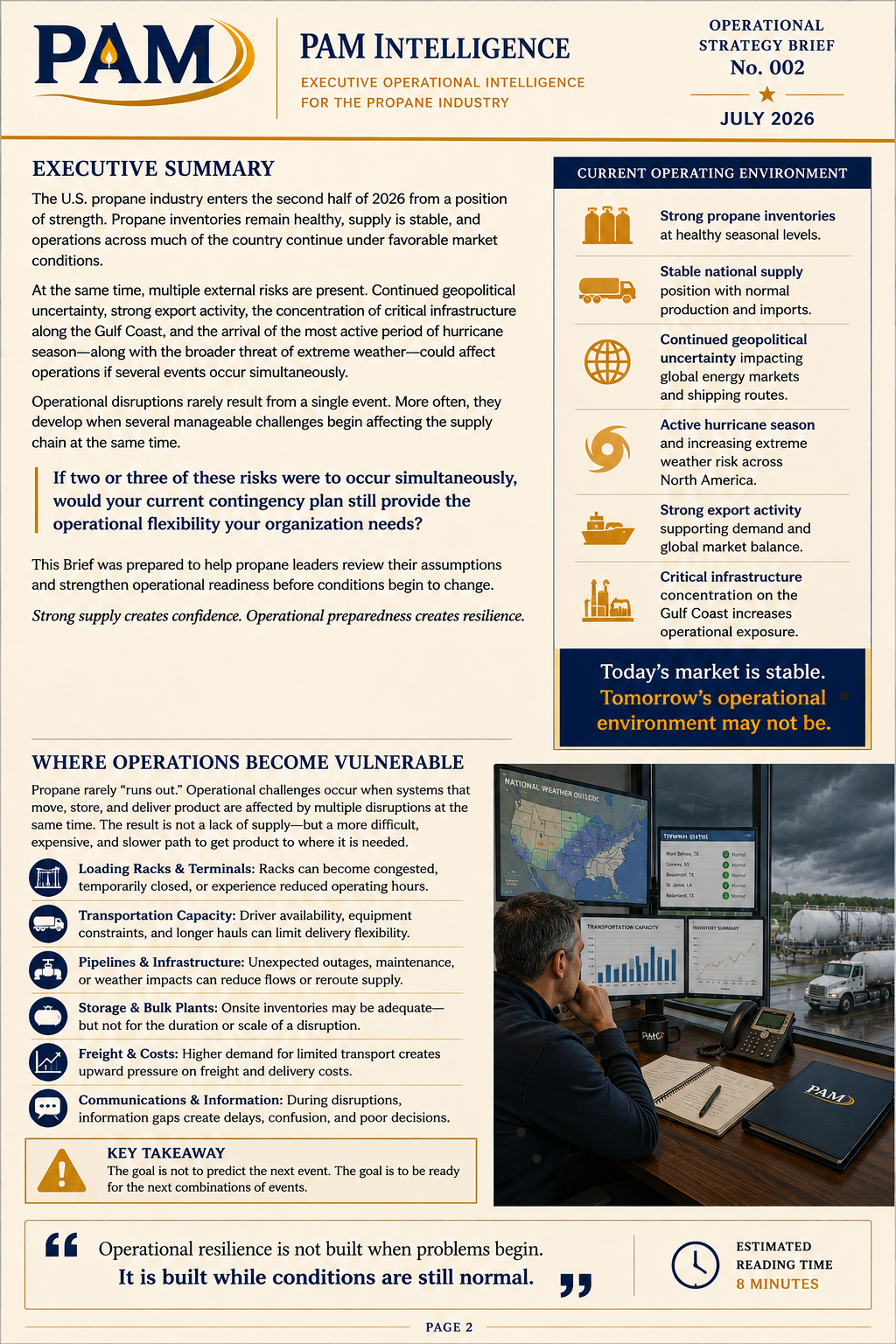
The U.S. propane industry enters the second half of 2026 from a position of strength. Propane inventories remain healthy, supply is stable, and operations across much of the country continue under favorable market conditions.
At the same time, multiple external risks are present. Continued geopolitical uncertainty, strong export activity, the concentration of critical infrastructure along the Gulf Coast, and the arrival of the most active period of hurricane season—along with the broader threat of extreme weather—could affect operations if several events occur simultaneously.
Operational disruptions rarely result from a single event. More often, they develop when several manageable challenges begin affecting the supply chain at the same time.
If two or three of these risks were to occur simultaneously, would your current contingency plan still provide the operational flexibility your organization needs?
This Brief was prepared to help propane leaders review their assumptions and strengthen operational readiness before conditions begin to change.
Strong supply creates confidence. Operational preparedness creates resilience.
Current Operating Environment
- Strong propane inventories at healthy seasonal levels.
- Stable national supply position with normal production and imports.
- Continued geopolitical uncertainty impacting global energy markets and shipping routes.
- Active hurricane season and increasing extreme weather risk across North America.
- Strong export activity supporting demand and global market balance.
- Critical infrastructure concentration on the Gulf Coast increases operational exposure.
Where Operations Become Vulnerable
Propane rarely “runs out.” Operational challenges occur when systems that move, store, and deliver product are affected by multiple disruptions at the same time. The result is not a lack of supply—but a more difficult, expensive, and slower path to get product to where it is needed.
Loading Racks & Terminals
Racks can become congested, temporarily closed, or experience reduced operating hours.
Transportation Capacity
Driver availability, equipment constraints, and longer hauls can limit delivery flexibility.
Pipelines & Infrastructure
Unexpected outages, maintenance, or weather impacts can reduce flows or reroute supply.
Storage & Bulk Plants
Onsite inventories may be adequate—but not for the duration or scale of a disruption.
Freight & Costs
Higher demand for limited transport creates upward pressure on freight and delivery costs.
Communications & Information
During disruptions, information gaps create delays, confusion, and poor decisions.
Operational resilience is not built when problems begin.
It is built while conditions are still normal.
Estimated reading time: 8 minutes
Executive Questions
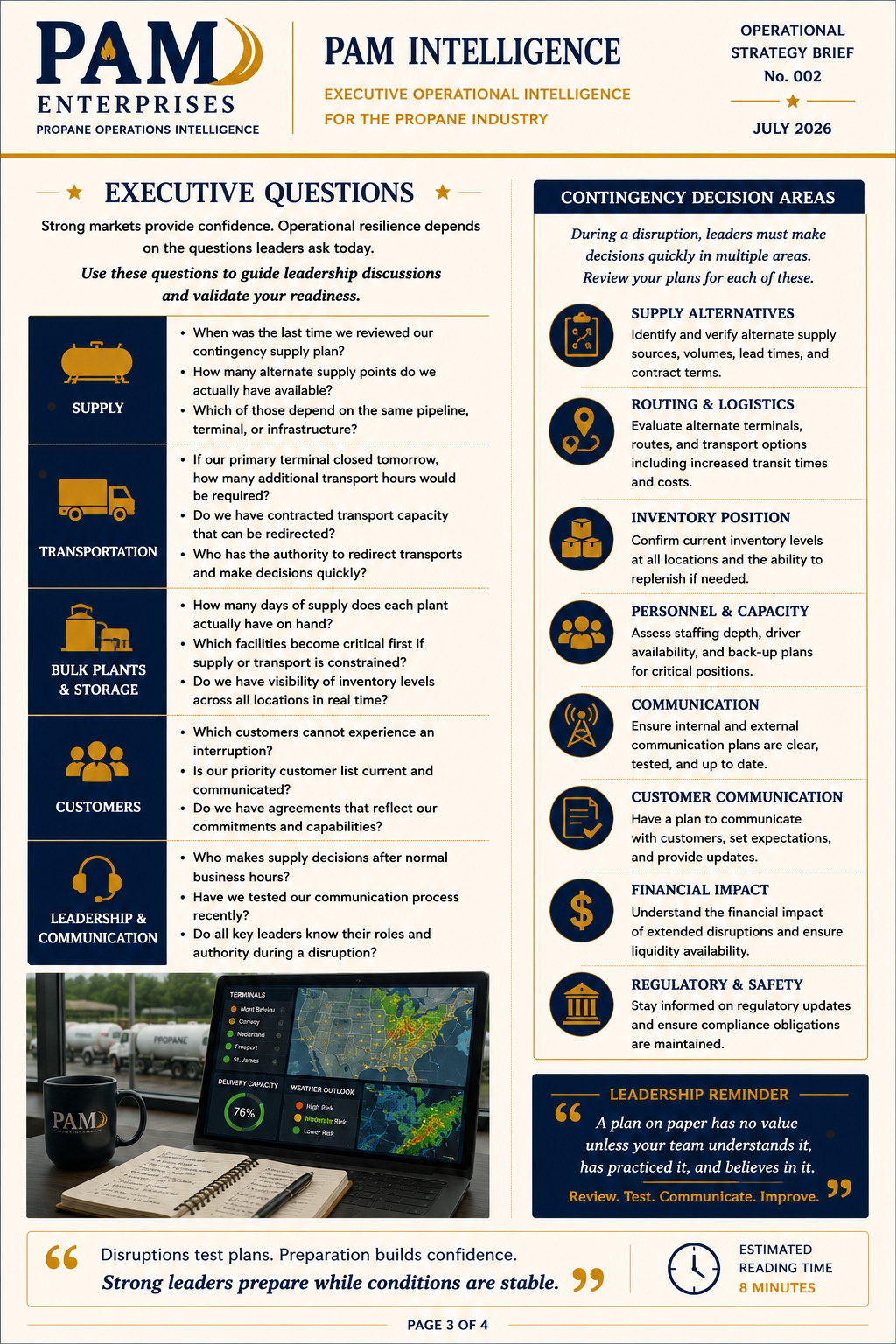
Strong markets provide confidence. Operational resilience depends on the questions leaders ask today.
Use these questions to guide leadership discussions and validate your readiness.
Supply
- When was the last time we reviewed our contingency supply plan?
- How many alternate supply points do we actually have available?
- Which of those depend on the same pipeline, terminal, or infrastructure?
Transportation
- If our primary terminal closed tomorrow, how many additional transport hours would be required?
- Do we have contracted transport capacity that can be redirected?
- Who has the authority to redirect transports and make decisions quickly?
Bulk Plants & Storage
- How many days of supply does each plant actually have on hand?
- Which facilities become critical first if supply or transport is constrained?
- Do we have visibility of inventory levels across all locations in real time?
Customers
- Which customers cannot experience an interruption?
- Is our priority customer list current and communicated?
- Do we have agreements that reflect our commitments and capabilities?
Leadership & Communication
- Who makes supply decisions after normal business hours?
- Have we tested our communication process recently?
- Do all key leaders know their roles and authority during a disruption?
Contingency Decision Areas
During a disruption, leaders must make decisions quickly in multiple areas.
Review your plans for each of these.
- Supply Alternatives
- Identify and verify alternate supply sources, volumes, lead times, and contract terms.
- Routing & Logistics
- Evaluate alternate terminals, routes, and transport options including increased transit times and costs.
- Inventory Position
- Confirm current inventory levels at all locations and the ability to replenish if needed.
- Personnel & Capacity
- Assess staffing depth, driver availability, and back-up plans for critical positions.
- Communication
- Ensure internal and external communication plans are clear, tested, and up to date.
- Customer Communication
- Have a plan to communicate with customers, set expectations, and provide updates.
- Financial Impact
- Understand the financial impact of extended disruptions and ensure liquidity availability.
- Regulatory & Safety
- Stay informed on regulatory updates and ensure compliance obligations are maintained.
Disruptions test plans. Preparation builds confidence.
Strong leaders prepare while conditions are stable.
Estimated reading time: 8 minutes
Leadership Readiness
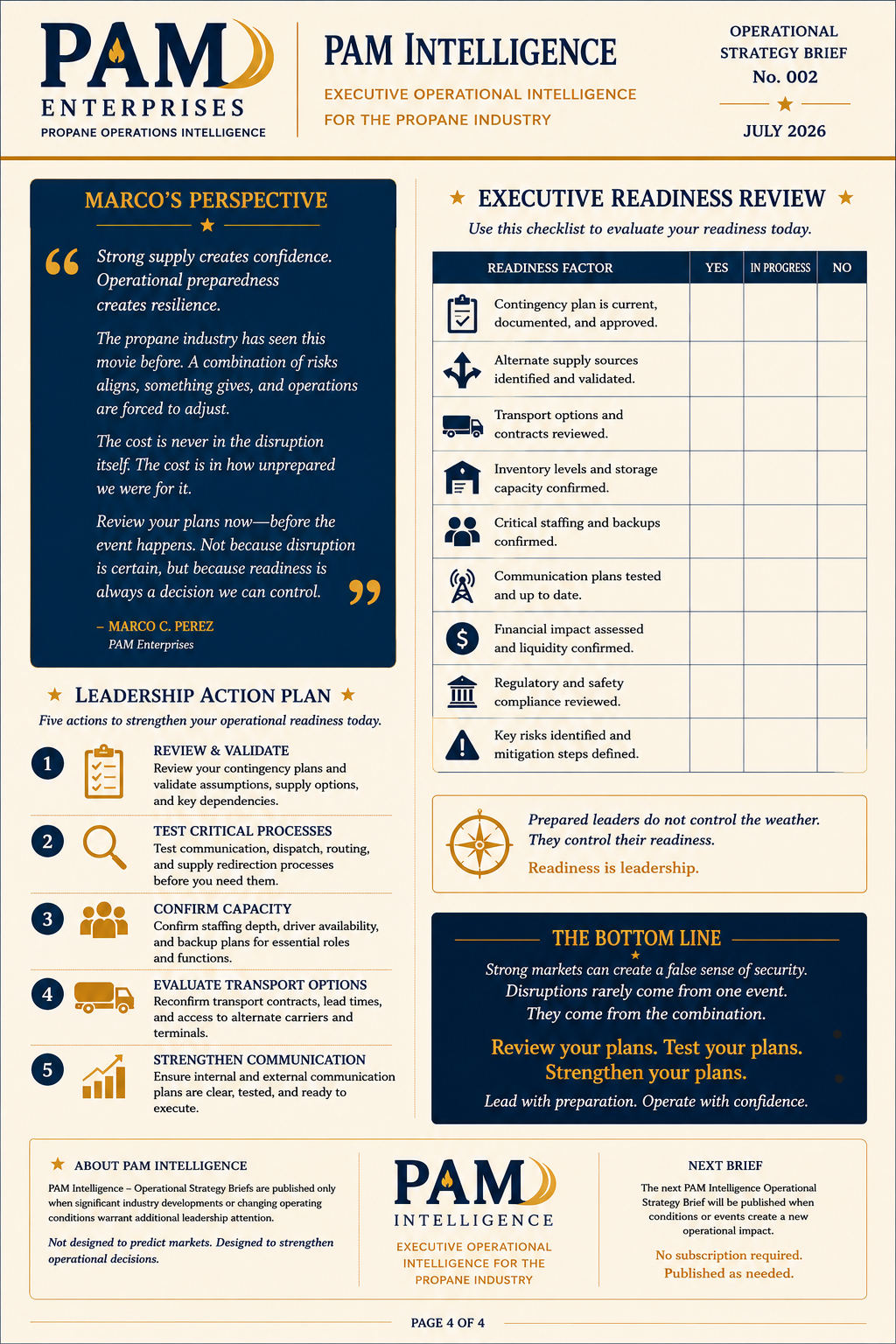
Marco’s Perspective“Strong supply creates confidence.
Operational preparedness creates resilience.The propane industry has seen this movie before. A combination of risks aligns, something gives, and operations are forced to adjust.
The cost is never in the disruption itself. The cost is in how unprepared we were for it.
Review your plans now—before the event happens. Not because disruption is certain, but because readiness is always a decision we can control.”
— MARCO C. PEREZ
PAM Enterprises
Leadership Action Plan
Five actions to strengthen your operational readiness today.
- Review & Validate. Review your contingency plans and validate assumptions, supply options, and key dependencies.
- Test Critical Processes. Test communication, dispatch, routing, and supply redirection processes before you need them.
- Confirm Capacity. Confirm staffing depth, driver availability, and backup plans for essential roles and functions.
- Evaluate Transport Options. Reconfirm transport contracts, lead times, and access to alternate carriers and terminals.
- Strengthen Communication. Ensure internal and external communication plans are clear, tested, and ready to execute.
Executive Readiness Review
Use this checklist to evaluate your readiness today.
Readiness Factor
- Contingency plan is current, documented, and approved.
- Alternate supply sources identified and validated.
- Transport options and contracts reviewed.
- Inventory levels and storage capacity confirmed.
- Critical staffing and backups confirmed.
- Communication plans tested and up to date.
- Financial impact assessed and liquidity confirmed.
- Regulatory and safety compliance reviewed.
- Key risks identified and mitigation steps defined.
Checklist response options: YES · IN PROGRESS · NO
About PAM Intelligence
PAM Intelligence — Operational Strategy Briefs are published only when significant industry developments or changing operating conditions warrant additional leadership attention.
Not designed to predict markets. Designed to strengthen operational decisions.
Next Brief
The next PAM Intelligence Operational Strategy Brief will be published when conditions or events create a new operational impact.
No subscription required.
Published as needed.