Web Edition
Organizations become what leaders consistently reward.
View Designed Edition4 original publication pagesThe Operation Becomes What Leadership Rewards
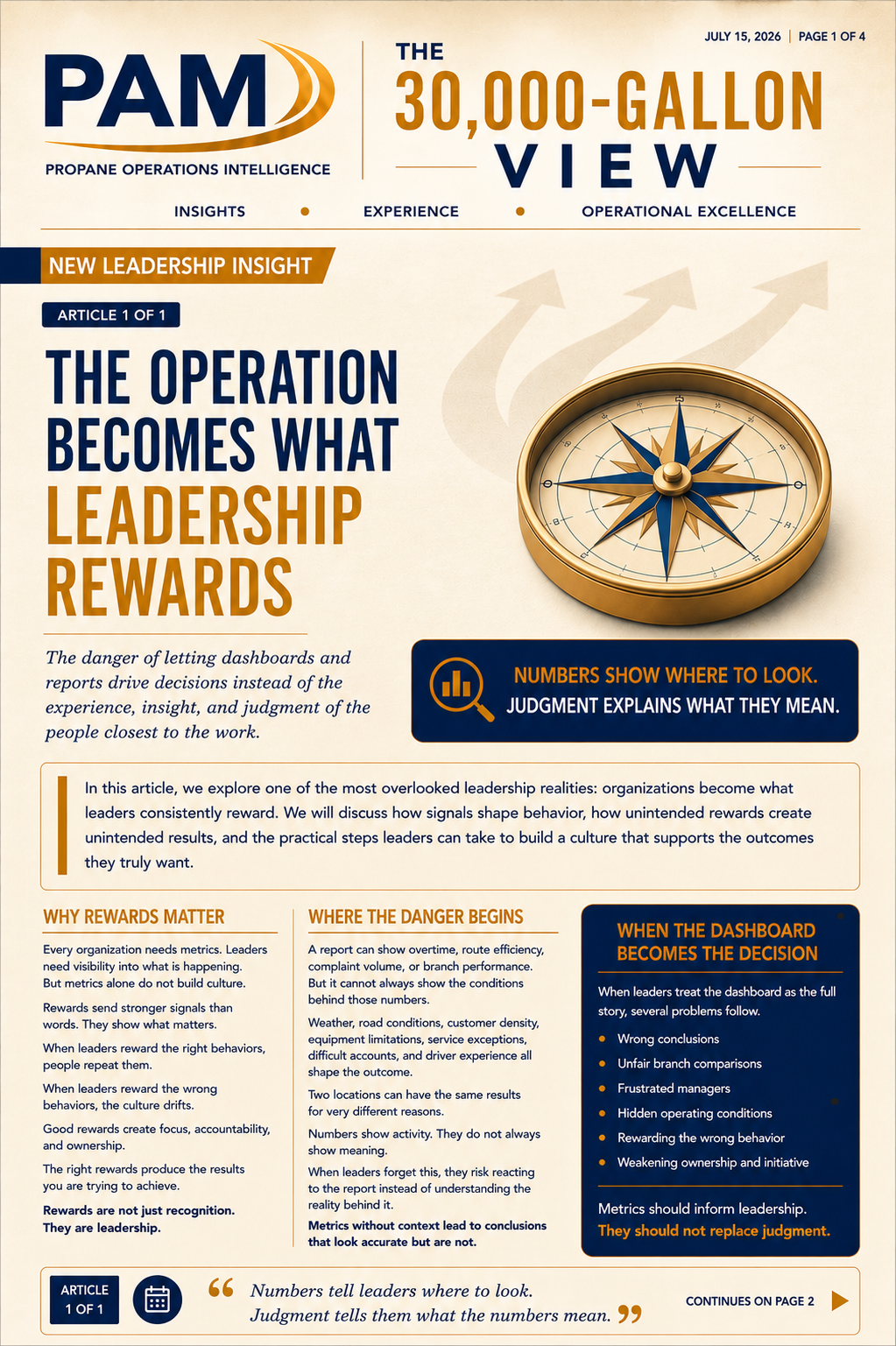
In this article, we explore one of the most overlooked leadership realities: organizations become what leaders consistently reward.
We will discuss how signals shape behavior, how unintended rewards create unintended results, and the practical steps leaders can take to build a culture that supports the outcomes they truly want.
Why Rewards Matter
Every organization needs metrics. Leaders need visibility into what is happening. But metrics alone do not build culture.
Rewards send stronger signals than words. They show what matters. When leaders reward the right behaviors, people repeat them. When leaders reward the wrong behaviors, the culture drifts.
Good rewards create focus, accountability, and ownership. The right rewards produce the results you are trying to achieve.
Rewards are not just recognition. They are leadership.
Where the Danger Begins
A report can show overtime, route efficiency, complaint volume, or branch performance. But it cannot always show the conditions behind those numbers.
Weather, road conditions, customer density, equipment limitations, service exceptions, difficult accounts, and driver experience all shape the outcome. Two locations can have the same results for very different reasons.
Numbers show activity. They do not always show meaning.
When leaders forget this, they risk reacting to the report instead of understanding the reality behind it. Metrics without context lead to conclusions that look accurate but are not.
When the Dashboard Becomes the Decision
When leaders treat the dashboard as the full story, several problems follow:
- Wrong conclusions
- Unfair branch comparisons
- Frustrated managers
- Hidden operating conditions
- Rewarding the wrong behavior
- Weakening ownership and initiative
Metrics should inform leadership. They should not replace judgment.
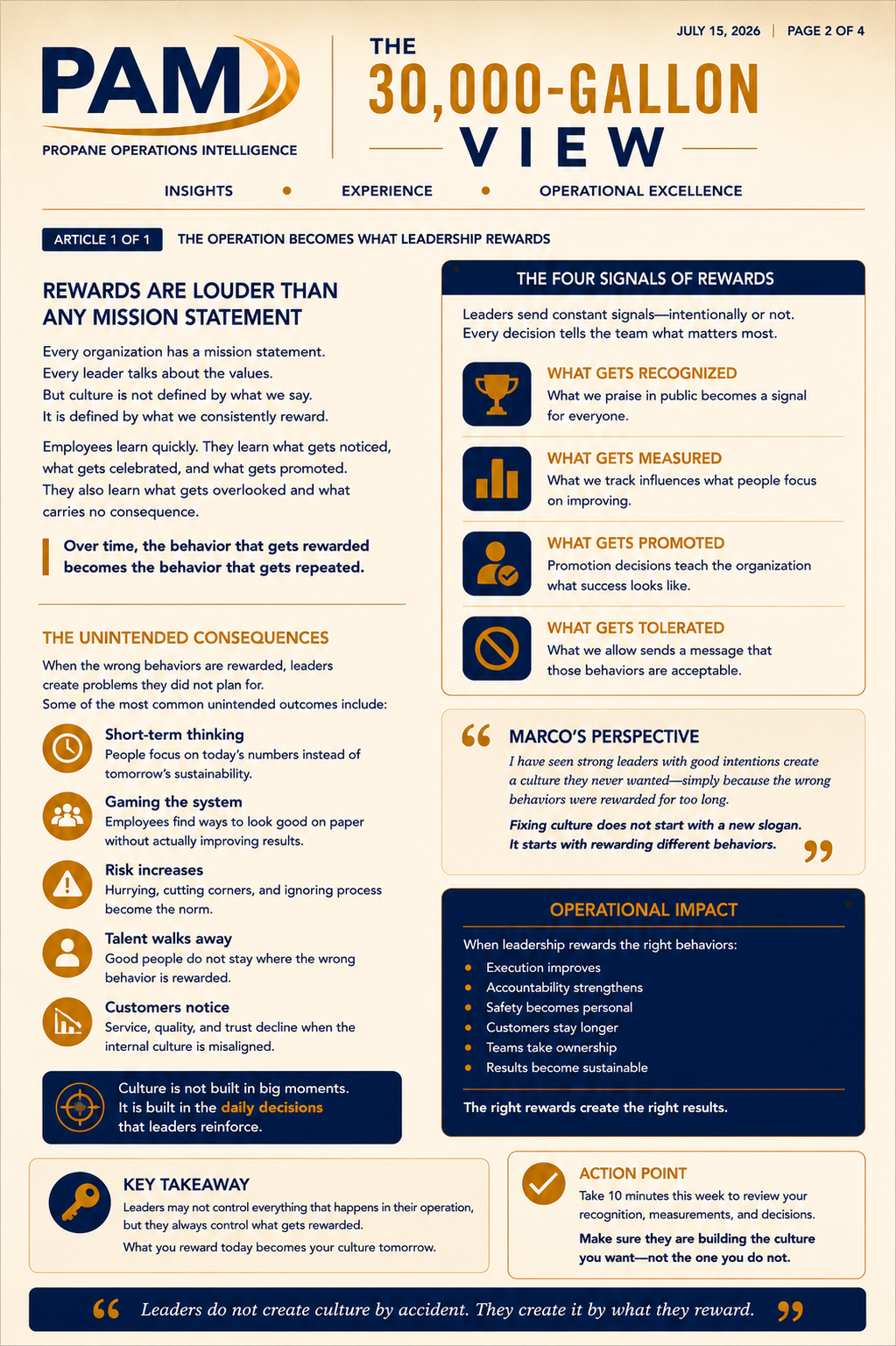
Rewards Are Louder Than Any Mission Statement
Every organization has a mission statement. Every leader talks about the values. But culture is not defined by what we say. It is defined by what we consistently reward.
Employees learn quickly. They learn what gets noticed, what gets celebrated, and what gets promoted. They also learn what gets overlooked and what carries no consequence.
Over time, the behavior that gets rewarded becomes the behavior that gets repeated.
The Unintended Consequences
When the wrong behaviors are rewarded, leaders create problems they did not plan for. Some of the most common unintended outcomes include:
- Short-term thinking. People focus on today’s numbers instead of tomorrow’s sustainability.
- Gaming the system. Employees find ways to look good on paper without actually improving results.
- Risk increases. Hurrying, cutting corners, and ignoring process become the norm.
- Talent walks away. Good people do not stay where the wrong behavior is rewarded.
- Customers notice. Service, quality, and trust decline when the internal culture is misaligned.
Culture is not built in big moments. It is built in the daily decisions that leaders reinforce.
The Four Signals of Rewards
- What gets recognized. What we praise in public becomes a signal for everyone.
- What gets measured. What we track influences what people focus on improving.
- What gets promoted. Promotion decisions teach the organization what success looks like.
- What gets tolerated. What we allow sends a message that those behaviors are acceptable.
Operational Impact
When leadership rewards the right behaviors:
- Execution improves.
- Accountability strengthens.
- Safety becomes personal.
- Customers stay longer.
- Teams take ownership.
- Results become sustainable.
Leaders may not control everything that happens in their operation, but they always control what gets rewarded.
What you reward today becomes your culture tomorrow.
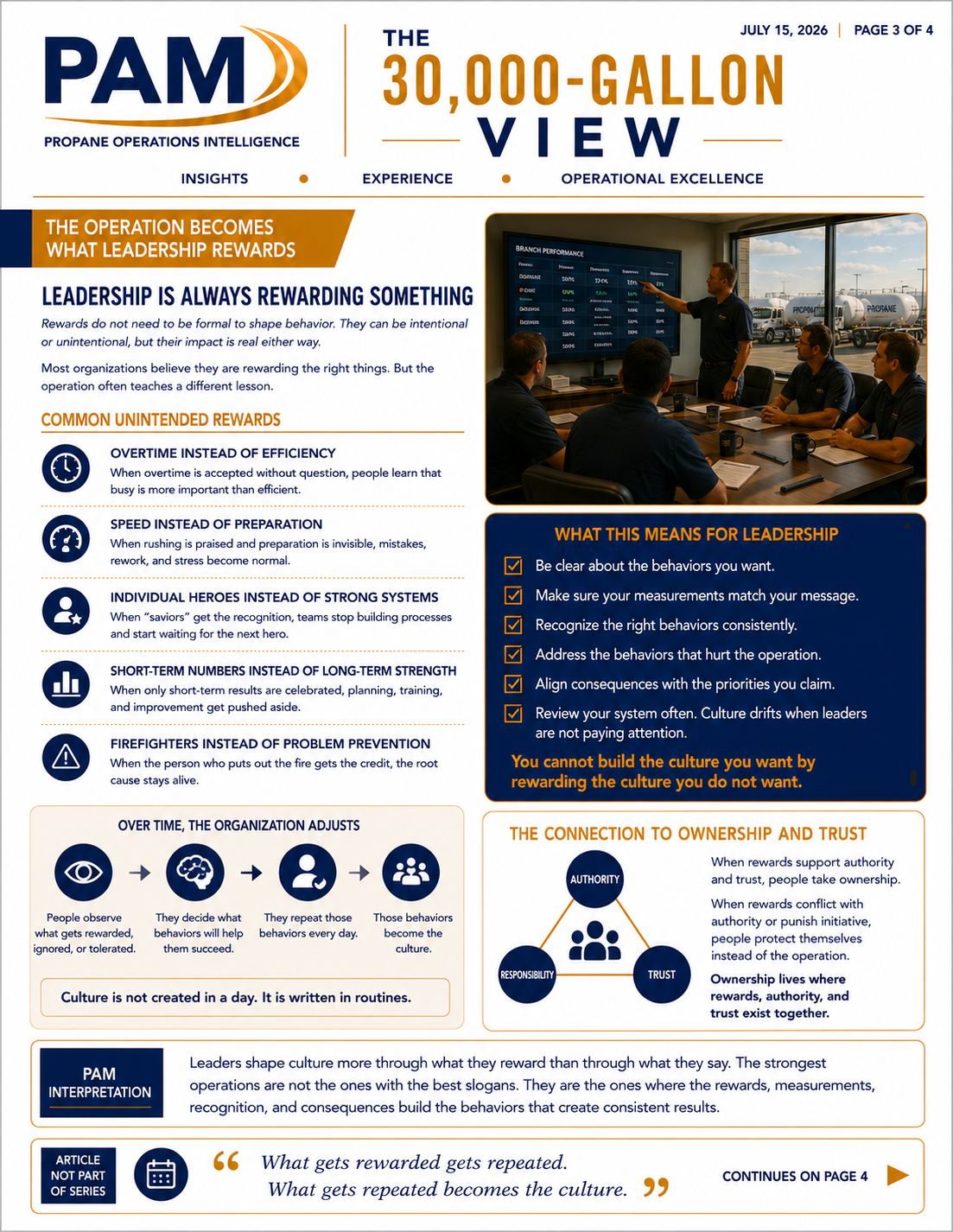
Leadership Is Always Rewarding Something
Rewards do not need to be formal to shape behavior. They can be intentional or unintentional, but their impact is real either way.
Most organizations believe they are rewarding the right things. But the operation often teaches a different lesson.
Common Unintended Rewards
- Overtime instead of efficiency. When overtime is accepted without question, people learn that busy is more important than efficient.
- Speed instead of preparation. When rushing is praised and preparation is invisible, mistakes, rework, and stress become normal.
- Individual heroes instead of strong systems. When “saviors” get the recognition, teams stop building processes and start waiting for the next hero.
- Short-term numbers instead of long-term strength. When only short-term results are celebrated, planning, training, and improvement get pushed aside.
- Firefighters instead of problem prevention. When the person who puts out the fire gets the credit, the root cause stays alive.
What This Means for Leadership
- Be clear about the behaviors you want.
- Make sure your measurements match your message.
- Recognize the right behaviors consistently.
- Address the behaviors that hurt the operation.
- Align consequences with the priorities you claim.
- Review your system often. Culture drifts when leaders are not paying attention.
You cannot build the culture you want by rewarding the culture you do not want.
The Connection to Ownership and Trust
People observe what gets rewarded, ignored, or tolerated. They decide what behaviors will help them succeed. They repeat those behaviors every day. Those behaviors become the culture.
When rewards support authority and trust, people take ownership. When rewards conflict with authority or punish initiative, people protect themselves instead of the operation.
Ownership lives where rewards, authority, and trust exist together.
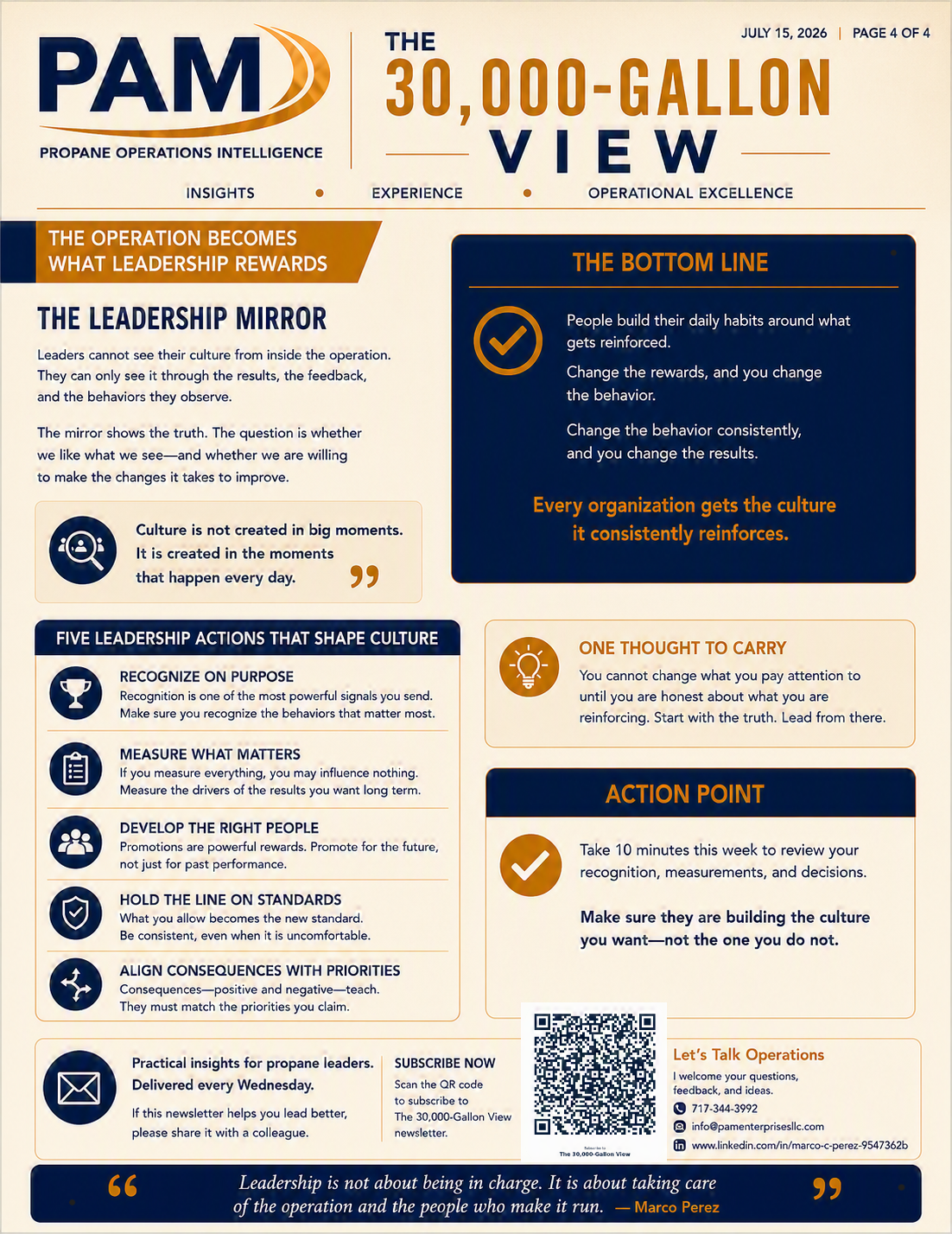
The Leadership Mirror
Leaders cannot see their culture from inside the operation. They can only see it through the results, the feedback, and the behaviors they observe.
The mirror shows the truth. The question is whether we like what we see—and whether we are willing to make the changes it takes to improve.
Culture is not created in big moments. It is created in the moments that happen every day.
Five Leadership Actions That Shape Culture
- Recognize on purpose. Recognition is one of the most powerful signals you send. Make sure you recognize the behaviors that matter most.
- Measure what matters. If you measure everything, you may influence nothing. Measure the drivers of the results you want long term.
- Develop the right people. Promotions are powerful rewards. Promote for the future, not just for past performance.
- Hold the line on standards. What you allow becomes the new standard. Be consistent, even when it is uncomfortable.
- Align consequences with priorities. Consequences—positive and negative—teach. They must match the priorities you claim.
Action Point
Take 10 minutes this week to review your recognition, measurements, and decisions. Make sure they are building the culture you want—not the one you do not.
Leadership is not about being in charge. It is about taking care of the operation and the people who make it run.
— Marco Perez