Web Edition
Decisions made prior to the winter season will determine what your winter will be like.
View Designed Edition4 original publication pagesRead the Signals Before Winter
Every operation gives warning signs long before problems become crises. Maybe it’s increasing overtime, more service calls, delayed repairs, frustrated drivers, slipping route efficiency, or PMs falling behind.
None of these alone create a crisis today. But together, they tell a story about what’s coming. The operation is speaking. The question is whether leadership is listening.
Your operation warns you long before winter exposes the problems. Strong leaders read the signs and take action while they still have time.
What You’ll Find in This Issue
- The early warning signs your operation is already showing
- Where problems start before they become crises
- Why leaders miss the signals
- What strong leaders do now to prepare for winter
- A practical action plan to stay ahead of the season
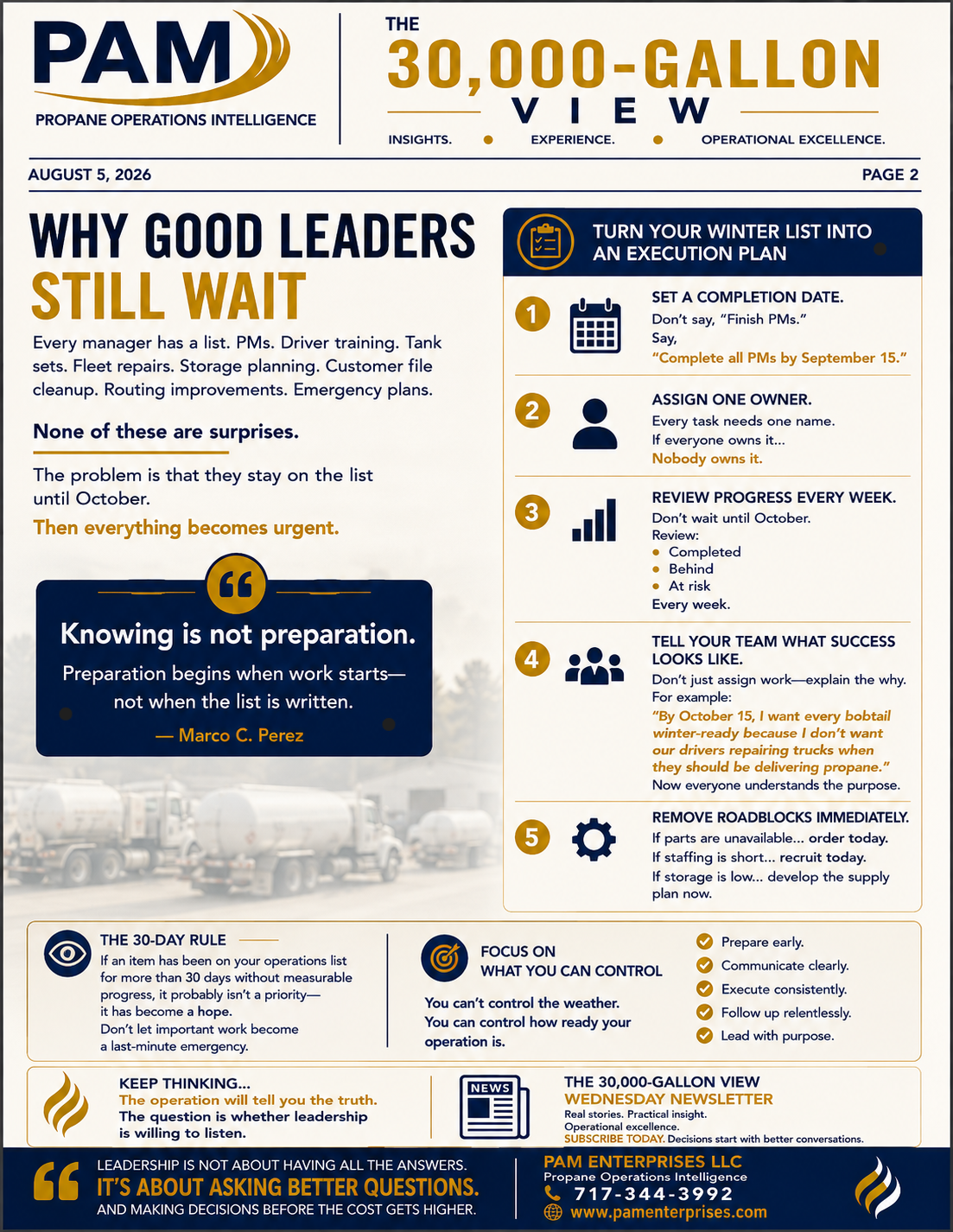
Why Good Leaders Still Wait
Every manager has a list: PMs, driver training, tank sets, fleet repairs, storage planning, customer file cleanup, routing improvements, and emergency plans. None of these are surprises.
The problem is that they stay on the list until October. Then everything becomes urgent.
Knowing is not preparation. Preparation begins when work starts—not when the list is written. — Marco C. Perez
Turn Your Winter List Into an Execution Plan
- Set a completion date. Don’t say “Finish PMs.” Say “Complete all PMs by September 15.”
- Assign one owner. Every task needs one name. If everyone owns it, nobody owns it.
- Review progress every week. Review what is completed, behind, and at risk.
- Tell your team what success looks like. Don’t just assign work—explain the why and the purpose.
- Remove roadblocks immediately. If parts are unavailable, order today. If staffing is short, recruit today. If storage is low, develop the supply plan now.
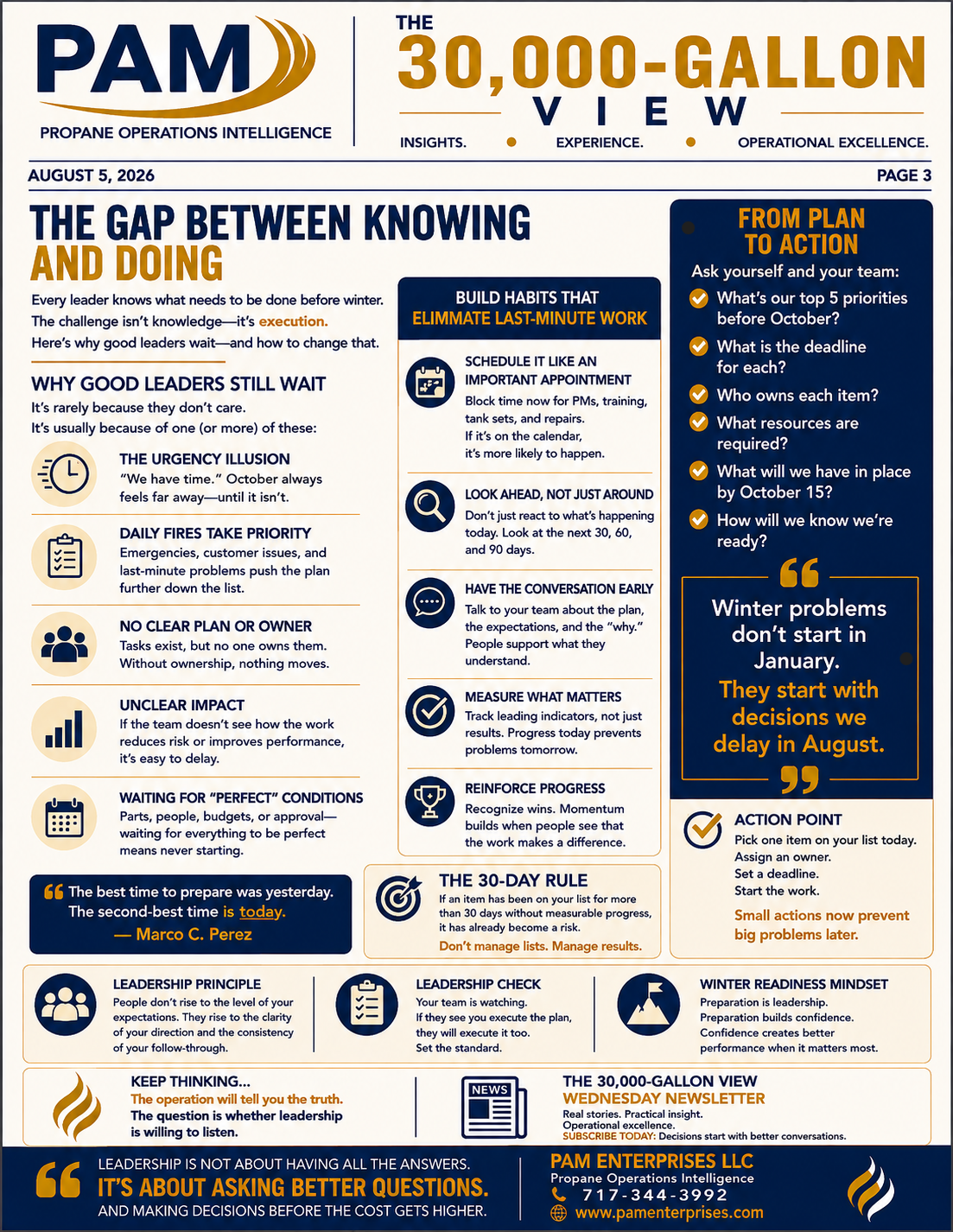
The Gap Between Knowing and Doing
Every leader knows what needs to be done before winter. The challenge isn’t knowledge—it’s execution.
Why Good Leaders Still Wait
- The urgency illusion: “We have time.” October always feels far away—until it isn’t.
- Daily fires take priority: emergencies, customer issues, and last-minute problems push the plan farther down the list.
- No clear plan or owner: tasks exist, but no one owns them. Without ownership, nothing moves.
- Unclear impact: if the team doesn’t see how the work reduces risk or improves performance, it’s easy to delay.
- Waiting for “perfect” conditions: parts, people, budgets, or approval—waiting for everything to be perfect means never starting.
The best time to prepare was yesterday. The second-best time is today. — Marco C. Perez
Build Habits That Eliminate Last-Minute Work
- Schedule it like an important appointment.
- Look ahead, not just around—review the next 30, 60, and 90 days.
- Have the conversation early and explain the “why.”
- Measure leading indicators, not just results.
- Reinforce progress so people see that the work makes a difference.
From Plan to Action
- What are our top five priorities before October?
- What is the deadline for each?
- Who owns each item?
- What resources are required?
- What will we have in place by October 15?
- How will we know we’re ready?
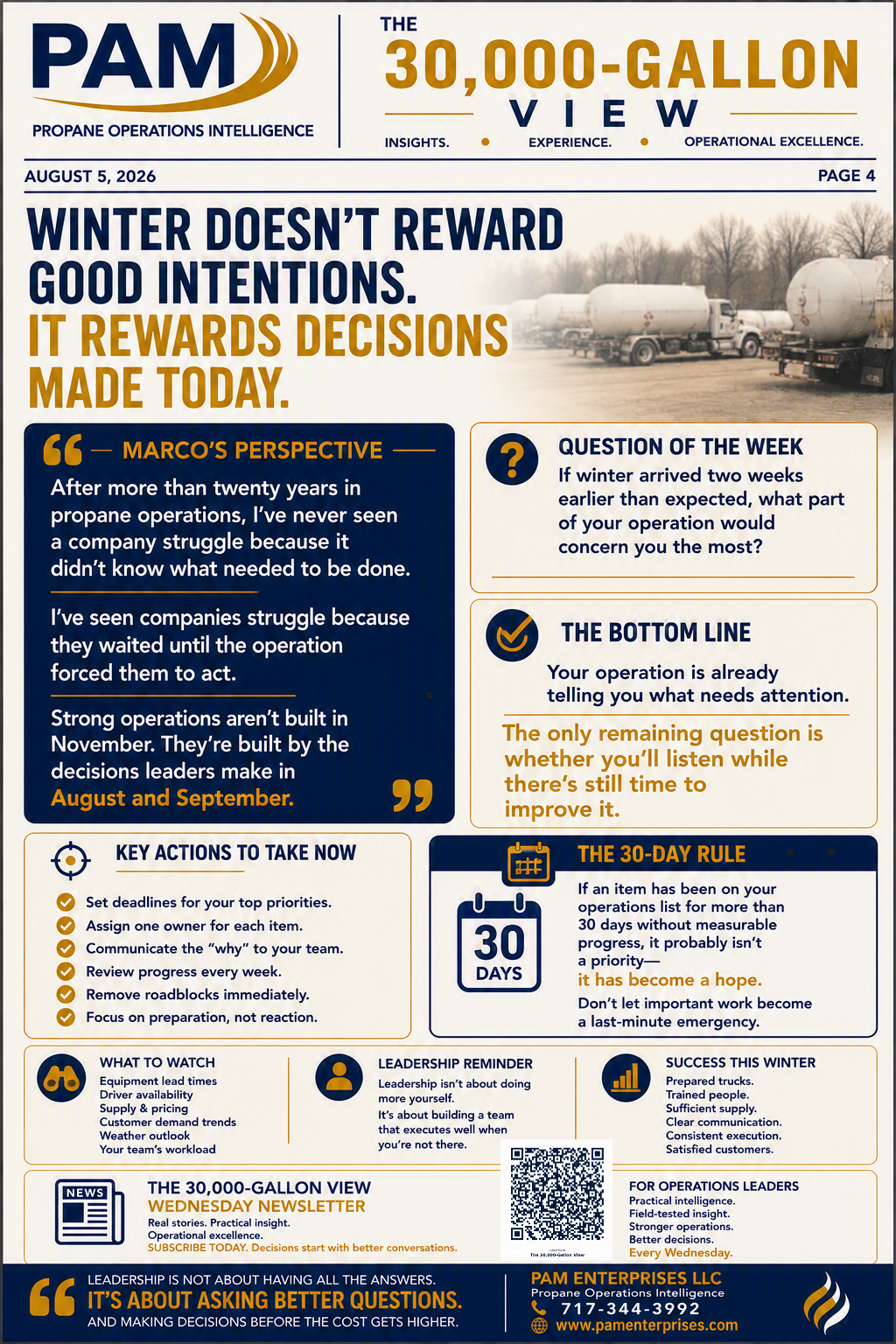
Winter Doesn’t Reward Good Intentions. It Rewards Decisions Made Today.
Key Actions to Take Now
- Set deadlines for your top priorities.
- Assign one owner for each item.
- Communicate the “why” to your team.
- Review progress every week.
- Remove roadblocks immediately.
- Focus on preparation, not reaction.
What to Watch
- Equipment lead times
- Driver availability
- Supply and pricing
- Customer demand trends
- Weather outlook
- Your team’s workload