Web Edition
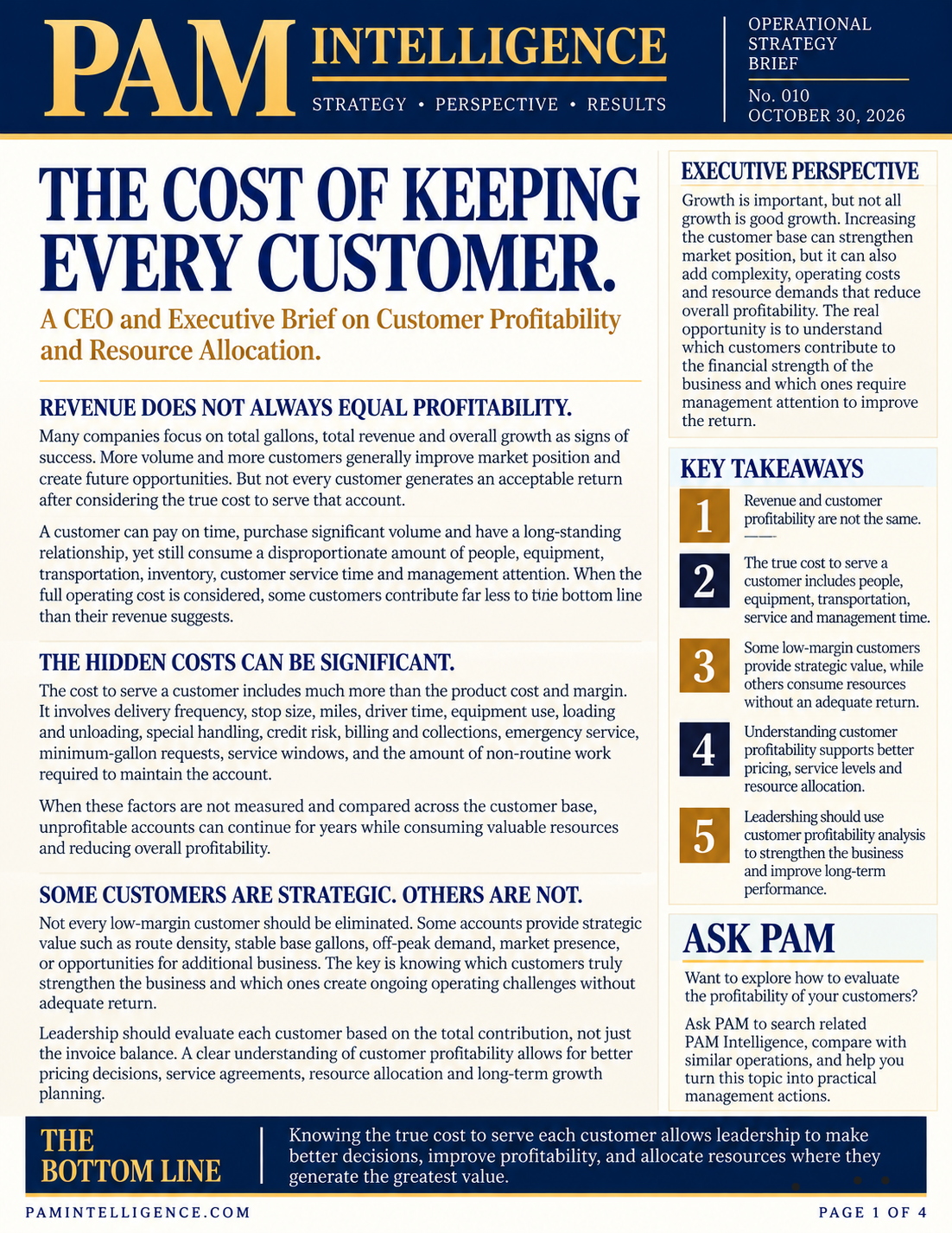
Knowing the true cost to serve each customer allows leadership to make better decisions, improve profitability, and allocate resources where they generate the greatest value.
View Designed Edition4 original publication pagesThe Cost of Keeping Every Customer
Revenue Does Not Always Equal Profitability
Many companies focus on total gallons, total revenue, and overall growth as signs of success. More volume and more customers can improve market position and create future opportunities. But not every customer generates an acceptable return after the true cost to serve that account is considered.
A customer can pay on time, purchase significant volume, and have a long-standing relationship, yet still consume a disproportionate amount of people, equipment, transportation, inventory, customer-service time, and management attention. When the full operating cost is considered, some customers contribute far less to the bottom line than their revenue suggests.
The Hidden Costs Can Be Significant
Cost to serve includes much more than product cost and margin. It includes delivery frequency, stop size, miles, driver time, equipment use, loading and unloading, special handling, credit risk, billing and collections, emergency service, minimum-gallon requests, service windows, and non-routine work required to maintain the account.
When these factors are not measured and compared across the customer base, unprofitable accounts can continue for years while consuming valuable resources and reducing overall profitability.
Some Customers Are Strategic. Others Are Not.
Not every low-margin customer should be eliminated. Some accounts provide strategic value through route density, stable base gallons, off-peak demand, market presence, or future business opportunities. Leadership should evaluate total contribution, not just invoice balance, and understand which customers strengthen the business and which create continuing operating challenges without adequate return.
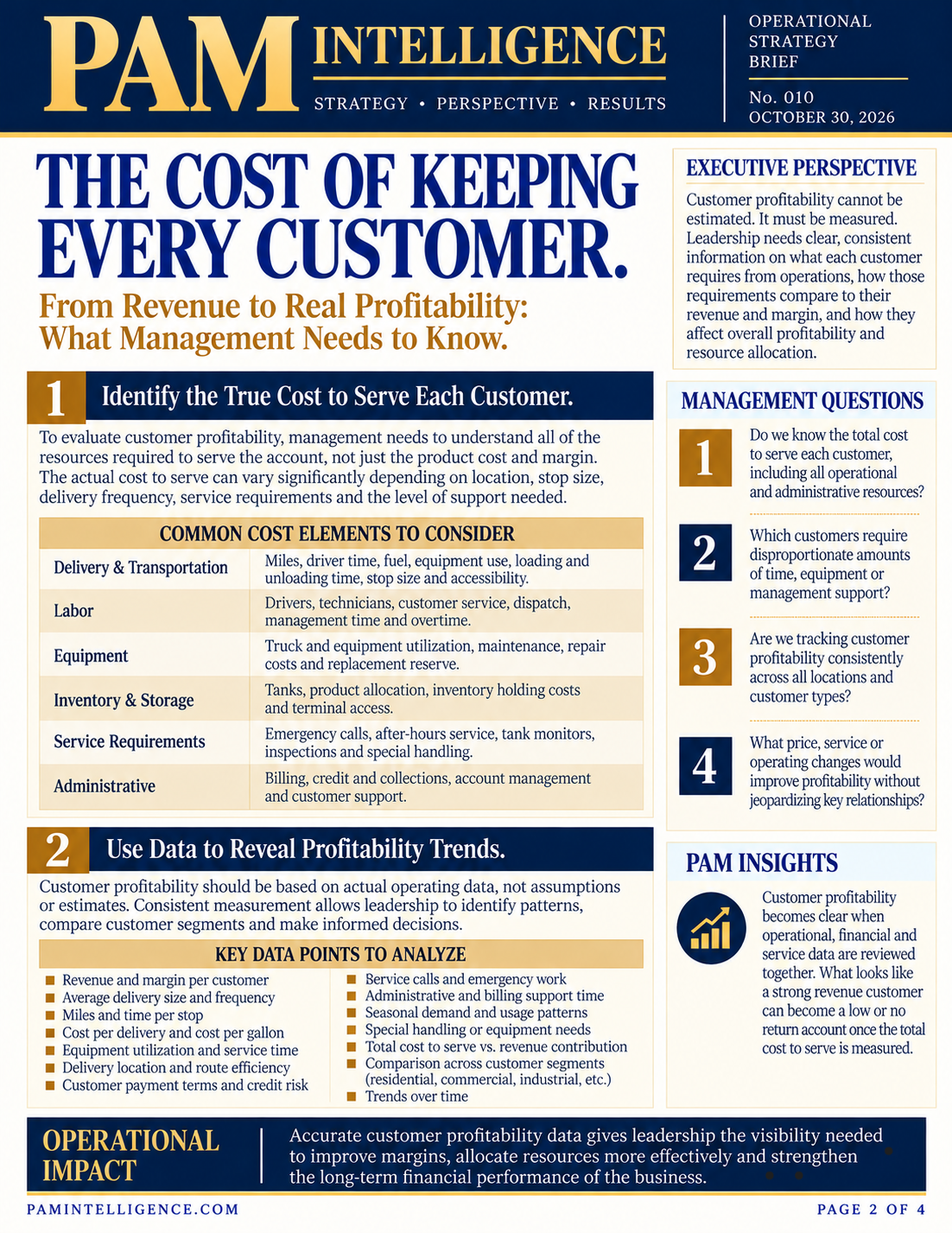
From Revenue to Real Profitability
1. Identify the True Cost to Serve Each Customer
Management needs to understand every resource required to serve the account, not just product cost and margin. Actual cost to serve can vary significantly based on location, stop size, delivery frequency, service requirements, and support level.
Common Cost Elements to Consider
- Delivery and transportation. Miles, driver time, fuel, equipment use, loading and unloading time, stop size, and accessibility.
- Labor. Drivers, technicians, customer service, dispatch, management time, and overtime.
- Equipment. Truck and equipment utilization, maintenance, repair costs, and replacement reserve.
- Inventory and storage. Tanks, product allocation, inventory holding costs, and terminal access.
- Service requirements. Emergency calls, after-hours service, tank monitors, inspections, and special handling.
- Administrative. Billing, credit and collections, account management, and customer support.
2. Use Data to Reveal Profitability Trends
Customer profitability should be based on actual operating data, not assumptions or estimates. Consistent measurement allows leadership to identify patterns, compare customer segments, and make informed decisions.
Key Data Points to Analyze
- Revenue and margin by customer
- Average delivery size and frequency
- Miles and time per stop
- Cost per delivery and cost per gallon
- Equipment utilization and service time
- Delivery location and route efficiency
- Payment terms and credit risk
- Service calls and emergency work
- Administrative and billing support time
- Seasonal demand and usage patterns
- Special handling or equipment needs
- Total cost to serve compared with revenue contribution
- Comparison across residential, commercial, industrial, and other customer segments
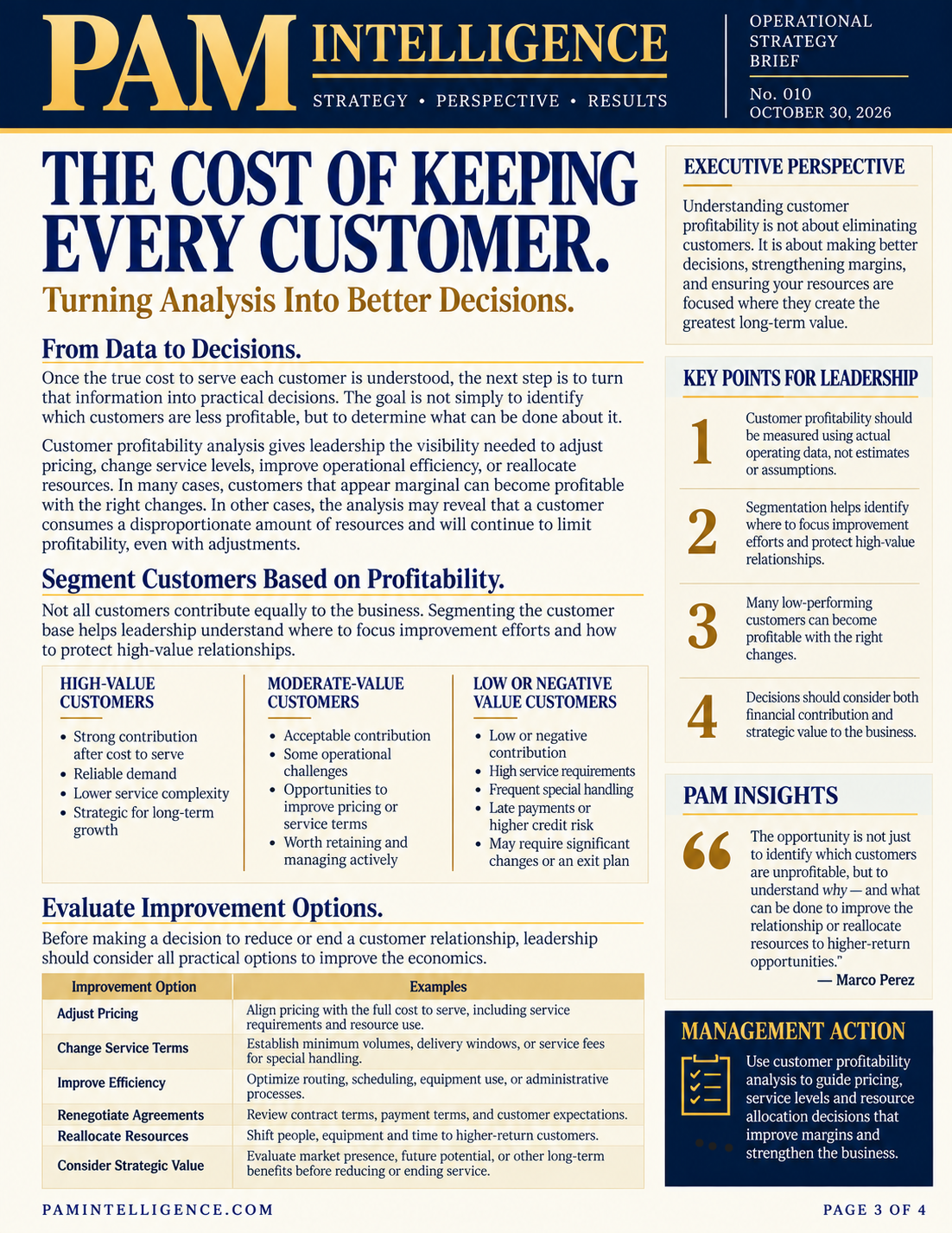
Turning Analysis Into Better Decisions
From Data to Decisions
Once the true cost to serve is understood, leadership must decide what can be done about it. Customer-profitability analysis provides visibility to adjust pricing, change service levels, improve operational efficiency, or reallocate resources. Some marginal customers can become profitable with the right changes. Others may continue to consume disproportionate resources and limit profitability.
Segment Customers Based on Profitability
- High-value customers. Strong contribution after cost to serve, reliable demand, lower service complexity, and strategic long-term value.
- Moderate-value customers. Acceptable contribution with operational challenges or opportunities to improve pricing or service terms; generally worth retaining and actively managing.
- Low- or negative-value customers. Low or negative contribution, high service requirements, frequent special handling, late payments or credit risk, and a possible need for significant changes or an exit plan.
Evaluate Improvement Options
Before reducing or ending a relationship, leadership should consider practical options to improve the economics.
- Adjust pricing. Align pricing with the full cost to serve, including service requirements and resource use.
- Change service terms. Establish minimum volumes, delivery windows, or service fees for special handling.
- Improve efficiency. Optimize routing, scheduling, equipment use, and administrative processes.
- Renegotiate agreements. Review contract terms, payment terms, and customer expectations.
- Reallocate resources. Shift people, equipment, and time toward higher-return customers.
- Consider strategic value. Evaluate market presence, future potential, and other long-term benefits before reducing or ending service.
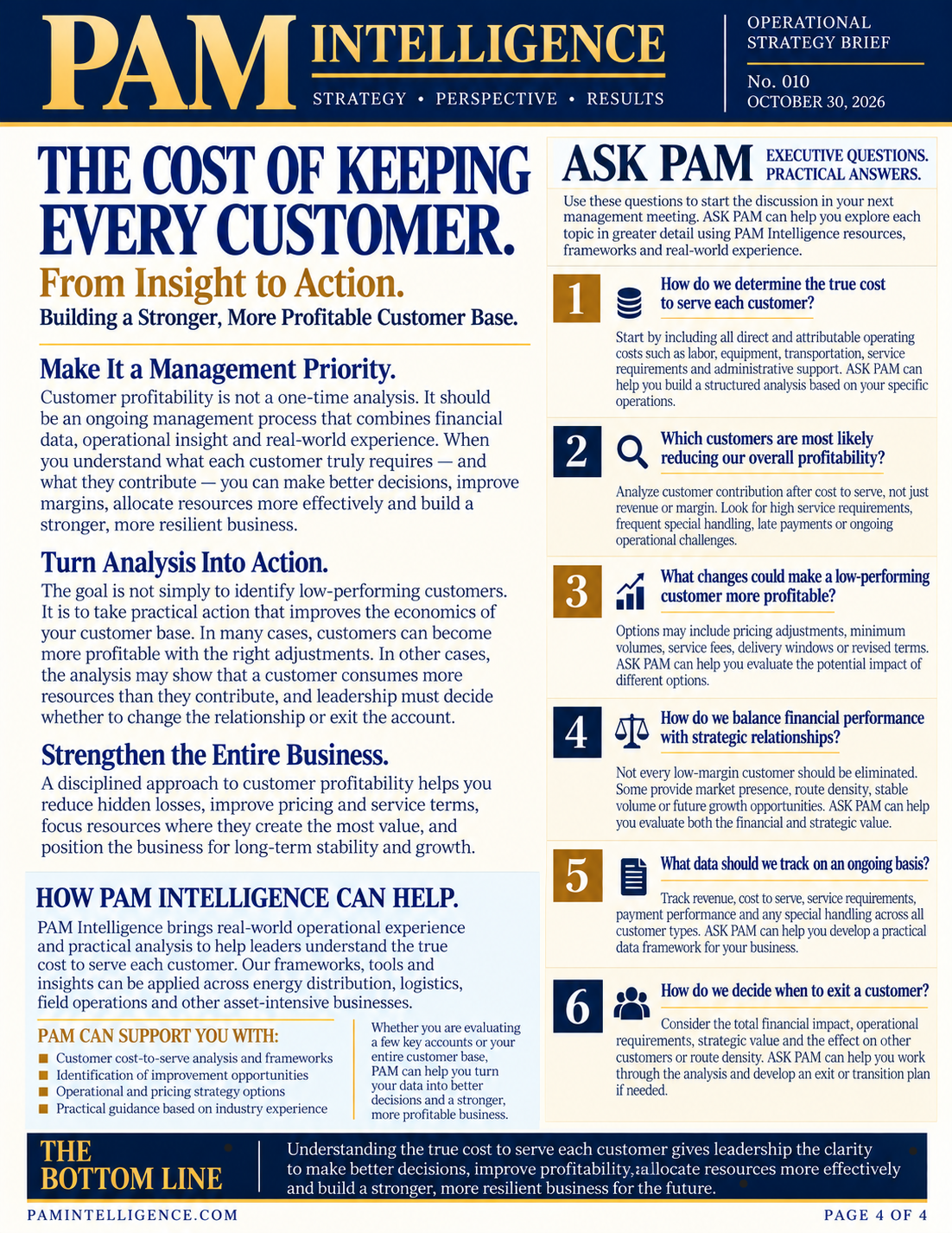
From Insight to Action
Make It a Management Priority
Customer profitability is not a one-time analysis. It should be an ongoing management process combining financial data, operational insight, and real-world experience. When leadership understands what each customer requires and contributes, it can make better decisions, improve margins, allocate resources more effectively, and build a stronger business.
Turn Analysis Into Action
The goal is not simply to identify low-performing customers. It is to take practical action that improves customer-base economics. Some customers become more profitable with the right adjustments. In other cases, leadership must decide whether to change the relationship or exit the account.
Strengthen the Entire Business
A disciplined approach helps reduce hidden losses, improve pricing and service terms, focus resources where they create the most value, and position the business for long-term stability and growth.
How PAM Intelligence Can Help
PAM Intelligence applies operational experience and practical analysis to customer cost-to-serve questions across energy distribution, logistics, field operations, and other asset-intensive businesses. It can support cost-to-serve frameworks, improvement-opportunity identification, operational and pricing strategy options, and practical guidance based on industry experience.
ASK PAM — Executive Questions. Practical Answers.
Put Customer Profitability Into Practice
Use these questions to start the discussion in your next management meeting. ASK PAM can help explore each topic using PAM Intelligence resources, frameworks, and operational experience.
How do we determine the true cost to serve each customer?
Include all direct and attributable operating costs such as labor, equipment, transportation, service requirements, and administrative support. Build a structured analysis using company-specific operating data.
Which customers are most likely reducing our overall profitability?
Analyze customer contribution after cost to serve, not just revenue or margin. Look for high service requirements, frequent special handling, late payments, or continuing operational challenges.
What changes could make a low-performing customer more profitable?
Consider pricing adjustments, minimum volumes, service fees, delivery windows, revised terms, and operating-efficiency improvements.
How do we balance financial performance with strategic relationships?
Not every low-margin customer should be eliminated. Evaluate market presence, route density, stable volume, future growth opportunities, and other strategic value alongside financial contribution.
What data should we track on an ongoing basis?
Track revenue, cost to serve, service requirements, payment performance, and special handling consistently across customer types.
How do we decide when to exit a customer?
Consider total financial impact, operational requirements, strategic value, and effects on other customers or route density. Work through an exit or transition plan when necessary.
ASK PAM remains a controlled beta. Access restrictions and privacy guidance continue to apply. Company-specific recommendations require appropriate operating and financial inputs; ASK PAM should request missing data rather than invent figures.