Web Edition
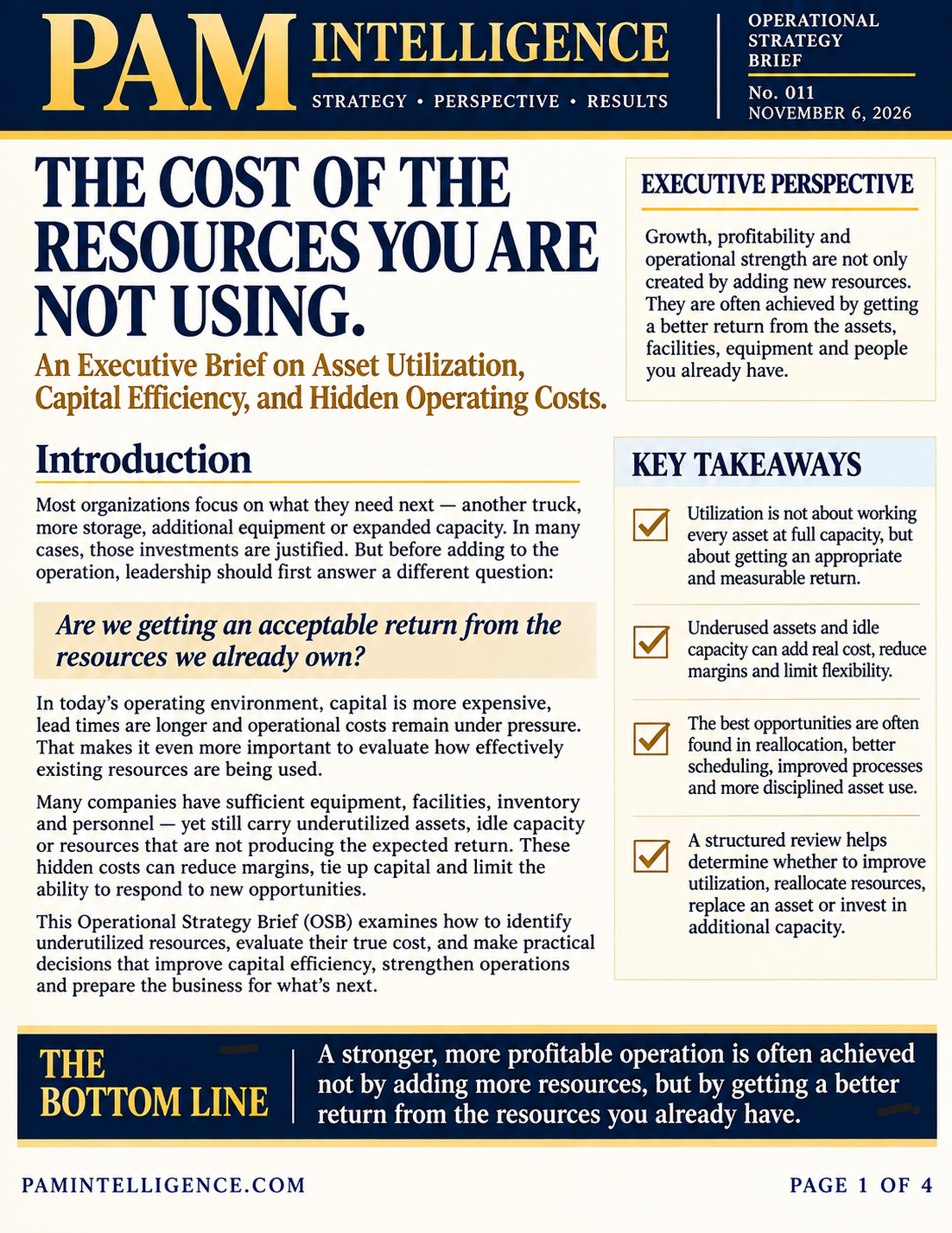
Growth, profitability, and operational strength are not only created by adding resources. They are often achieved by getting a better return from the assets, facilities, equipment, and people already in place.
View Designed Edition4 original publication pagesThe Cost of the Resources You Are Not Using
Most organizations focus on what they need next—another truck, more storage, additional equipment, or expanded capacity. In many cases, those investments are justified. But before adding to the operation, leadership should first answer a different question:
Are we getting an acceptable return from the resources we already own?
In today’s operating environment, capital is more expensive, lead times are longer, and operational costs remain under pressure. That makes it even more important to evaluate how effectively existing resources are being used.
Many companies have sufficient equipment, facilities, inventory, and personnel—yet still carry underutilized assets, idle capacity, or resources that are not producing the expected return. These hidden costs can reduce margins, tie up capital, and limit the ability to respond to new opportunities.
This Operational Strategy Brief (OSB) examines how to identify underutilized resources, evaluate their true cost, and make practical decisions that improve capital efficiency, strengthen operations, and prepare the business for what’s next.
Key Takeaways
- Utilization is not about working every asset at full capacity, but about getting an appropriate and measurable return.
- Underused assets and idle capacity can add real cost, reduce margins and limit flexibility.
- The best opportunities are often found in reallocation, better scheduling, improved processes and more disciplined asset use.
- A structured review helps determine whether to improve utilization, reallocate resources, replace an asset or invest in additional capacity.
From Analysis to Decision: Real Options for a Higher Return
Practical approaches to get more from the resources you already own.
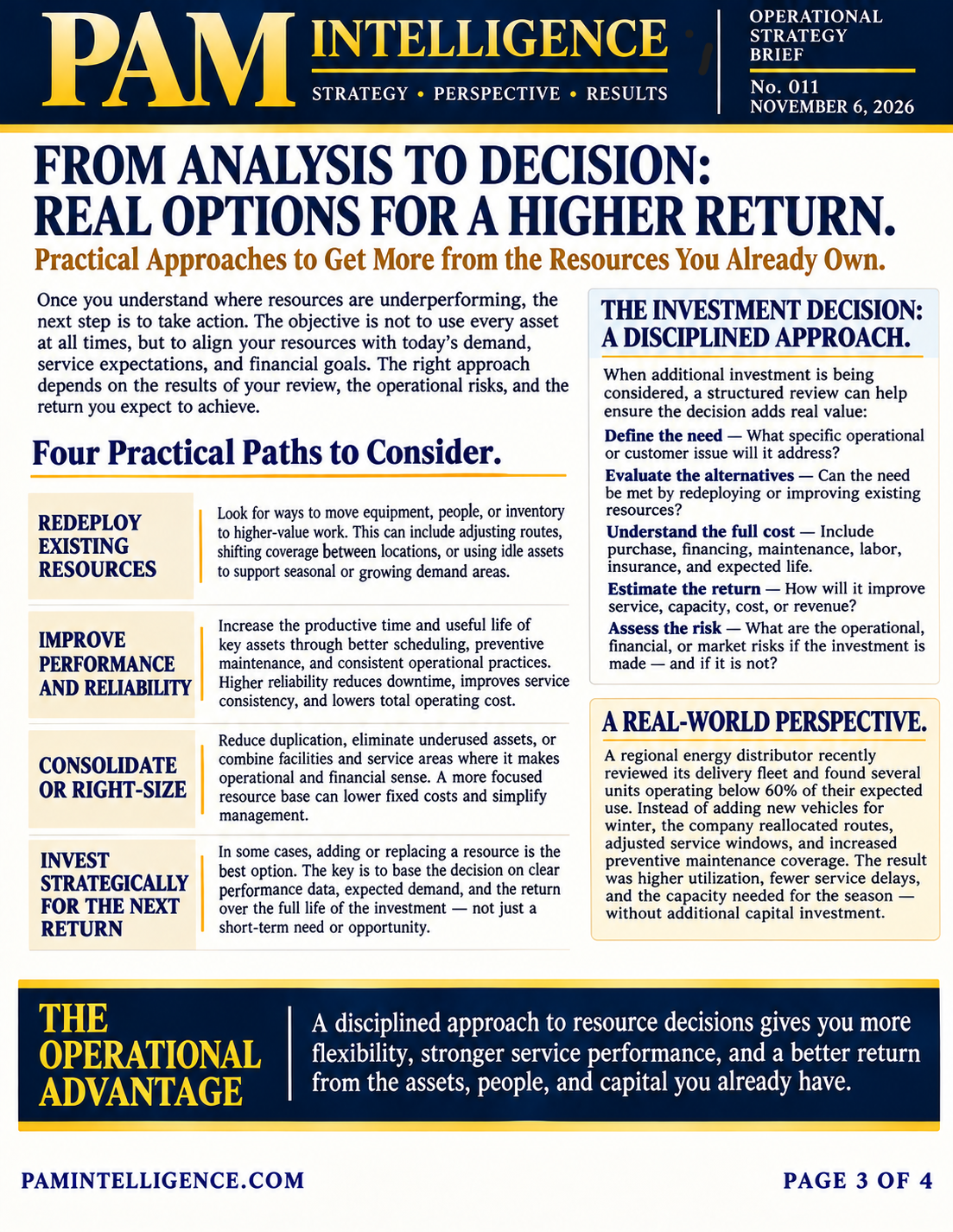
Once you understand where resources are underperforming, the next step is to take action. The objective is not to use every asset at all times, but to align your resources with today’s demand, service expectations, and financial goals. The right approach depends on the results of your review, the operational risks, and the return you expect to achieve.
Four Practical Paths to Consider
- Redeploy Existing Resources. Look for ways to move equipment, people, or inventory to higher-value work. This can include adjusting routes, shifting coverage between locations, or using idle assets to support seasonal or growing demand areas.
- Improve Performance and Reliability. Increase the productive time and useful life of key assets through better scheduling, preventive maintenance, and consistent operational practices. Higher reliability reduces downtime, improves service consistency, and lowers total operating cost.
- Consolidate or Right-Size. Reduce duplication, eliminate underused assets, or combine facilities and service areas where it makes operational and financial sense. A more focused resource base can lower fixed costs and simplify management.
- Invest Strategically for the Next Return. In some cases, adding or replacing a resource is the best option. The key is to base the decision on clear performance data, expected demand, and the return over the full life of the investment—not just a short-term need or opportunity.
The Investment Decision: A Disciplined Approach
When additional investment is being considered, a structured review can help ensure the decision adds real value:
- Define the need. What specific operational or customer issue will it address?
- Evaluate the alternatives. Can the need be met by redeploying or improving existing resources?
- Understand the full cost. Include purchase, financing, maintenance, labor, insurance, and expected life.
- Estimate the return. How will it improve service, capacity, cost, or revenue?
- Assess the risk. What are the operational, financial, or market risks if the investment is made—and if it is not?
Conclusion: Turn Resource Insight into Operational Gain
A practical framework to increase performance, control cost, and strengthen return.
A resource review is more than an operational exercise—it is a leadership opportunity to get more from what you already have. In today’s environment of higher costs, tighter labor, and ongoing market uncertainty, the most effective operators are not the ones adding the most resources. They are the ones that evaluate, adjust, and align their resources to produce a stronger and more consistent return.
The goal is to build a more efficient, flexible operation that can meet today’s demand, handle seasonal and unexpected changes, and support long-term growth without unnecessary cost or risk.
A Practical Action Framework
Use this step-by-step approach to move from review to results.
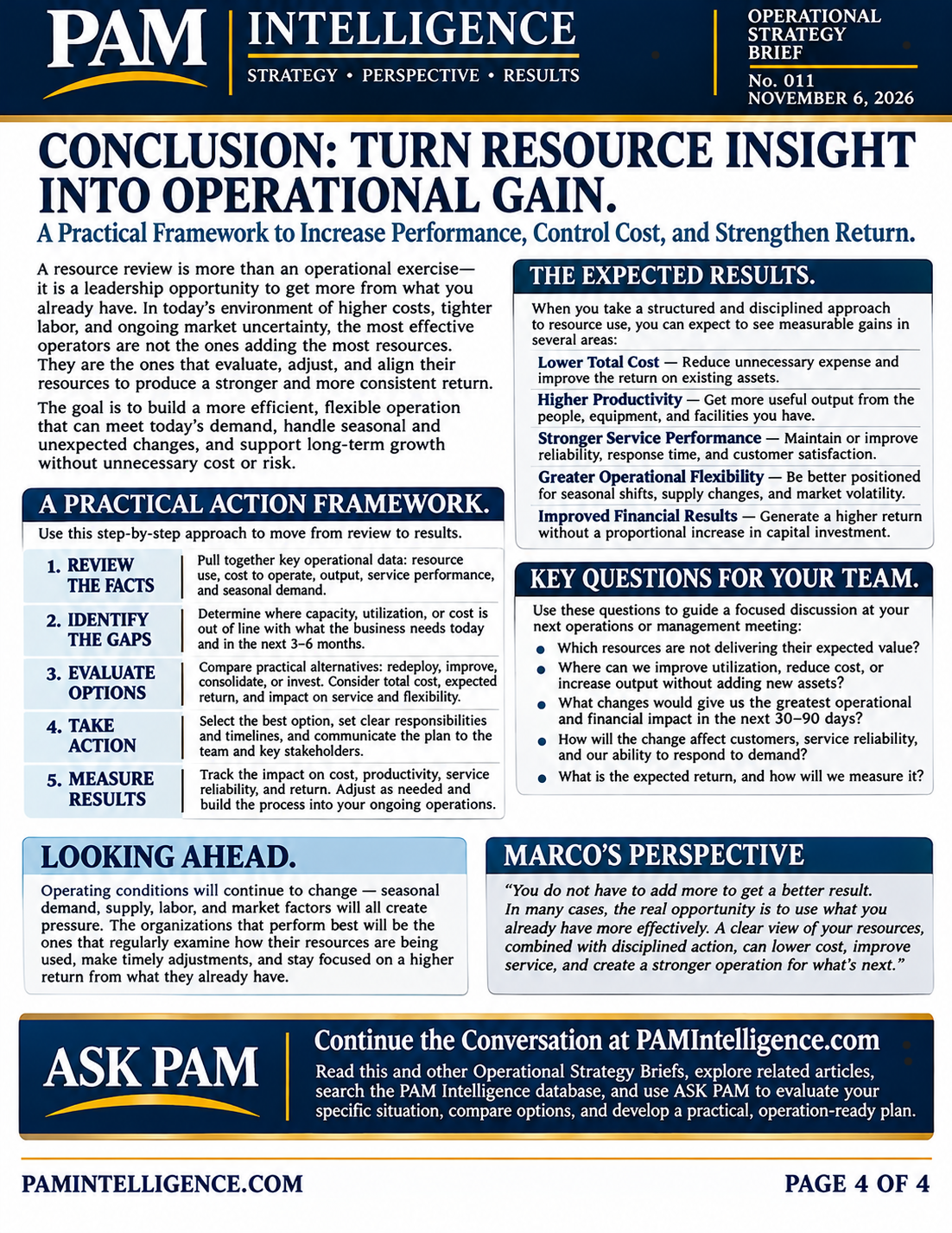
- Review the Facts. Pull together key operational data: resource use, cost to operate, output, service performance, and seasonal demand.
- Identify the Gaps. Determine where capacity, utilization, or cost is out of line with what the business needs today and in the next 3–6 months.
- Evaluate Options. Compare practical alternatives: redeploy, improve, consolidate, or invest. Consider total cost, expected return, and impact on service and flexibility.
- Take Action. Select the best option, set clear responsibilities and timelines, and communicate the plan to the team and key stakeholders.
- Measure Results. Track the impact on cost, productivity, service reliability, and return. Adjust as needed and build the process into your ongoing operations.
The Expected Results
When you take a structured and disciplined approach to resource use, you can expect to see measurable gains in several areas:
- Lower Total Cost. Reduce unnecessary expense and improve the return on existing assets.
- Higher Productivity. Get more useful output from the people, equipment, and facilities you have.
- Stronger Service Performance. Maintain or improve reliability, response time, and customer satisfaction.
- Greater Operational Flexibility. Be better positioned for seasonal shifts, supply changes, and market volatility.
- Improved Financial Results. Generate a higher return without a proportional increase in capital investment.
Key Questions for Your Team
Use these questions to guide a focused discussion at your next operations or management meeting:
- Which resources are not delivering their expected value?
- Where can we improve utilization, reduce cost, or increase output without adding new assets?
- What changes would give us the greatest operational and financial impact in the next 30–90 days?
- How will the change affect customers, service reliability, and our ability to respond to demand?
- What is the expected return, and how will we measure it?
Looking Ahead
Operating conditions will continue to change—seasonal demand, supply, labor, and market factors will all create pressure. The organizations that perform best will be the ones that regularly examine how their resources are being used, make timely adjustments, and stay focused on a higher return from what they already have.
Marco’s Perspective“You do not have to add more to get a better result. In many cases, the real opportunity is to use what you already have more effectively. A clear view of your resources, combined with disciplined action, can lower cost, improve service, and create a stronger operation for what’s next.”
ASK PAM — Start With a Better Question
Prepare a Resource-Utilization Question
ASK PAM remains Coming Soon. Use the public reader-education page to frame a question about utilization, cost, output, capacity, capital return, or the operational trade-offs behind an investment decision.