Web Edition
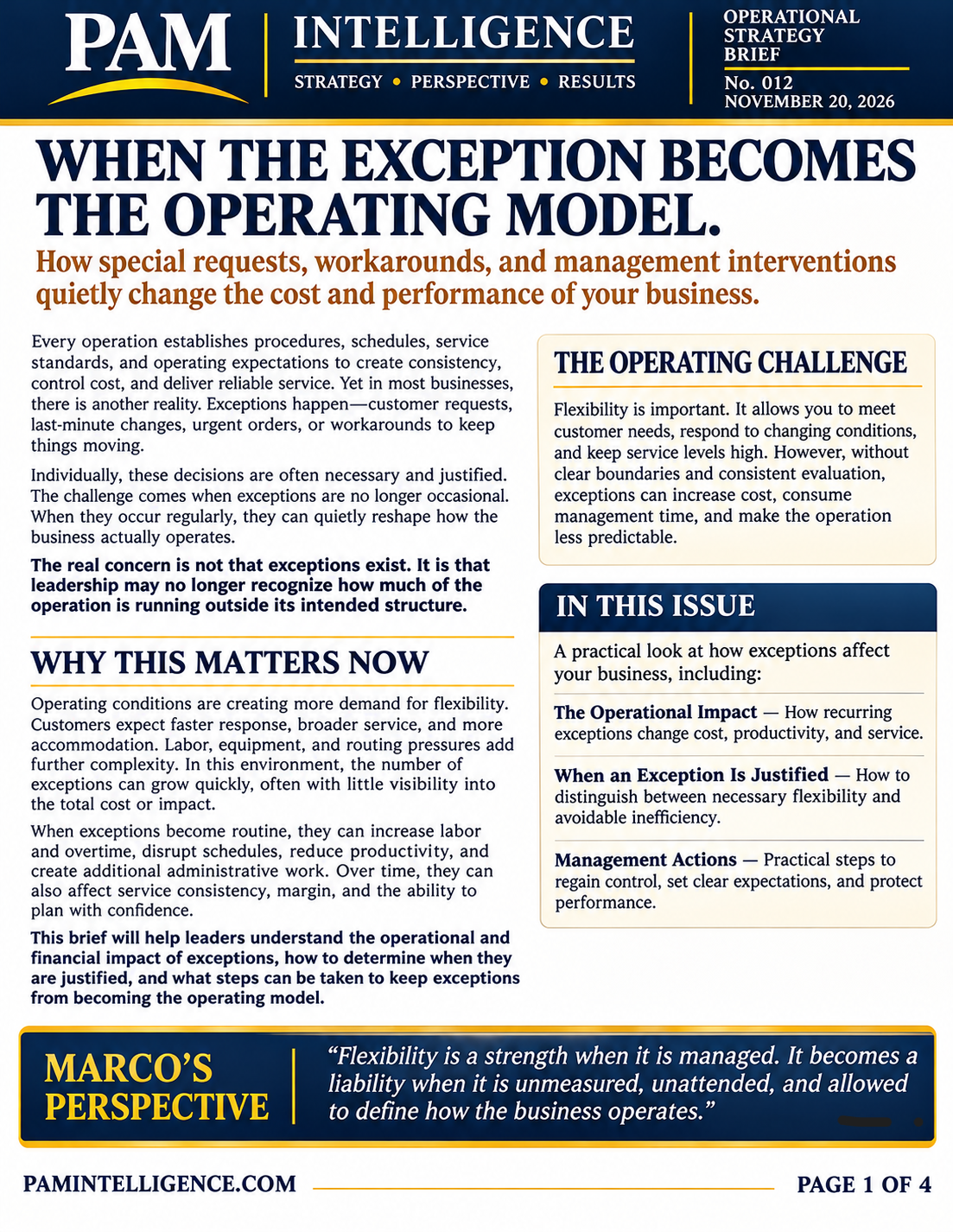
Flexibility is a strength when it is managed. It becomes a liability when it is unmeasured, unattended, and allowed to define how the business operates.
View Designed Edition4 original publication pagesThe Operating Challenge
Every operation establishes procedures, schedules, service standards, and operating expectations to create consistency, control cost, and deliver reliable service. Yet in most businesses, there is another reality. Exceptions happen—customer requests, last-minute changes, urgent orders, or workarounds to keep things moving.
Individually, these decisions are often necessary and justified. The challenge comes when exceptions are no longer occasional. When they occur regularly, they can quietly reshape how the business actually operates.
The real concern is not that exceptions exist. It is that leadership may no longer recognize how much of the operation is running outside its intended structure.
Why This Matters Now
Operating conditions are creating more demand for flexibility. Customers expect faster response, broader service, and more accommodation. Labor, equipment, and routing pressures add further complexity. In this environment, the number of exceptions can grow quickly, often with little visibility into the total cost or impact.
When exceptions become routine, they can increase labor and overtime, disrupt schedules, reduce productivity, and create additional administrative work. Over time, they can also affect service consistency, margin, and the ability to plan with confidence.
This brief examines the operational and financial impact of exceptions, how to determine when they are justified, and what steps can keep exceptions from becoming the operating model.
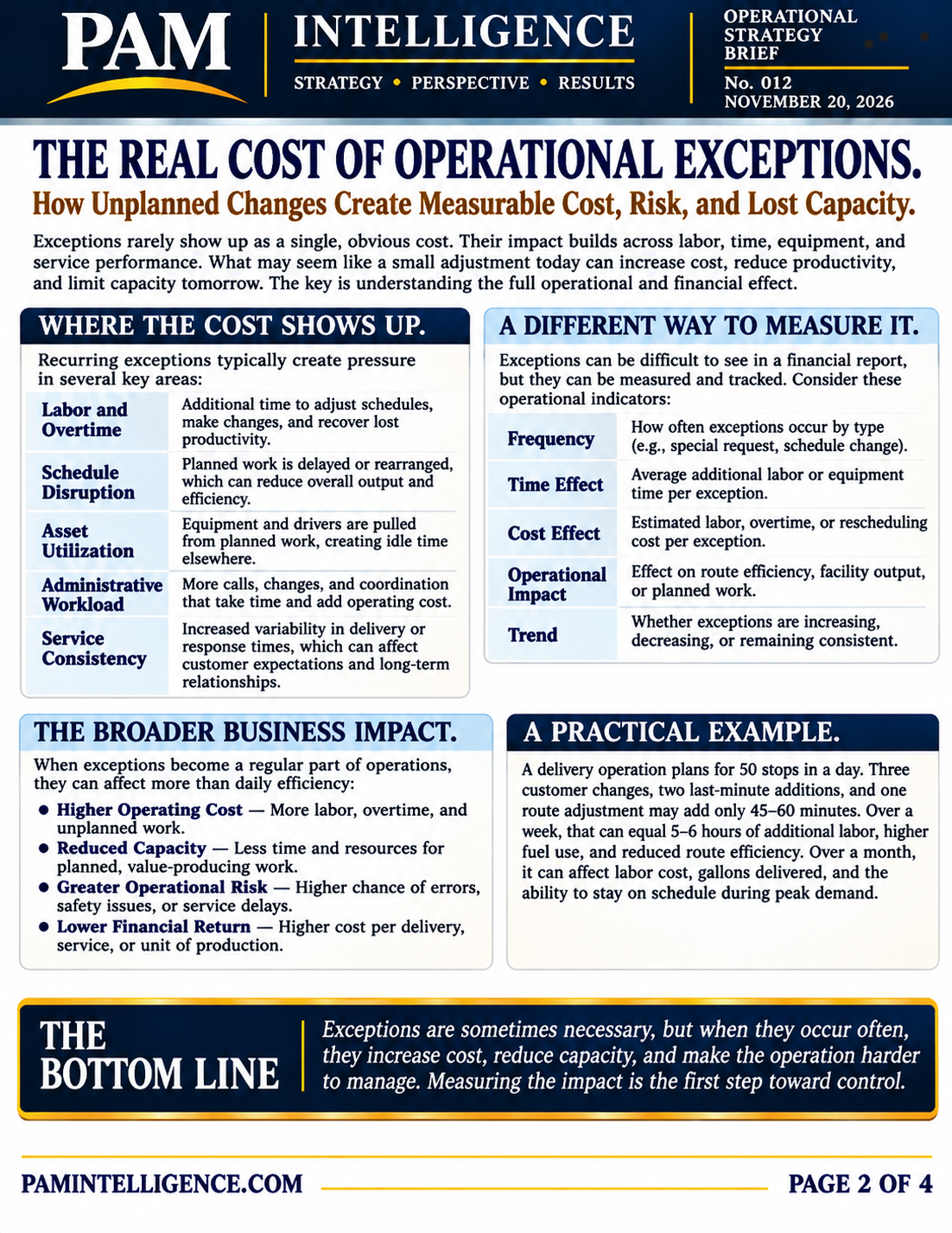
The Real Cost of Operational Exceptions
How unplanned changes create measurable cost, risk, and lost capacity.
Exceptions rarely show up as a single, obvious cost. Their impact builds across labor, time, equipment, and service performance. What may seem like a small adjustment today can increase cost, reduce productivity, and limit capacity tomorrow. The key is understanding the full operational and financial effect.
Where the Cost Shows Up
Recurring exceptions typically create pressure in several key areas:
- Labor and overtime. Additional time to adjust schedules, make changes, and recover lost productivity.
- Schedule disruption. Planned work is delayed or rearranged, which can reduce overall output and efficiency.
- Asset utilization. Equipment and drivers are pulled from planned work, creating idle time elsewhere.
- Administrative workload. More calls, changes, and coordination take time and add operating cost.
- Service consistency. Increased variability in delivery or response times can affect customer expectations and long-term relationships.
A Different Way to Measure It
Exceptions can be difficult to see in a financial report, but they can be measured and tracked using operational indicators:
- Frequency. How often exceptions occur by type, such as special requests or schedule changes.
- Time effect. Average additional labor or equipment time per exception.
- Cost effect. Estimated labor, overtime, or rescheduling cost per exception.
- Operational impact. Effect on route efficiency, facility output, or planned work.
- Trend. Whether exceptions are increasing, decreasing, or remaining consistent.
The Broader Business Impact
When exceptions become a regular part of operations, they can affect more than daily efficiency:
- Higher operating cost. More labor, overtime, and unplanned work.
- Reduced capacity. Less time and fewer resources for planned, value-producing work.
- Greater operational risk. A higher chance of errors, safety issues, or service delays.
- Lower financial return. Higher cost per delivery, service, or unit of production.
A Practical Example
A delivery operation plans for 50 stops in a day. Three customer changes, two last-minute additions, and one route adjustment may add only 45–60 minutes. Over a week, that can equal 5–6 hours of additional labor, higher fuel use, and reduced route efficiency. Over a month, it can affect labor cost, gallons delivered, and the ability to stay on schedule during peak demand.
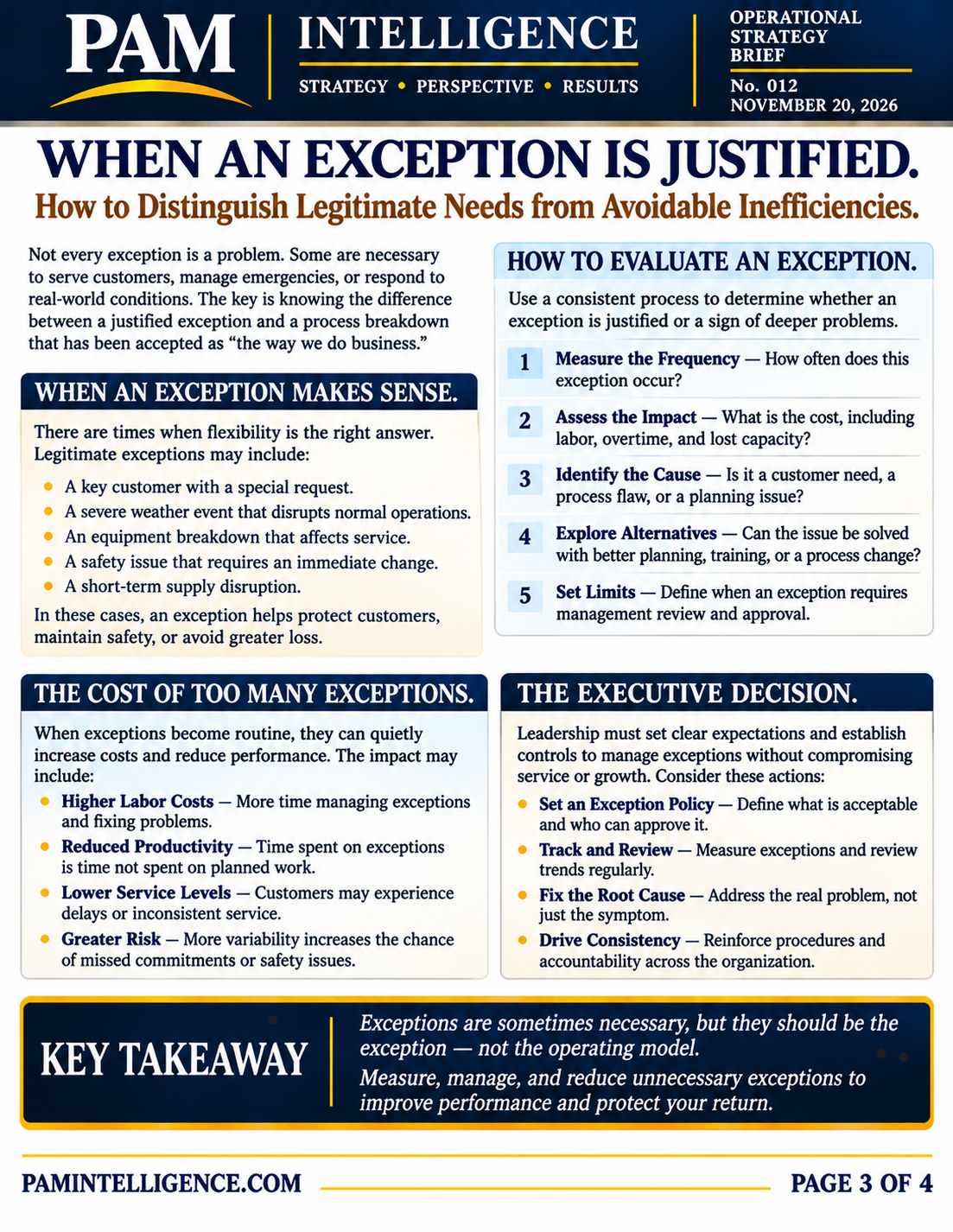
When an Exception Is Justified
How to distinguish legitimate needs from avoidable inefficiencies.
Not every exception is a problem. Some are necessary to serve customers, manage emergencies, or respond to real-world conditions. The key is knowing the difference between a justified exception and a process breakdown that has been accepted as “the way we do business.”
When an Exception Makes Sense
There are times when flexibility is the right answer. Legitimate exceptions may include:
- A key customer with a special request.
- A severe weather event that disrupts normal operations.
- An equipment breakdown that affects service.
- A safety issue that requires an immediate change.
- A short-term supply disruption.
In these cases, an exception helps protect customers, maintain safety, or avoid greater loss.
How to Evaluate an Exception
Use a consistent process to determine whether an exception is justified or a sign of deeper problems.
- Measure the frequency. How often does this exception occur?
- Assess the impact. What is the cost, including labor, overtime, and lost capacity?
- Identify the cause. Is it a customer need, a process flaw, or a planning issue?
- Explore alternatives. Can the issue be solved with better planning, training, or a process change?
- Set limits. Define when an exception requires management review and approval.
The Cost of Too Many Exceptions
- Higher labor costs. More time managing exceptions and fixing problems.
- Reduced productivity. Time spent on exceptions is time not spent on planned work.
- Lower service levels. Customers may experience delays or inconsistent service.
- Greater risk. More variability increases the chance of missed commitments or safety issues.
The Executive Decision
Leadership must set clear expectations and establish controls to manage exceptions without compromising service or growth.
- Set an exception policy. Define what is acceptable and who can approve it.
- Track and review. Measure exceptions and review trends regularly.
- Fix the root cause. Address the real problem, not just the symptom.
- Drive consistency. Reinforce procedures and accountability across the organization.
The Executive Decision
Regain control, set clear boundaries, and protect performance.
Exceptions will always exist. The difference between a well-run operation and a costly one is how they are managed. Leadership can reduce unnecessary exceptions, control the cost, and keep the operation aligned with its plan and financial goals.
A Practical Action Plan
- Measure the current reality. Track the type, frequency, and cost of exceptions for a defined period, such as 30–60 days.
- Set clear boundaries. Define what is acceptable, what requires approval, and what should be avoided.
- Address the root causes. Correct process gaps, communication issues, or resource constraints that are driving exceptions.
- Assign ownership. Identify who can approve exceptions, track the impact, and ensure follow-up.
- Monitor and improve. Review the results, adjust as needed, and make exception management part of regular operational review.
Key Management Considerations
- Customer impact. Ensure the exception supports service, safety, or a clear business need.
- Cost and capacity. Understand the real cost and effect on available resources.
- Consistency and fairness. Apply the same standards across customers and teams.
- Operational discipline. Avoid letting short-term adjustments become a long-term habit.
- Financial performance. Track the impact on cost, margins, and return on invested resources.
Turn This Into Action
Continue With PAM Intelligence
ASK PAM remains Coming Soon during its protected launch. Use the public PAM Intelligence library to search related articles, review the Operational Strategy Brief archive, and connect exception-management questions to established operational frameworks.