Web Edition
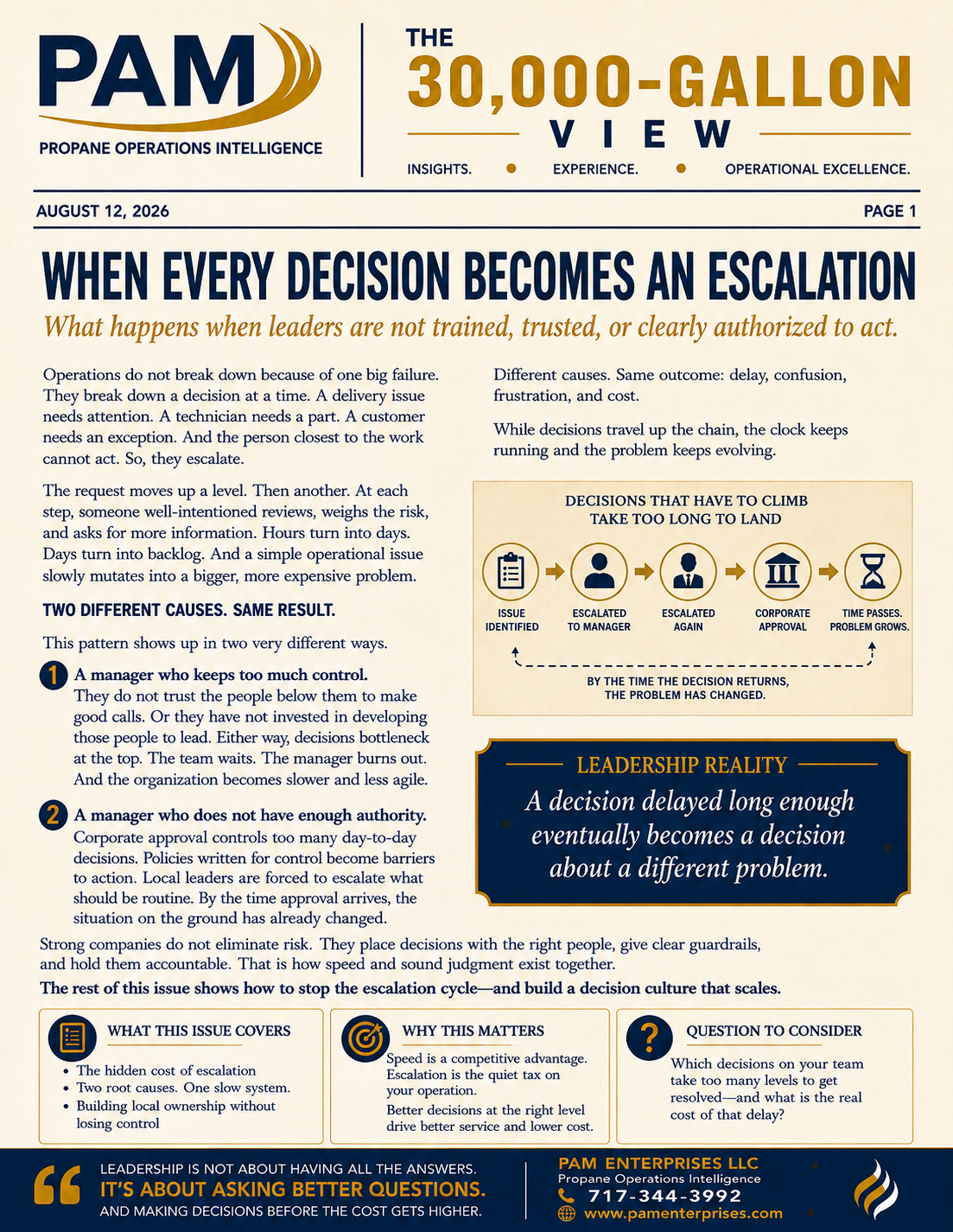
Operations do not break down because of one big failure. They break down a decision at a time.
View Designed Edition 4 original publication pagesThe Escalation Cycle
A delivery issue needs attention. A technician needs a part. A customer needs an exception. And the person closest to the work cannot act.
So, they escalate. The request moves up a level. Then another. At each step, someone well-intentioned reviews, weighs the risk, and asks for more information. Hours turn into days. Days turn into backlog. And a simple operational issue slowly mutates into a bigger, more expensive problem.
Two Different Causes. Same Result.
A manager who keeps too much control. They do not trust the people below them to make good calls, or they have not invested in developing those people to lead. Decisions bottleneck at the top. The team waits. The manager burns out. The organization becomes slower and less agile.
A manager who does not have enough authority. Corporate approval controls too many day-to-day decisions. Policies written for control become barriers to action. Local leaders must escalate what should be routine. By the time approval arrives, conditions have changed.
Different causes create the same outcome: delay, confusion, frustration, and cost. While decisions travel up the chain, the clock keeps running and the problem keeps evolving.
The rest of this issue shows how to stop the escalation cycle—and build a decision culture that scales.
What This Issue Covers
- The hidden cost of escalation
- Two root causes. One slow system.
- Building local ownership without losing control
Why This Matters
Speed is a competitive advantage. Escalation is the quiet tax on your operation. Better decisions at the right level drive better service and lower cost.
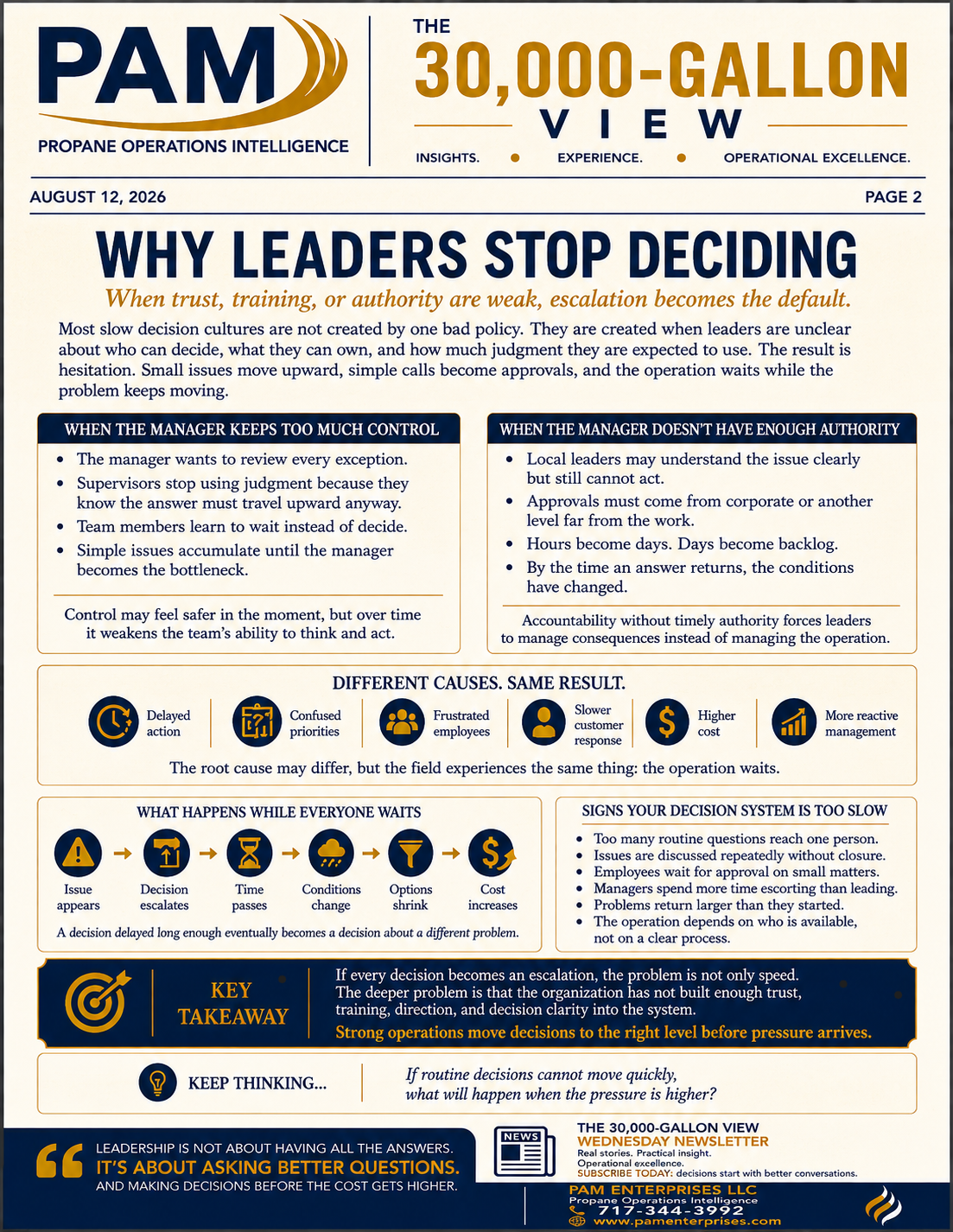
Why Leaders Stop Deciding
When trust, training, or authority are weak, escalation becomes the default.
Most slow decision cultures are not created by one bad policy. They are created when leaders are unclear about who can decide, what they can own, and how much judgment they are expected to use.
The result is hesitation. Small issues move upward, simple calls become approvals, and the operation waits while the problem keeps moving.
When the Manager Keeps Too Much Control
- The manager wants to review every exception.
- Supervisors stop using judgment because the answer must travel upward anyway.
- Team members learn to wait instead of decide.
- Simple issues accumulate until the manager becomes the bottleneck.
Control may feel safer in the moment, but over time it weakens the team’s ability to think and act.
When the Manager Does Not Have Enough Authority
- Local leaders understand the issue but still cannot act.
- Approvals must come from corporate or another level far from the work.
- Hours become days and days become backlog.
- By the time an answer returns, conditions have changed.
Accountability without timely authority forces leaders to manage consequences instead of managing the operation.
Different Causes. Same Result.
The root cause may differ, but the field experiences the same thing: the operation waits.
Signs Your Decision System Is Too Slow
- Too many routine questions reach one person.
- Issues are discussed repeatedly without closure.
- Employees wait for approval on small matters.
- Managers spend more time escalating than leading.
- Problems return larger than they started.
- The operation depends on who is available, not on a clear process.
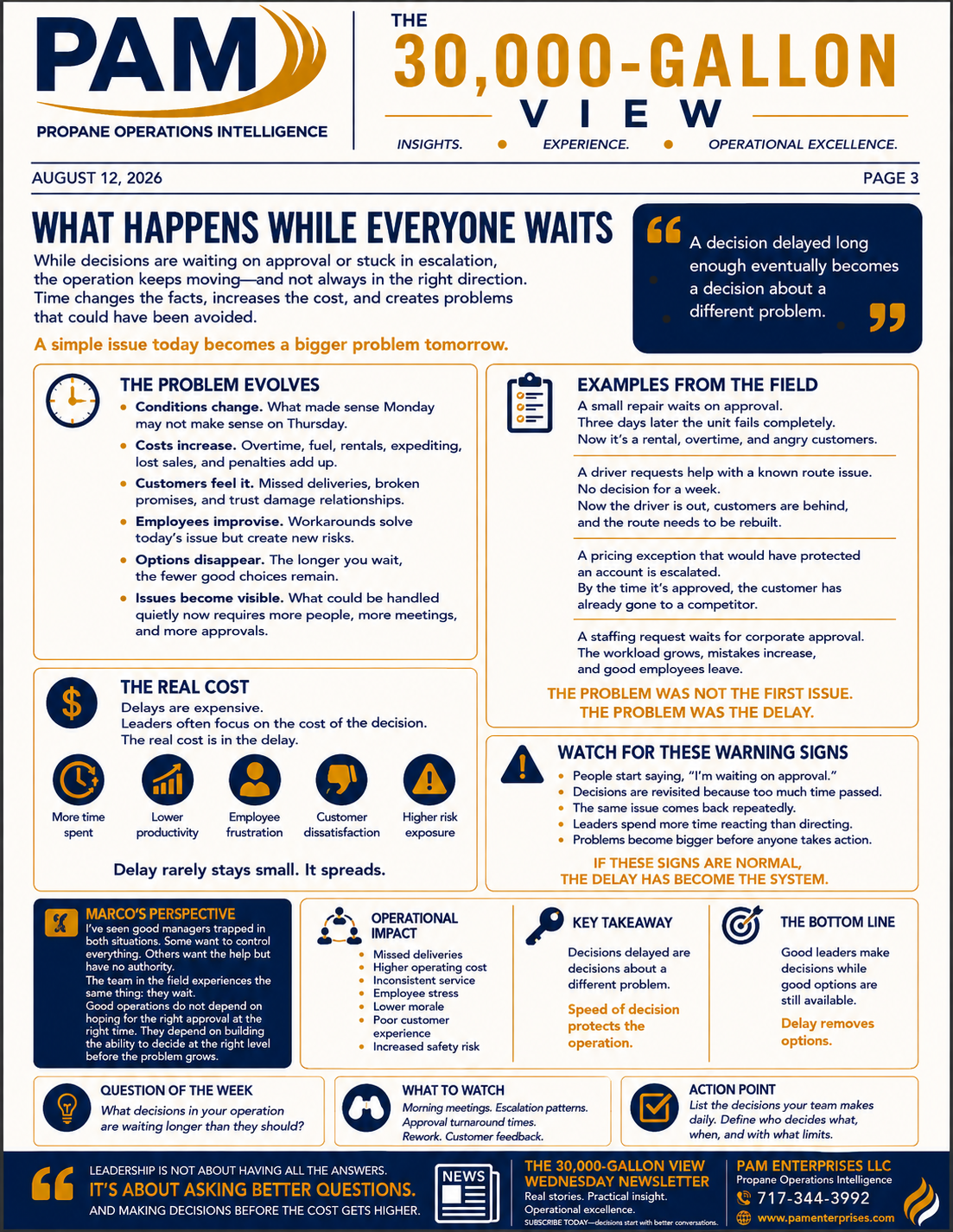
What Happens While Everyone Waits
While decisions wait on approval or remain stuck in escalation, the operation keeps moving—and not always in the right direction. Time changes the facts, increases the cost, and creates problems that could have been avoided.
- The problem evolves. What made sense Monday may not make sense Thursday.
- Costs increase. Overtime, fuel, rentals, expediting, lost sales, and penalties add up.
- Customers feel it. Missed deliveries, broken promises, and damaged trust affect relationships.
- Employees improvise. Workarounds solve today’s issue but create new risks.
- Options disappear. The longer leaders wait, the fewer good choices remain.
- Issues become visible. What could have been handled quietly now needs more people, meetings, and approvals.
The problem was not the first issue. The problem was the delay.
The Real Cost
Delays are expensive. Leaders often focus on the cost of the decision. The real cost is in the delay.
- More time spent
- Employee frustration
- Lower productivity
- Customer dissatisfaction
- Higher risk exposure
Examples from the Field
- A small repair waits on approval. Three days later the unit fails completely. Now it’s a rental, overtime, and angry customers.
- A driver requests help with a known route issue. No decision for a week. Now the driver is out, customers are behind, and the route needs to be rebuilt.
- A pricing exception that would have protected an account is escalated. By the time it’s approved, the customer has already gone to a competitor.
- A staffing request waits for corporate approval. The workload grows, mistakes increase, and good employees leave.
Watch for These Warning Signs
- People start saying, “I’m waiting on approval.”
- Decisions are revisited because too much time passed.
- The same issue comes back repeatedly.
- Leaders spend more time reacting than directing.
- Problems become bigger before anyone takes action.
If these signs are normal, the delay has become the system.
Delay rarely stays small.
Operational Impact
- Missed deliveries
- Higher operating cost
- Inconsistent service
- Employee stress
- Lower morale
- Poor customer experience
- Increased safety risk
What to Watch
Morning meetings. Escalation patterns. Approval turnaround times. Rework. Customer feedback.
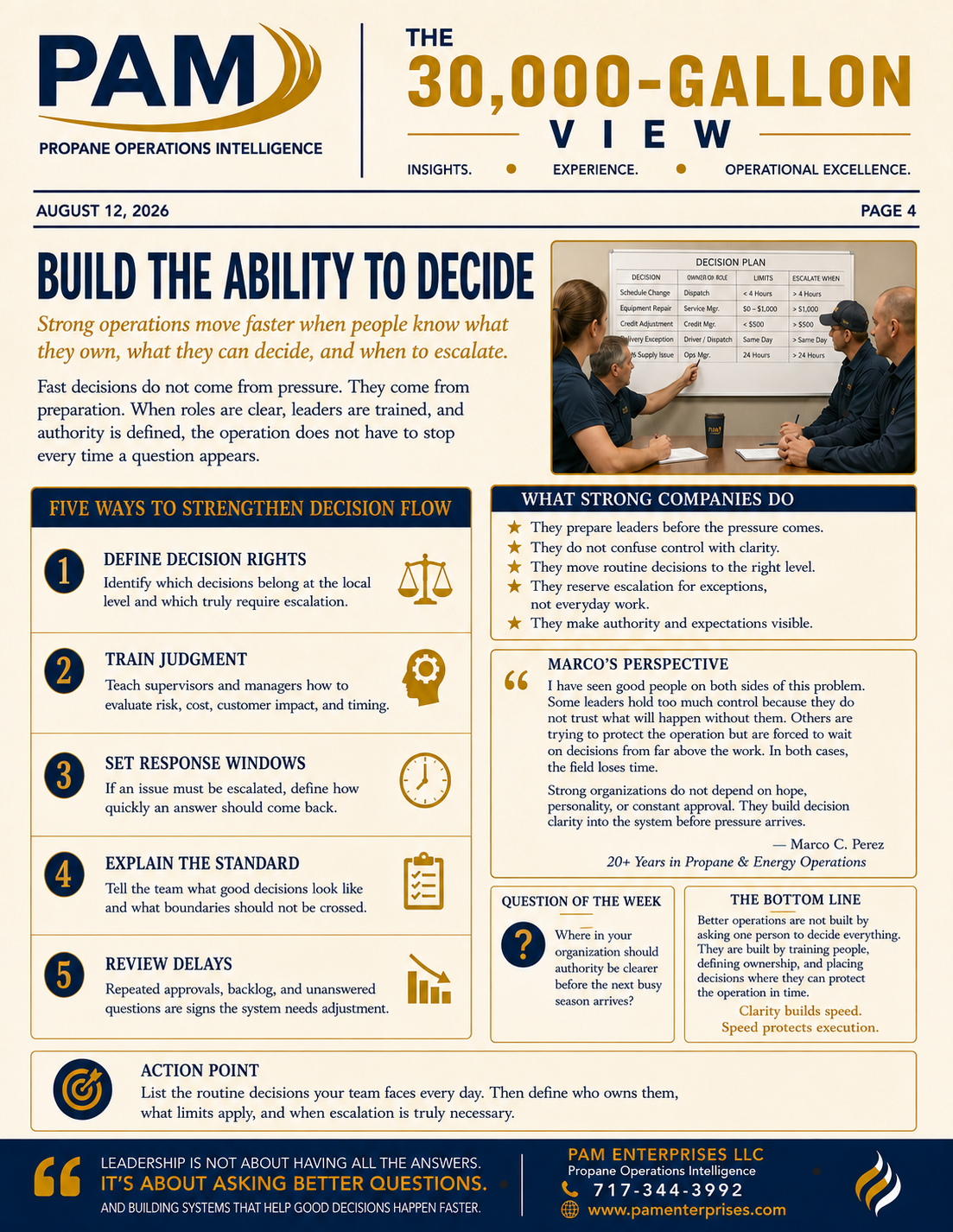
Build the Ability to Decide
Strong operations move faster when people know what they own, what they can decide, and when to escalate.
Fast decisions do not come from pressure. They come from preparation. When roles are clear, leaders are trained, and authority is defined, the operation does not have to stop every time a question appears.
- Define decision rights. Identify which decisions belong locally and which truly require escalation.
- Train judgment. Teach supervisors and managers how to evaluate risk, cost, customer impact, and timing.
- Set response windows. If an issue must be escalated, define how quickly an answer should return.
- Explain the standard. Tell the team what good decisions look like and what boundaries should not be crossed.
- Review delays. Repeated approvals, backlog, and unanswered questions are signs the system needs adjustment.
Action Point
List the routine decisions your team faces every day. Then define who owns them, what limits apply, and when escalation is truly necessary.
What Strong Companies Do
- Prepare leaders before pressure comes
- Do not confuse control with clarity
- Move routine decisions to the right level
- Reserve escalation for exceptions, not everyday work
- Make authority and expectations visible