Web Edition
Every postponed decision quietly becomes tomorrow’s operating condition.
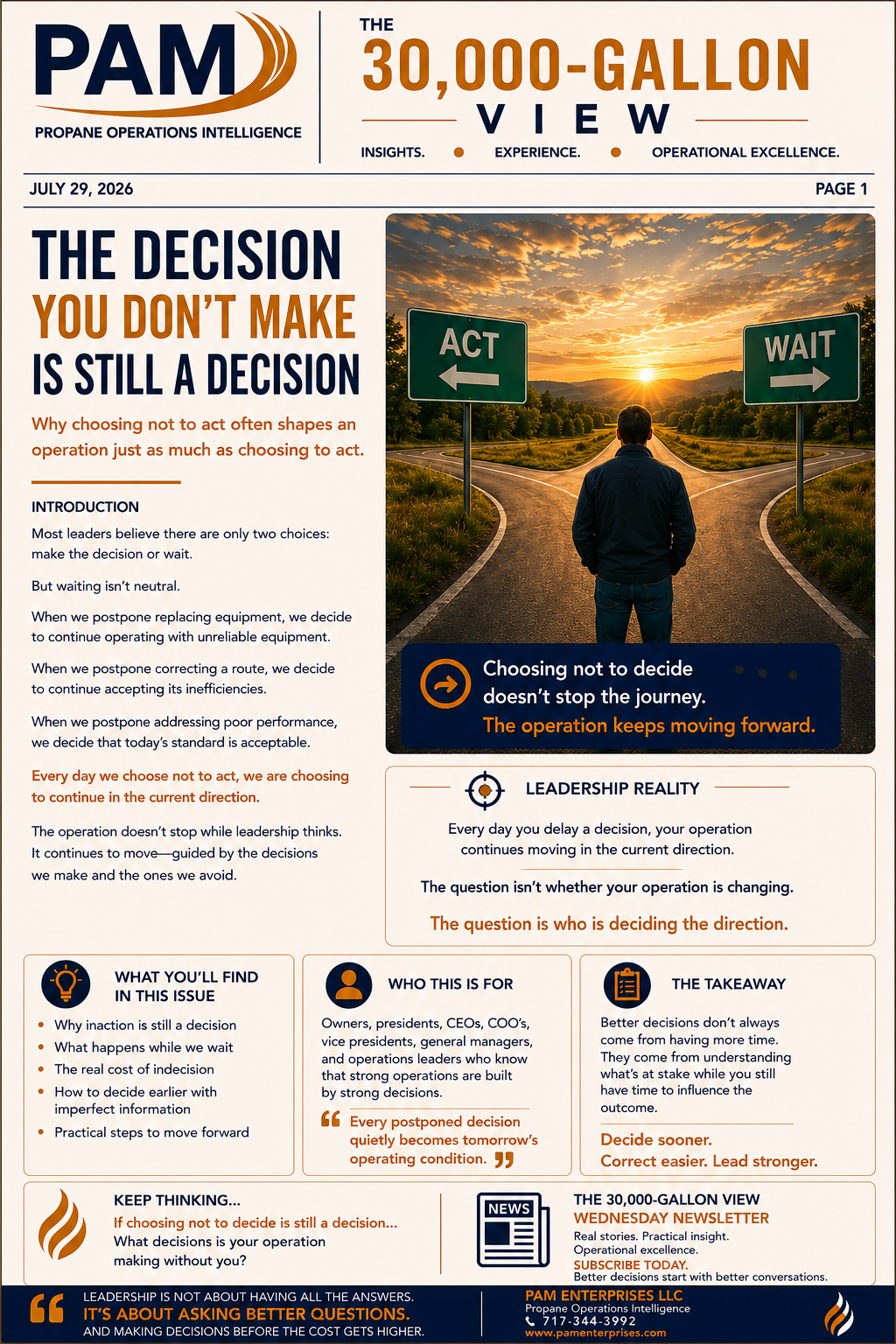
View Designed Edition4 original publication pagesInaction Is Still a Decision
Most leaders believe there are only two choices: make the decision or wait. But waiting isn’t neutral.
When we postpone replacing equipment, we decide to continue operating with unreliable equipment. When we postpone correcting a route, we decide to continue accepting its inefficiencies. When we postpone addressing poor performance, we decide that today’s standard is acceptable.
Every day we choose not to act, we are choosing to continue in the current direction. The operation doesn’t stop while leadership thinks. It continues to move—guided by the decisions we make and the ones we avoid.
Choosing not to decide doesn’t stop the journey. The operation keeps moving forward.
The Leadership Reality
Every day you delay a decision, your operation continues moving in the current direction. The question isn’t whether your operation is changing. The question is who is deciding the direction.
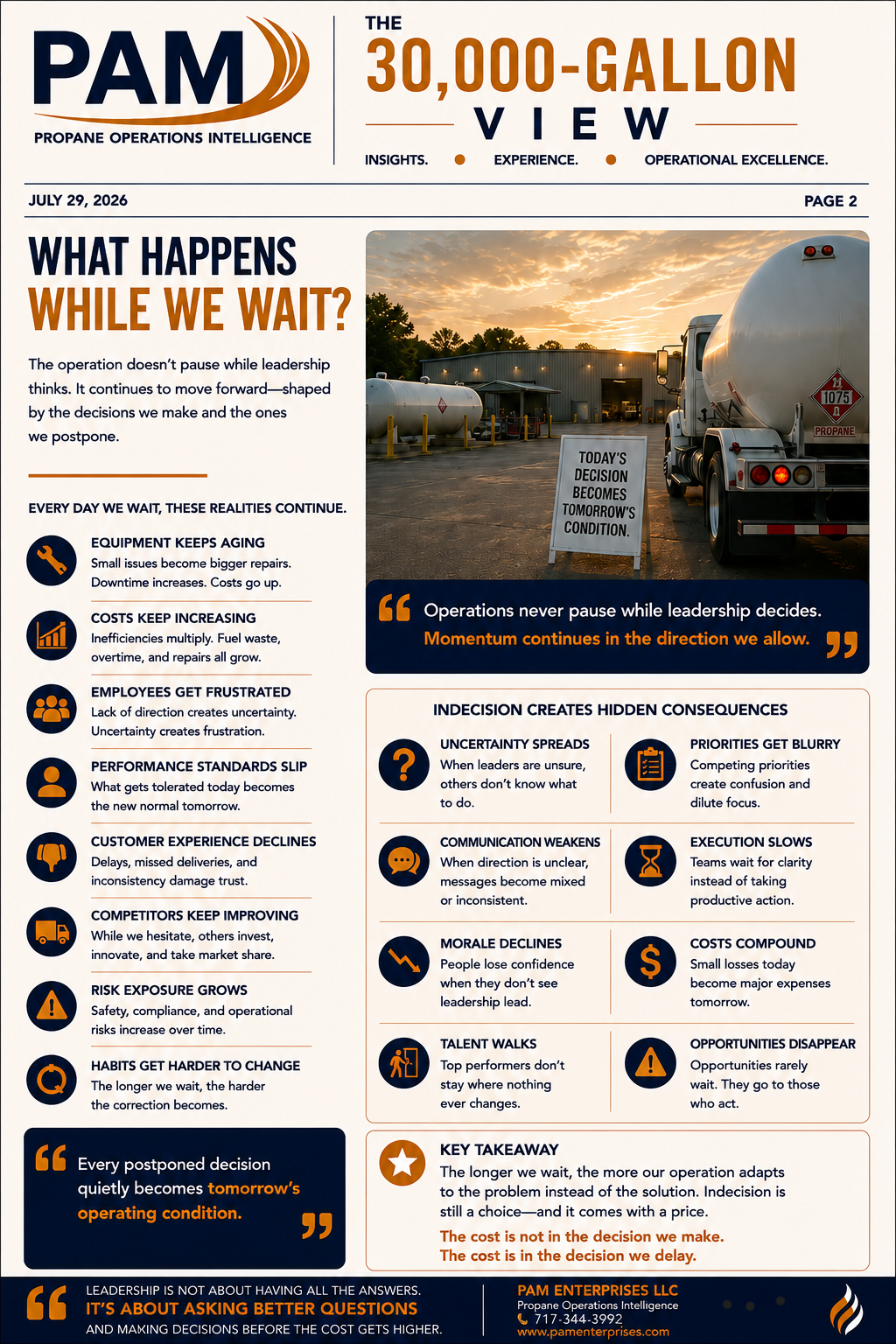
What Happens While We Wait?
The operation doesn’t pause while leadership thinks. It continues to move forward—shaped by the decisions we make and the ones we postpone.
- Equipment keeps aging. Small issues become bigger repairs. Downtime increases. Costs go up.
- Costs keep increasing. Inefficiencies multiply. Fuel waste, overtime, and repairs grow.
- Employees get frustrated. Lack of direction creates uncertainty; uncertainty creates frustration.
- Performance standards slip. What gets tolerated today becomes the new normal tomorrow.
- Customer experience declines. Delays, missed deliveries, and inconsistency damage trust.
- Competitors keep improving. While we hesitate, others invest, innovate, and take market share.
- Risk exposure grows. Safety, compliance, and operational risks increase over time.
- Habits get harder to change. The longer we wait, the harder the correction becomes.
Indecision Creates Hidden Consequences
- Uncertainty spreads and priorities get blurry.
- Communication weakens and execution slows.
- Morale declines and costs compound.
- Talent walks and opportunities disappear.
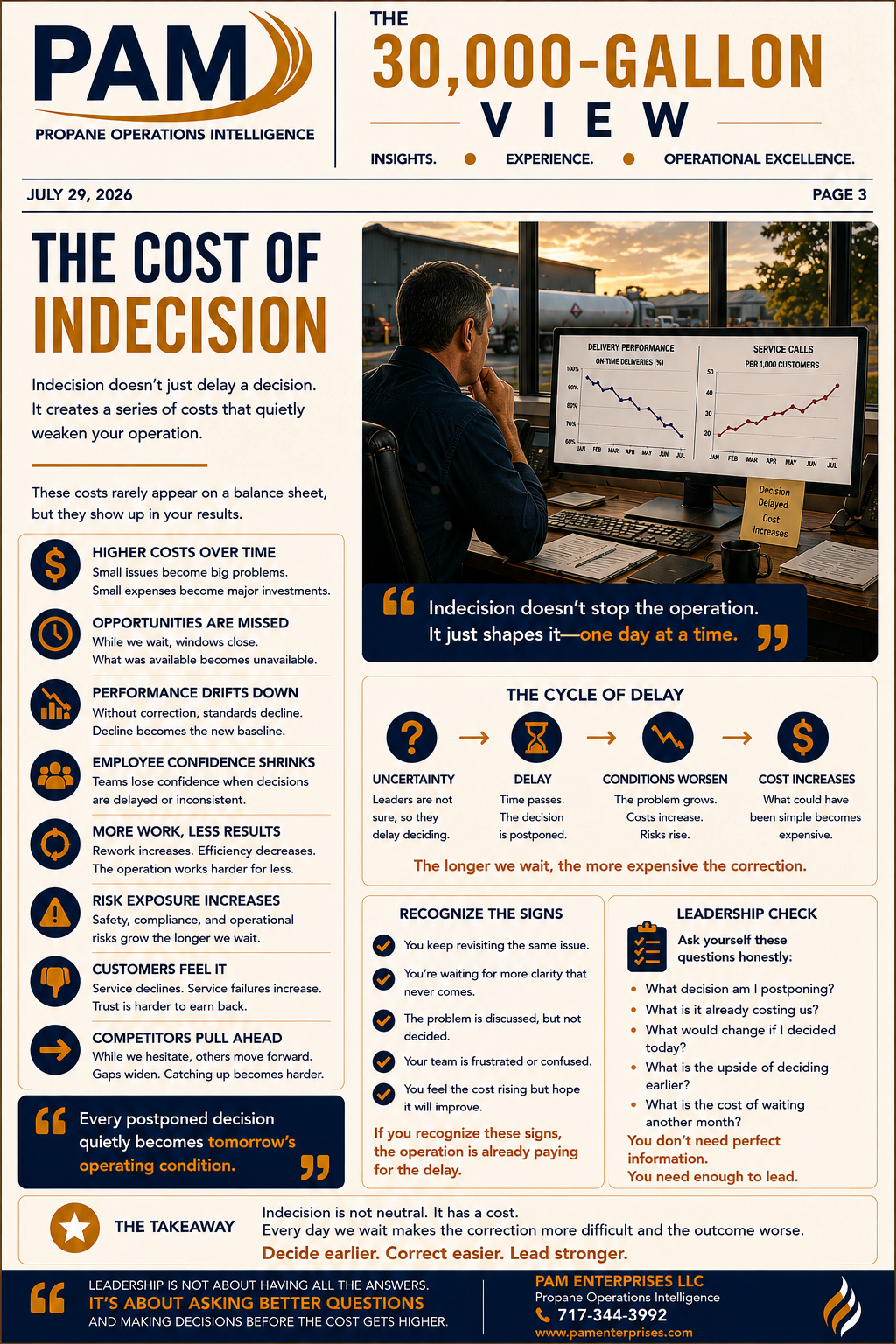
The Cost of Indecision
Indecision doesn’t just delay a decision. It creates a series of costs that quietly weaken your operation. These costs rarely appear on a balance sheet, but they show up in your results.
- Higher costs over time: small issues become big problems; small expenses become major investments.
- Opportunities are missed: while we wait, windows close and what was available becomes unavailable.
- Performance drifts down: without correction, standards decline and become the new baseline.
- Employee confidence shrinks: teams lose confidence when decisions are delayed or inconsistent.
- More work, less results: rework increases, efficiency decreases, and the operation works harder for less.
- Risk exposure increases: safety, compliance, and operational risks grow.
- Customers feel it: service declines, failures increase, and trust is harder to earn back.
- Competitors pull ahead: while we hesitate, others move forward and the gaps widen.
The Cycle of Delay
Uncertainty → Delay → Conditions worsen → Cost increases. Leaders are not sure, so they delay. Time passes. The problem grows. Costs increase. Risks rise. What could have been simple becomes expensive.
Recognize the Signs
- You keep revisiting the same issue.
- You’re waiting for more clarity that never comes.
- The problem is discussed, but not decided.
- Your team is frustrated or confused.
- You feel the cost rising but hope it will improve.
If you recognize these signs, the operation is already paying for the delay.
Leadership Check
- What decision am I postponing?
- What is it already costing us?
- What would change if I decided today?
- What is the upside of deciding earlier?
- What is the cost of waiting another month?
You don’t need perfect information. You need enough to lead.
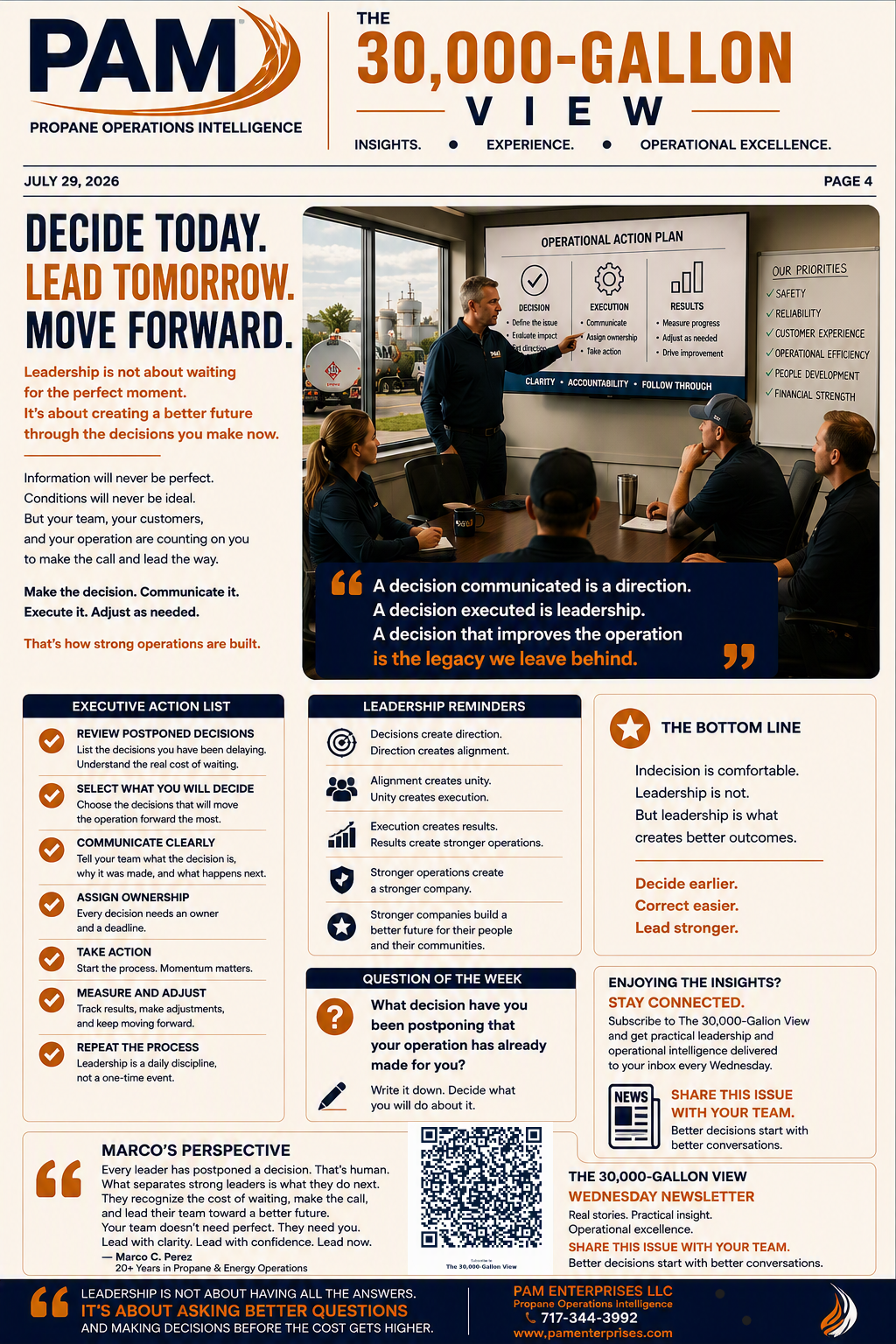
Decide Today. Lead Tomorrow. Move Forward.
Leadership is not about waiting for the perfect moment. It’s about creating a better future through the decisions you make now.
Information will never be perfect. Conditions will never be ideal. But your team, your customers, and your operation are counting on you to make the call and lead the way.
Make the decision. Communicate it. Execute it. Adjust as needed. That’s how strong operations are built.
Executive Action List
- Review postponed decisions. List the decisions you have been delaying and understand the real cost of waiting.
- Select what you will decide. Choose the decisions that will move the operation forward the most.
- Communicate clearly. Tell your team what the decision is, why it was made, and what happens next.
- Assign ownership. Every decision needs an owner and a deadline.
- Take action. Start the process. Momentum matters.
- Measure and adjust. Track results, make adjustments, and keep moving forward.
- Repeat the process. Leadership is a daily discipline, not a one-time event.