Web Edition
Every mile forward in the wrong direction makes the correction more difficult.
View Designed Edition4 original publication pagesThe Cost of Waiting Too Long to Change
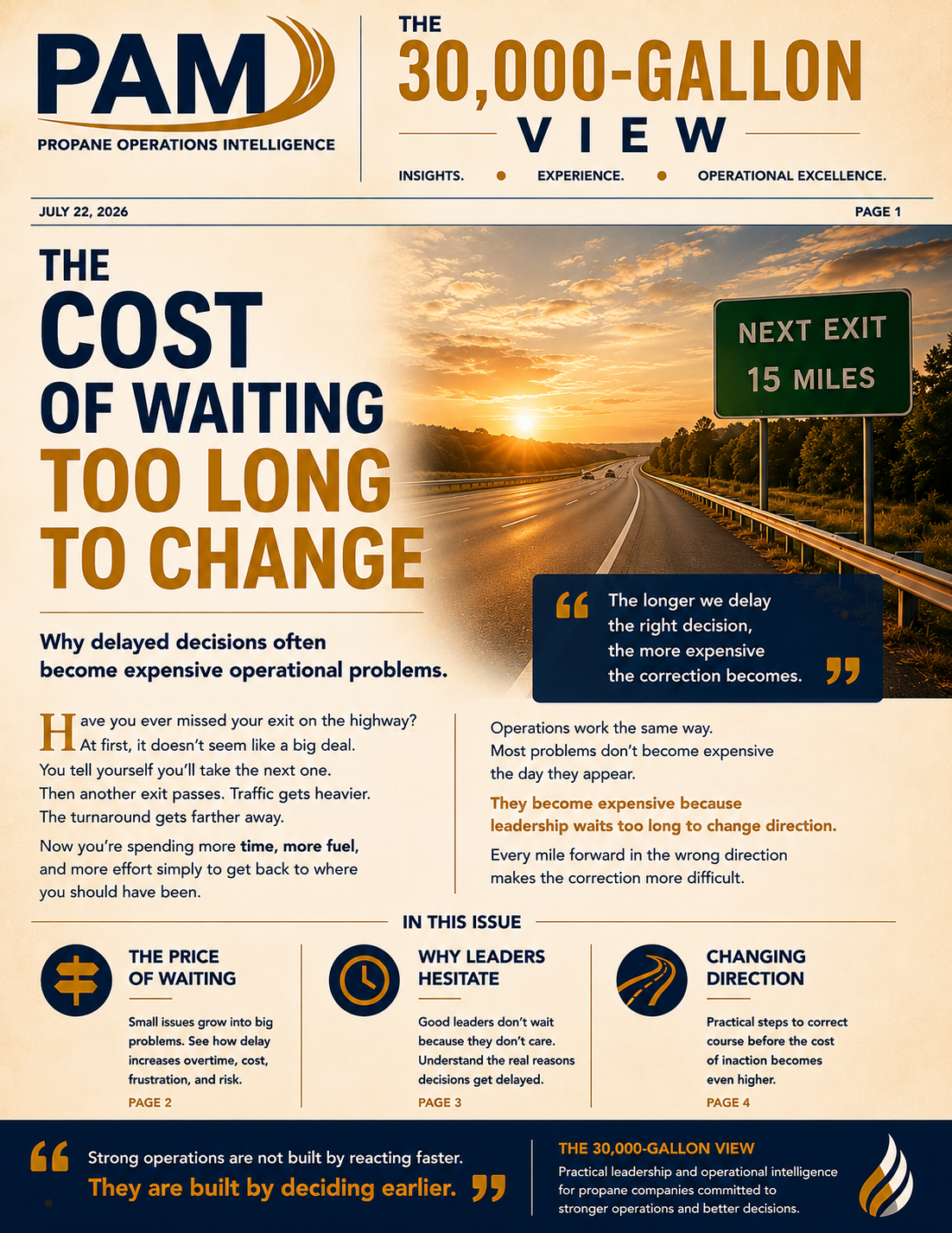
Have you ever missed your exit on the highway?
At first, it doesn’t seem like a big deal. You tell yourself you’ll take the next one. Then another exit passes. Traffic gets heavier. The turnaround gets farther away. Now you’re spending more time, more fuel, and more effort simply to get back to where you should have been.
Operations work the same way. Most problems don’t become expensive the day they appear. They become expensive because leadership waits too long to change direction.
Every mile forward in the wrong direction makes the correction more difficult.
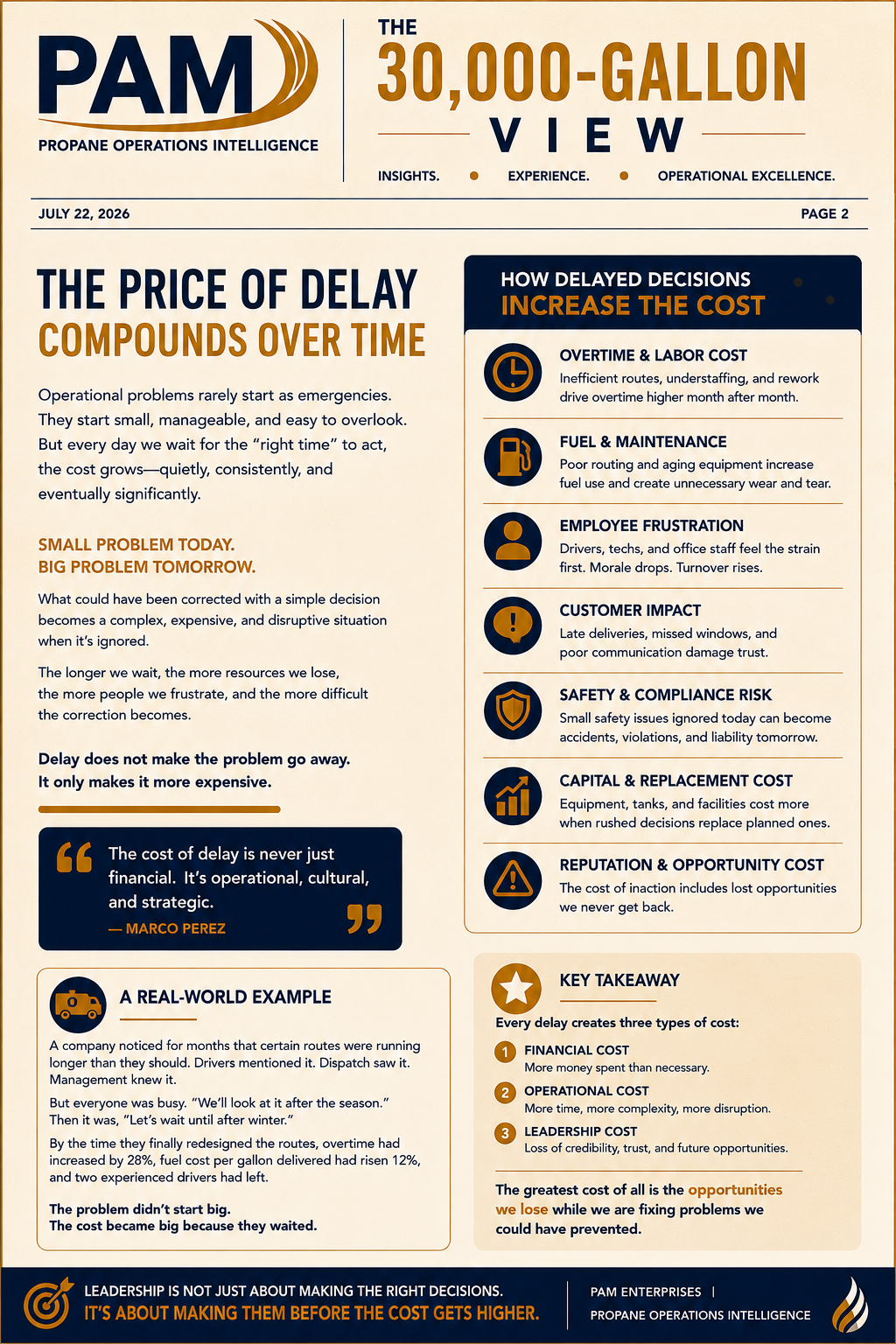
The Price of Delay Compounds Over Time
Operational problems rarely start as emergencies. They start small, manageable, and easy to overlook. But every day we wait for the “right time” to act, the cost grows—quietly, consistently, and eventually significantly.
What could have been corrected with a simple decision becomes a complex, expensive, and disruptive situation when it’s ignored.
The longer we wait, the more resources we lose, the more people we frustrate, and the more difficult the correction becomes.
A Real-World Example
A company noticed for months that certain routes were running longer than they should. Drivers mentioned it. Dispatch saw it. Management knew it. But everyone was busy.
“We’ll look at it after the season.” Then it was, “Let’s wait until after winter.”
By the time they finally redesigned the routes, overtime had increased by 28%, fuel cost per gallon delivered had risen 12%, and two experienced drivers had left.
The problem didn’t start big. The cost became big because they waited.
How Delayed Decisions Increase the Cost
- Overtime and labor cost. Inefficient routes, understaffing, and rework drive overtime higher month after month.
- Fuel and maintenance. Poor routing and aging equipment increase fuel use and create unnecessary wear and tear.
- Employee frustration. Drivers, technicians, and office staff feel the strain first. Morale drops. Turnover rises.
- Customer impact. Late deliveries, missed windows, and poor communication damage trust.
- Safety and compliance risk. Small safety issues ignored today can become accidents, violations, and liability tomorrow.
- Capital and replacement cost. Equipment, tanks, and facilities cost more when rushed decisions replace planned ones.
- Reputation and opportunity cost. The cost of inaction includes lost opportunities we never get back.
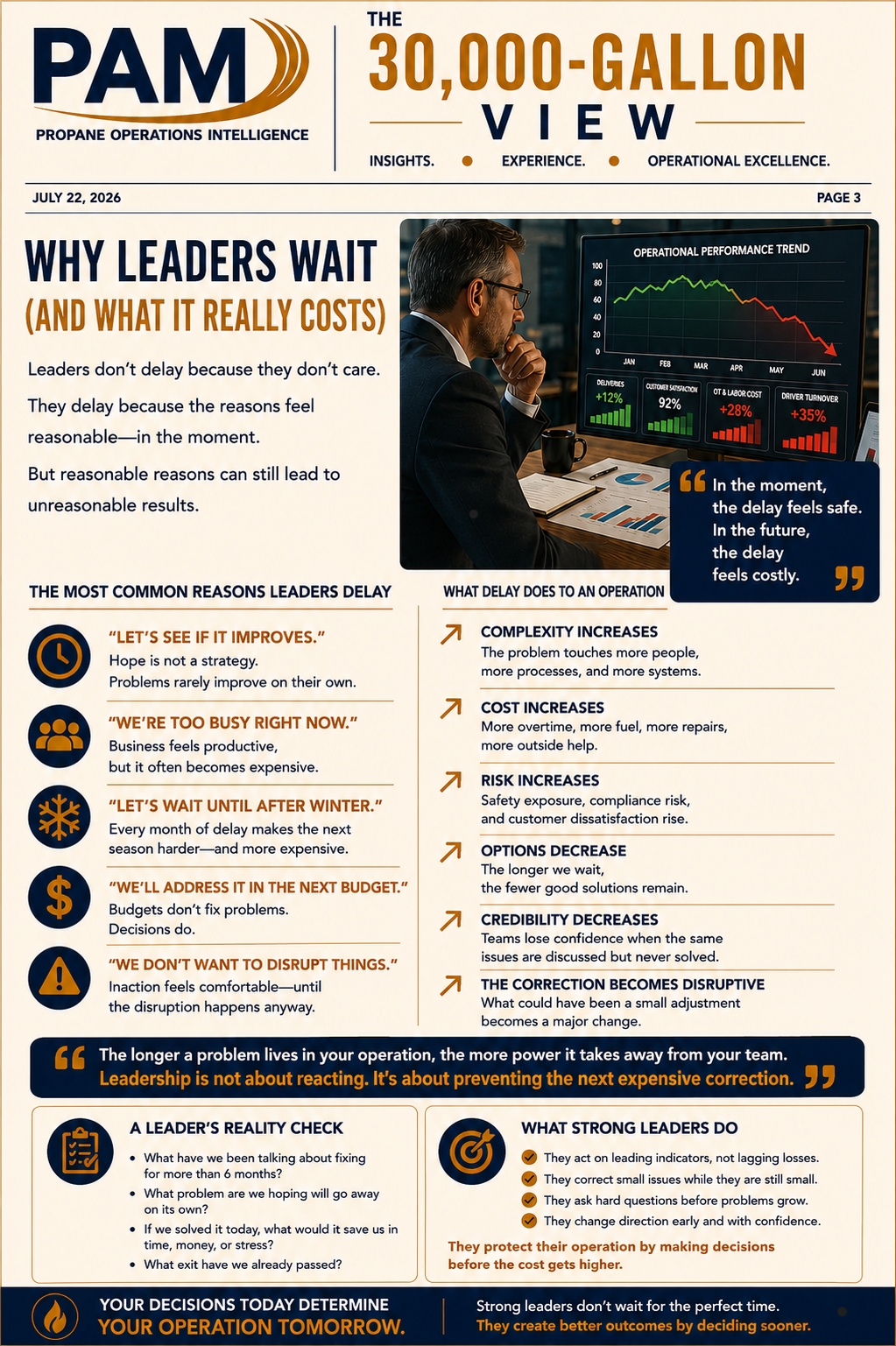
Why Leaders Wait—and What It Really Costs
Leaders don’t delay because they don’t care. They delay because the reasons feel reasonable—in the moment. But reasonable reasons can still lead to unreasonable results.
The Most Common Reasons Leaders Delay
- “Let’s see if it improves.” Hope is not a strategy. Problems rarely improve on their own.
- “We’re too busy right now.” Busyness feels productive, but it often becomes expensive.
- “Let’s wait until after winter.” Every month of delay makes the next season harder—and more expensive.
- “We’ll address it in the next budget.” Budgets don’t fix problems. Decisions do.
- “We don’t want to disrupt things.” Inaction feels comfortable—until the disruption happens anyway.
What Delay Does to an Operation
- Complexity increases. The problem touches more people, more processes, and more systems.
- Cost increases. More overtime, more fuel, more repairs, more outside help.
- Risk increases. Safety exposure, compliance risk, and customer dissatisfaction rise.
- Options decrease. The longer we wait, the fewer good solutions remain.
- Credibility decreases. Teams lose confidence when the same issues are discussed but never solved.
- The correction becomes disruptive. What could have been a small adjustment becomes a major change.
The longer a problem lives in your operation, the more power it takes away from your team.
A Leader’s Reality Check
- What have we been talking about fixing for more than six months?
- What problem are we hoping will go away on its own?
- If we solved it today, what would it save us in time, money, or stress?
- What exit have we already passed?
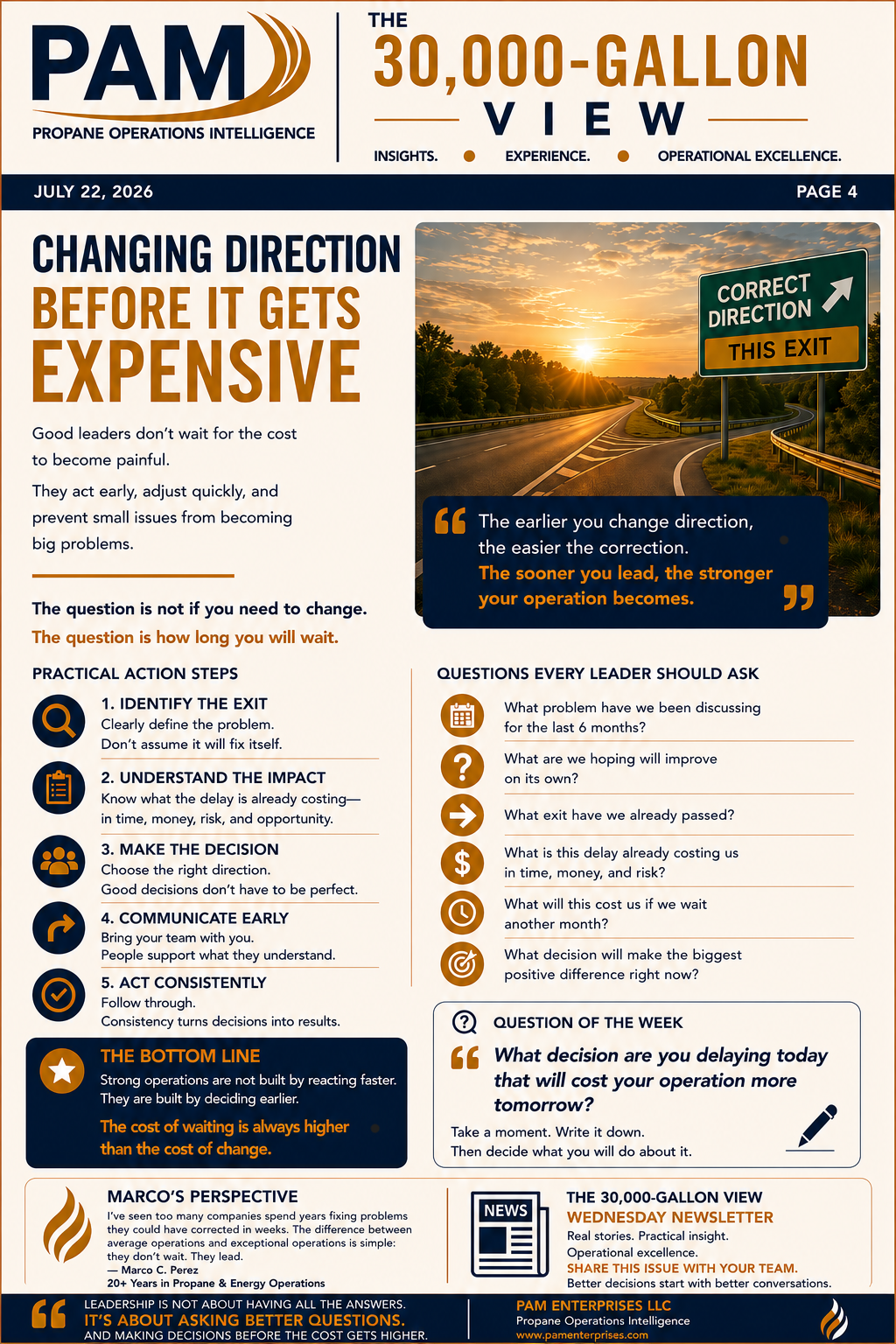
Changing Direction Before It Gets Expensive
Good leaders don’t wait for the cost to become painful. They act early, adjust quickly, and prevent small issues from becoming big problems.
The question is not if you need to change. The question is how long you will wait.
- Identify the exit. Clearly define the problem. Don’t assume it will fix itself.
- Understand the impact. Know what the delay is already costing—in time, money, risk, and opportunity.
- Make the decision. Choose the right direction. Good decisions don’t have to be perfect.
- Communicate early. Bring your team with you. People support what they understand.
- Act consistently. Follow through. Consistency turns decisions into results.
Questions Every Leader Should Ask
- What problem have we been discussing for the last six months?
- What are we hoping will improve on its own?
- What exit have we already passed?
- What is this delay already costing us in time, money, and risk?
- What will this cost us if we wait another month?
- What decision will make the biggest positive difference right now?
The earlier you change direction, the easier the correction. The sooner you lead, the stronger your operation becomes.