Web Edition
Operations change continuously. Roles often do not. Leaders can reduce friction and make better capacity decisions by redesigning responsibilities around the work the operation requires today.
View Designed Edition4 original publication pagesThe Work Changed. Did the Role?
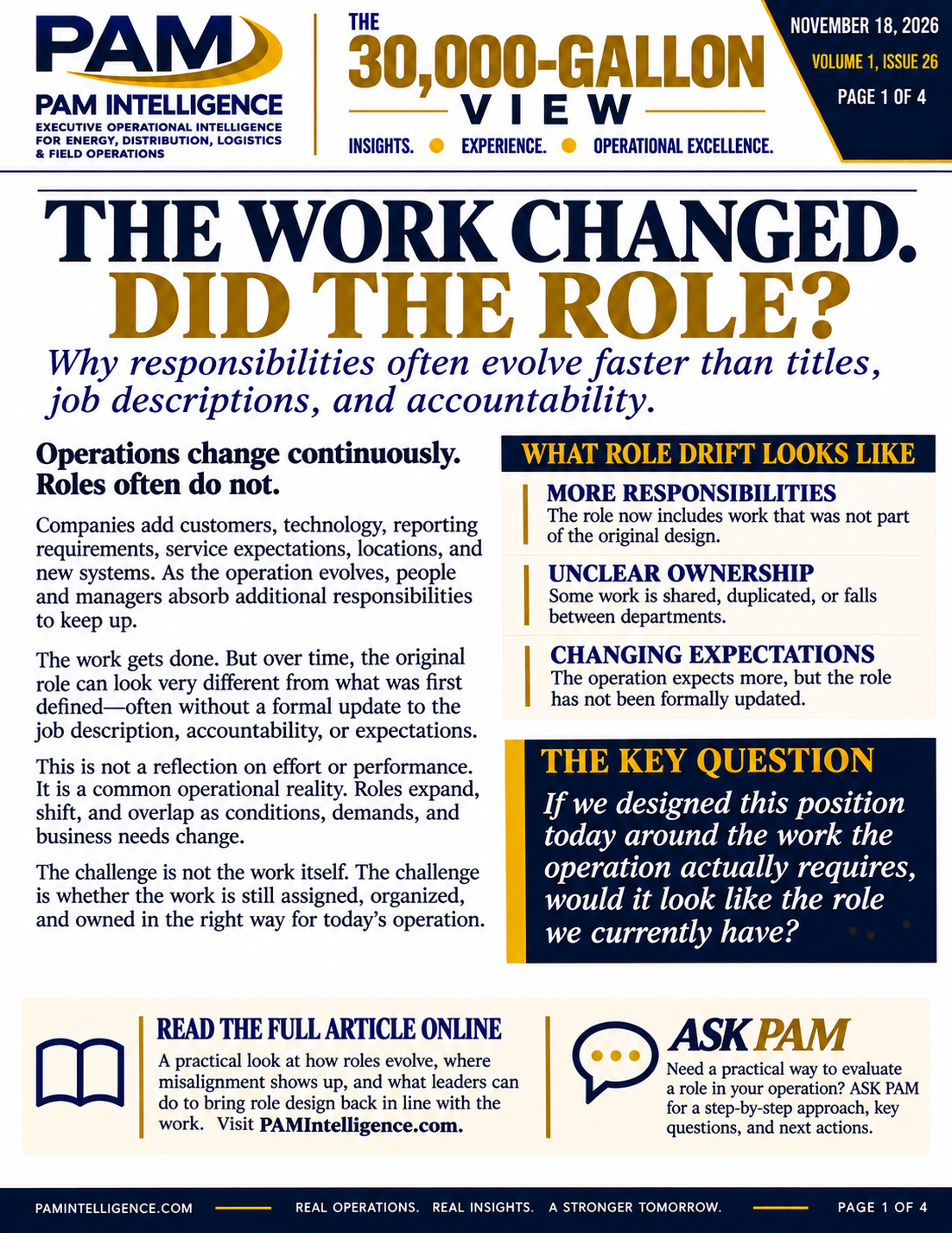
Operations change continuously. Roles often do not.
Companies add customers, technology, reporting requirements, service expectations, locations, and new systems. As the operation evolves, people and managers absorb additional responsibilities to keep up.
The work gets done. But over time, the original role can look very different from what was first defined—often without a formal update to the job description, accountability, or expectations.
This is not a reflection on effort or performance. It is a common operational reality. Roles expand, shift, and overlap as conditions, demands, and business needs change.
The challenge is not the work itself. The challenge is whether the work is still assigned, organized, and owned in the right way for today’s operation.
What Role Drift Looks Like
- More responsibilities. The role now includes work that was not part of the original design.
- Unclear ownership. Some work is shared, duplicated, or falls between departments.
- Changing expectations. The operation expects more, but the role has not been formally updated.
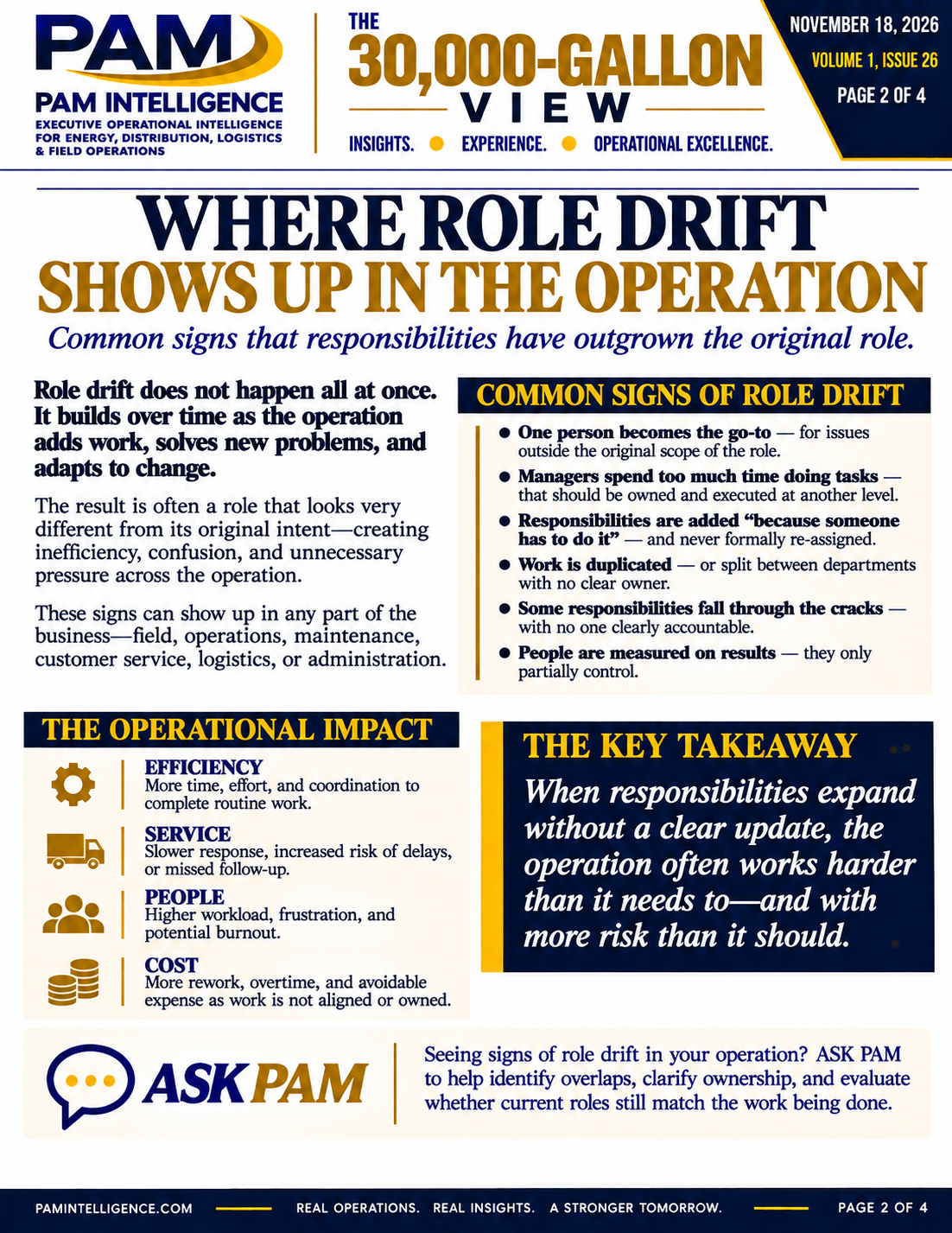
Where Role Drift Shows Up in the Operation
Common signs that responsibilities have outgrown the original role.
Role drift does not happen all at once. It builds over time as the operation adds work, solves new problems, and adapts to change.
The result is often a role that looks very different from its original intent—creating inefficiency, confusion, and unnecessary pressure across the operation.
These signs can show up in any part of the business—field, operations, maintenance, customer service, logistics, or administration.
Common Signs of Role Drift
- One person becomes the go-to for issues outside the original scope of the role.
- Managers spend too much time doing tasks that should be owned and executed at another level.
- Responsibilities are added “because someone has to do it” and never formally reassigned.
- Work is duplicated or split between departments with no clear owner.
- Some responsibilities fall through the cracks with no one clearly accountable.
- People are measured on results they only partially control.
The Operational Impact
- Efficiency: More time, effort, and coordination to complete routine work.
- Service: Slower response, increased risk of delays, or missed follow-up.
- People: Higher workload, frustration, and potential burnout.
- Cost: More rework, overtime, and avoidable expense as work is not aligned or owned.
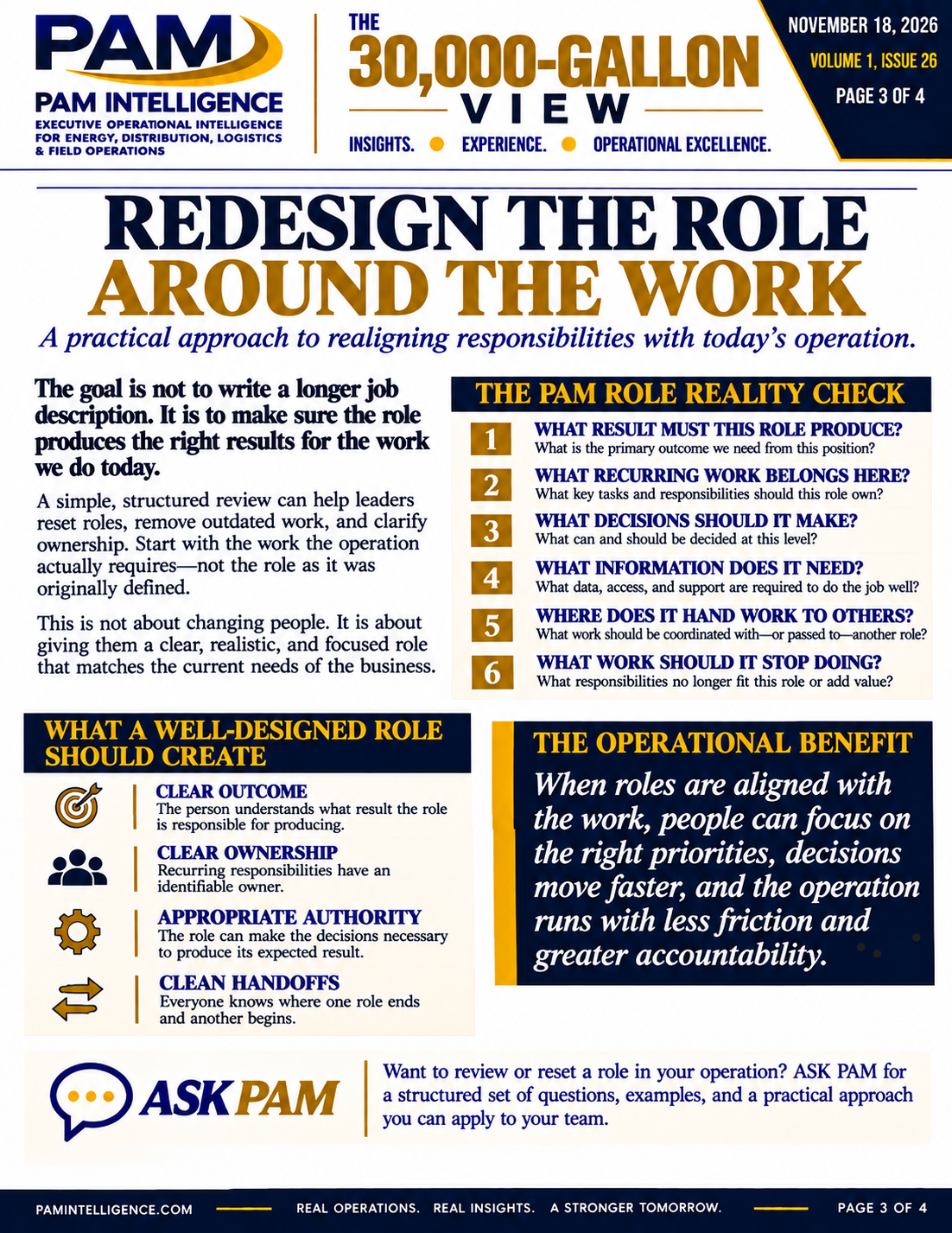
Redesign the Role Around the Work
A practical approach to realigning responsibilities with today’s operation.
The goal is not to write a longer job description. It is to make sure the role produces the right results for the work we do today.
A simple, structured review can help leaders reset roles, remove outdated work, and clarify ownership. Start with the work the operation actually requires—not the role as it was originally defined.
This is not about changing people. It is about giving them a clear, realistic, and focused role that matches the current needs of the business.
The PAM Role Reality Check
- What result must this role produce? What is the primary outcome we need from this position?
- What recurring work belongs here? What key tasks and responsibilities should this role own?
- What decisions should it make? What can and should be decided at this level?
- What information does it need? What data, access, and support are required to do the job well?
- Where does it hand work to others? What work should be coordinated with—or passed to—another role?
- What work should it stop doing? What responsibilities no longer fit this role or add value?
What a Well-Designed Role Should Create
- Clear outcome. The person understands what result the role is responsible for producing.
- Clear ownership. Recurring responsibilities have an identifiable owner.
- Appropriate authority. The role can make the decisions necessary to produce its expected result.
- Clean handoffs. Everyone knows where one role ends and another begins.
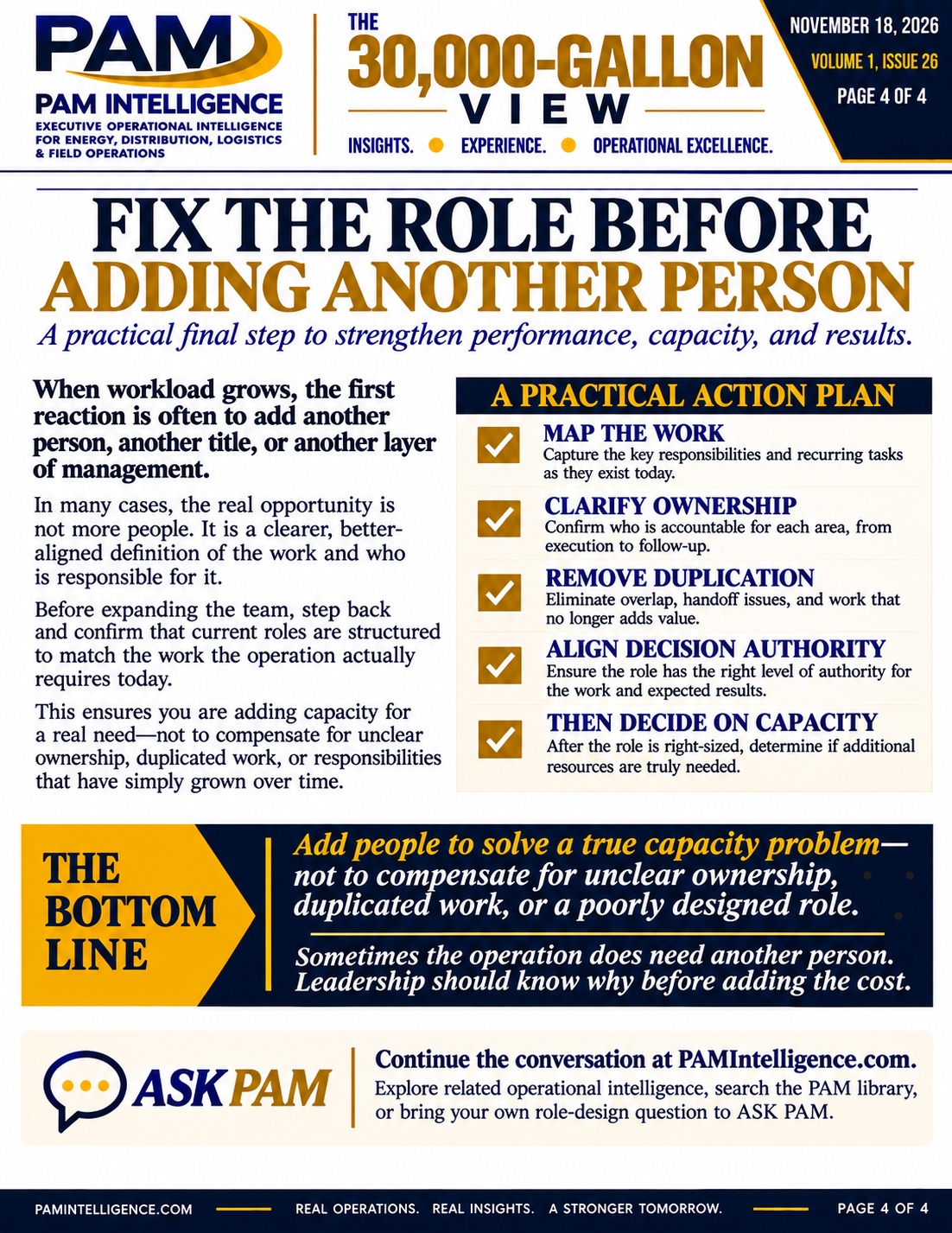
Fix the Role Before Adding Another Person
A practical final step to strengthen performance, capacity, and results.
When workload grows, the first reaction is often to add another person, another title, or another layer of management.
In many cases, the real opportunity is not more people. It is a clearer, better-aligned definition of the work and who is responsible for it.
Before expanding the team, step back and confirm that current roles are structured to match the work the operation actually requires today.
This ensures you are adding capacity for a real need—not to compensate for unclear ownership, duplicated work, or responsibilities that have simply grown over time.
A Practical Action Plan
- Map the work. Capture the key responsibilities and recurring tasks as they exist today.
- Clarify ownership. Confirm who is accountable for each area, from execution to follow-up.
- Remove duplication. Eliminate overlap, handoff issues, and work that no longer adds value.
- Align decision authority. Ensure the role has the right level of authority for the work and expected results.
- Then decide on capacity. After the role is right-sized, determine if additional resources are truly needed.
ASK PAM — Put This Issue to Work
Evaluate Role Design, Ownership, and Capacity
Seeing signs of role drift in your operation? ASK PAM can help identify overlaps, clarify ownership, evaluate decision authority, and determine whether current roles still match the work being done.
Describe the role, the result it must produce, recurring responsibilities, current decision rights, handoffs, workload, and where accountability or capacity feels unclear.
ASK PAM remains a controlled beta. Access restrictions and privacy guidance continue to apply.