Web Edition
Training builds knowledge. Readiness builds performance. Leaders establish operational capability by confirming that people can explain, demonstrate, recognize, and consistently perform the work in real conditions.
View Designed Edition4 original publication pagesTraining Versus Operational Readiness
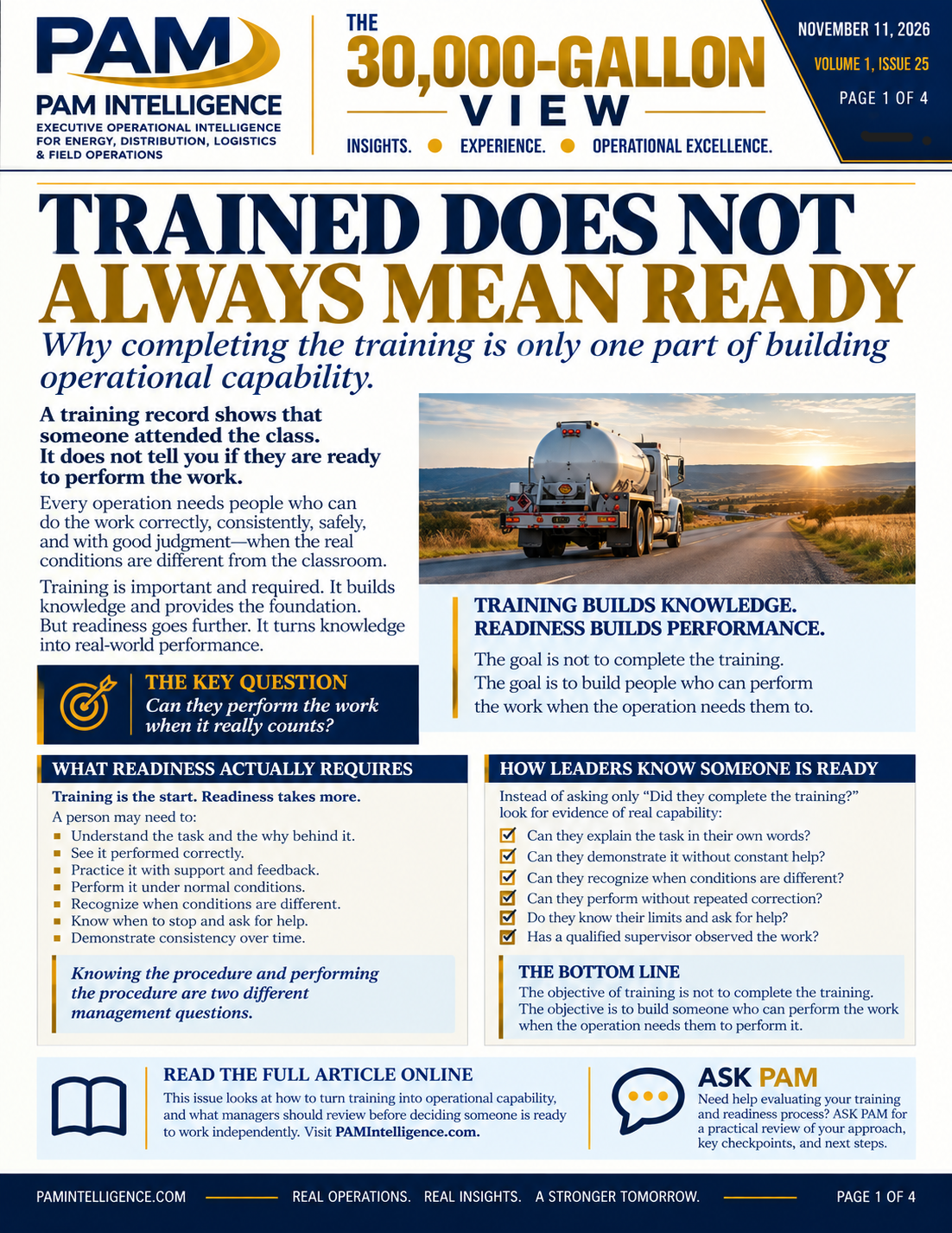
A training record shows that someone attended the class. It does not tell you if they are ready to perform the work.
Every operation needs people who can do the work correctly, consistently, safely, and with good judgment—when the real conditions are different from the classroom.
Training is important and required. It builds knowledge and provides the foundation. But readiness goes further. It turns knowledge into real-world performance.
Training builds knowledge. Readiness builds performance. The goal is not to complete the training. The goal is to build people who can perform the work when the operation needs them to.
What Readiness Actually Requires
Training is the start. Readiness takes more. A person may need to:
- Understand the task and the reason behind it.
- See it performed correctly.
- Practice it with support and feedback.
- Perform it under normal conditions.
- Recognize when conditions are different.
- Know when to stop and ask for help.
- Demonstrate consistency over time.
Knowing the procedure and performing the procedure are two different management questions.
How Leaders Know Someone Is Ready
Instead of asking only “Did they complete the training?” look for evidence of real capability:
- Can they explain the task in their own words?
- Can they demonstrate it without constant help?
- Can they recognize when conditions are different?
- Can they perform without repeated correction?
- Do they know their limits and ask for help?
- Has a qualified supervisor observed the work?
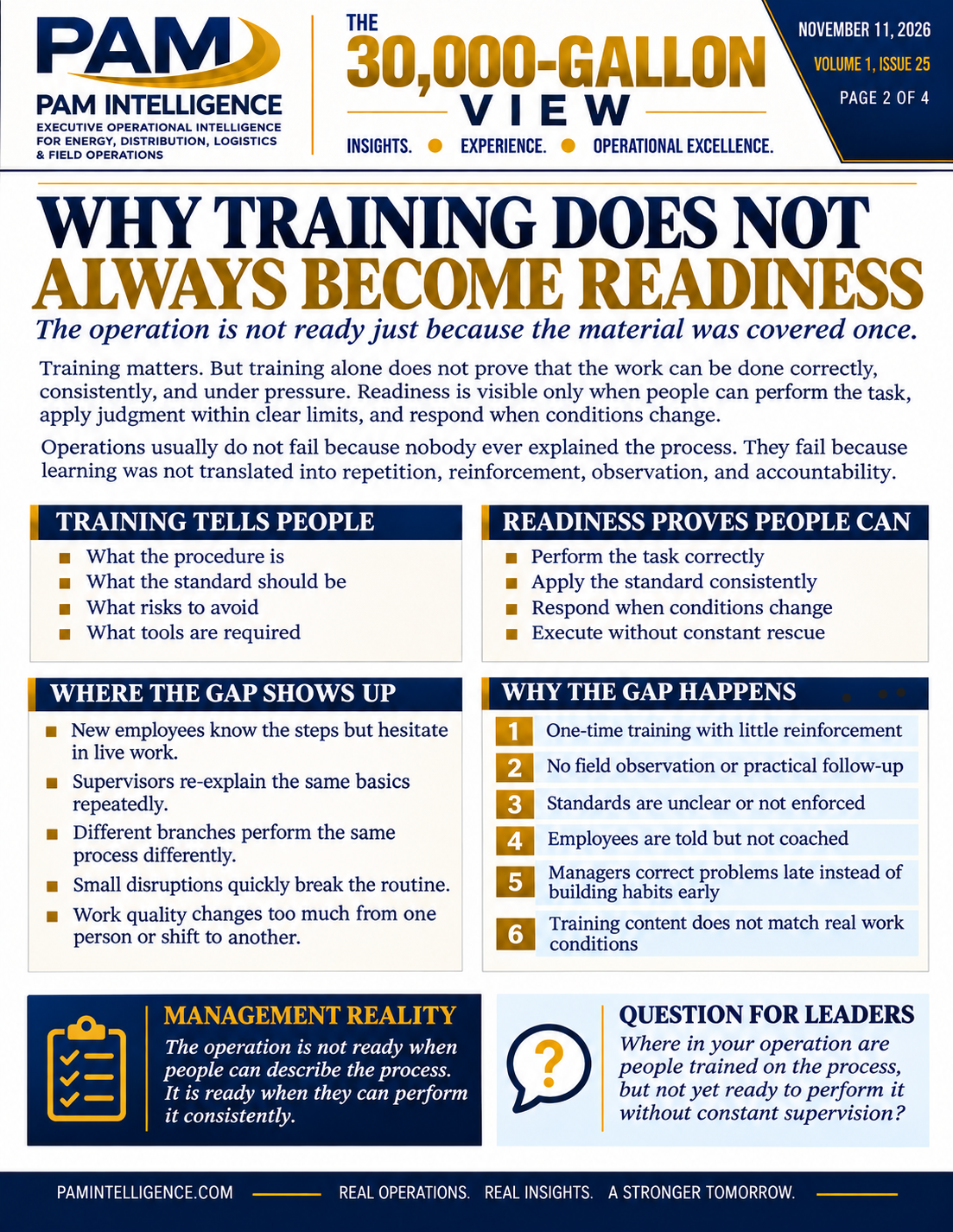
Why Training Does Not Always Become Readiness
The operation is not ready just because the material was covered once.
Training matters. But training alone does not prove that the work can be done correctly, consistently, and under pressure. Readiness is visible only when people can perform the task, apply judgment within clear limits, and respond when conditions change.
Operations usually do not fail because nobody ever explained the process. They fail because learning was not translated into repetition, reinforcement, observation, and accountability.
Training Tells People
- What the procedure is.
- What the standard should be.
- What risks to avoid.
- What tools are required.
Readiness Proves People Can
- Perform the task correctly.
- Apply the standard consistently.
- Respond when conditions change.
- Execute without constant rescue.
Where the Gap Shows Up
- New employees know the steps but hesitate in live work.
- Supervisors re-explain the same basics repeatedly.
- Different branches perform the same process differently.
- Small disruptions quickly break the routine.
- Work quality changes too much from one person or shift to another.
Why the Gap Happens
- One-time training with little reinforcement.
- No field observation or practical follow-up.
- Standards are unclear or not enforced.
- Employees are told but not coached.
- Managers correct problems late instead of building habits early.
- Training content does not match real work conditions.
Question for leaders: Where in your operation are people trained on the process, but not yet ready to perform it without constant supervision?
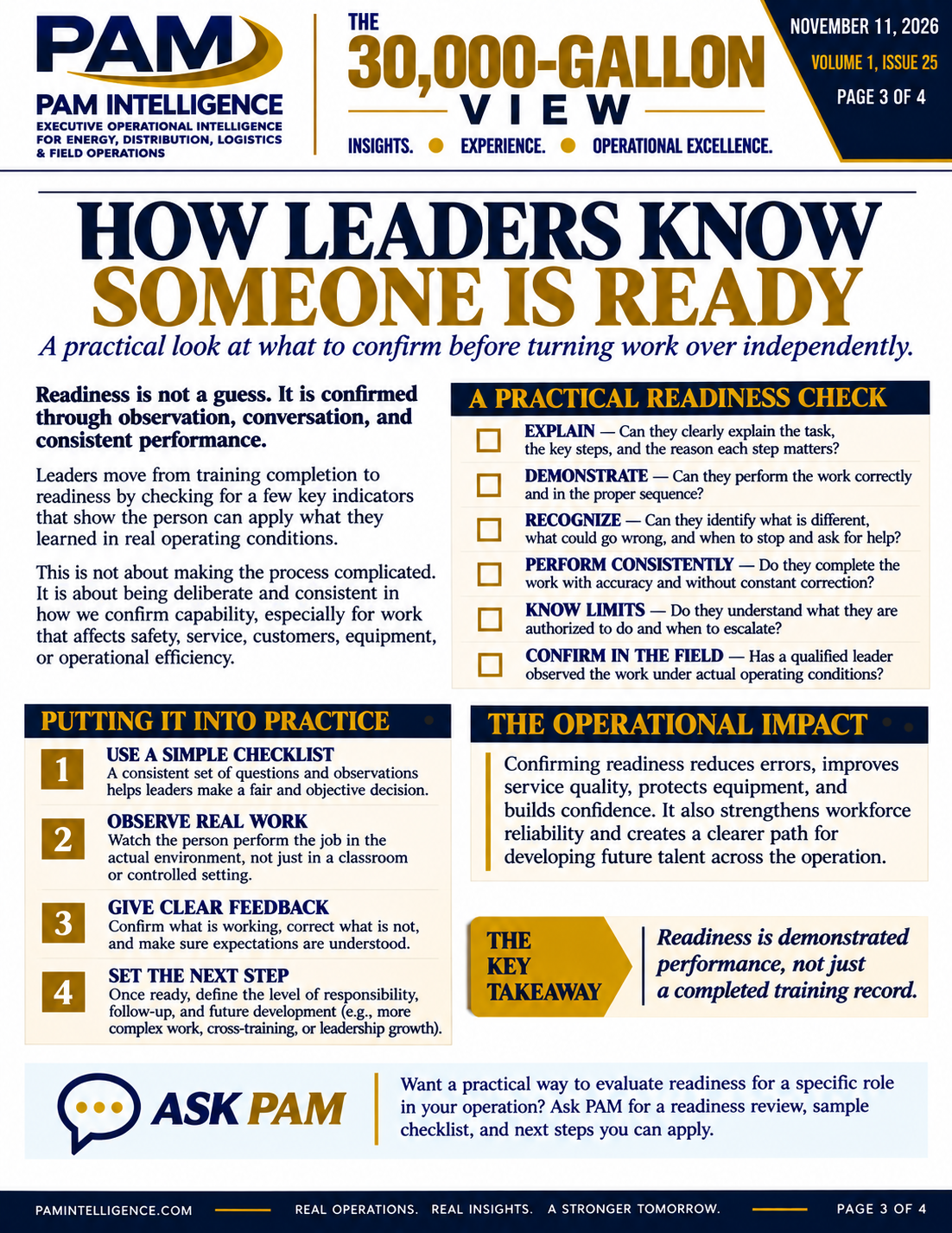
How Leaders Know Someone Is Ready
A practical look at what to confirm before turning work over independently.
Readiness is not a guess. It is confirmed through observation, conversation, and consistent performance.
Leaders move from training completion to readiness by checking for a few key indicators that show the person can apply what they learned in real operating conditions.
This is not about making the process complicated. It is about being deliberate and consistent in how capability is confirmed, especially for work that affects safety, service, customers, equipment, or operational efficiency.
A Practical Readiness Check
- Explain. Can they clearly explain the task, the key steps, and the reason each step matters?
- Demonstrate. Can they perform the work correctly and in the proper sequence?
- Recognize. Can they identify what is different, what could go wrong, and when to stop and ask for help?
- Perform Consistently. Do they complete the work with accuracy and without constant correction?
- Know Limits. Do they understand what they are authorized to do and when to escalate?
- Confirm in the Field. Has a qualified leader observed the work under actual operating conditions?
Putting It into Practice
- Use a Simple Checklist. A consistent set of questions and observations helps leaders make a fair and objective decision.
- Observe Real Work. Watch the person perform the job in the actual environment, not just in a classroom or controlled setting.
- Give Clear Feedback. Confirm what is working, correct what is not, and make sure expectations are understood.
- Set the Next Step. Once ready, define the level of responsibility, follow-up, and future development—for example, more complex work, cross-training, or leadership growth.
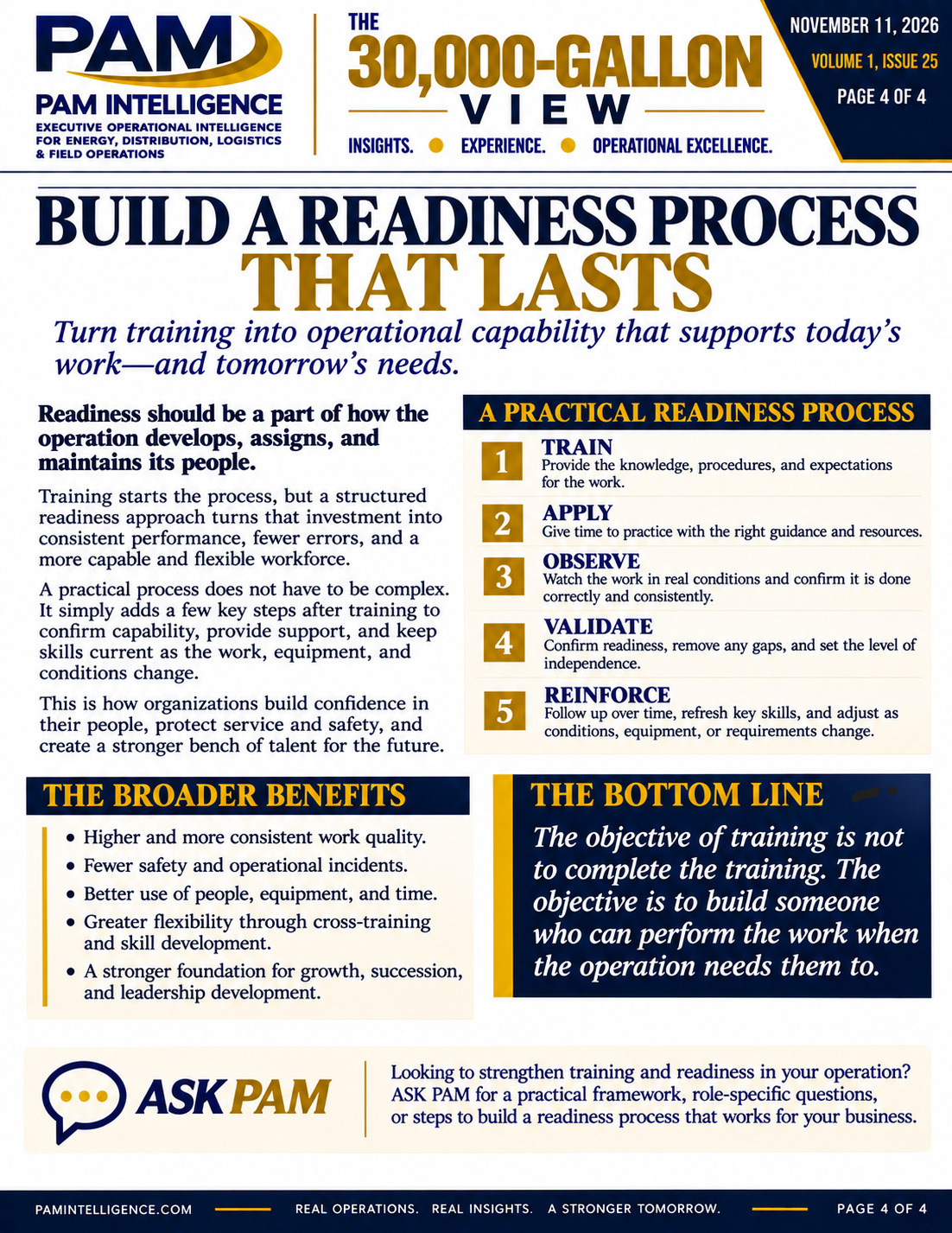
Build a Readiness Process That Lasts
Turn training into operational capability that supports today’s work—and tomorrow’s needs.
Readiness should be a part of how the operation develops, assigns, and maintains its people.
Training starts the process, but a structured readiness approach turns that investment into consistent performance, fewer errors, and a more capable and flexible workforce.
A practical process does not have to be complex. It simply adds a few key steps after training to confirm capability, provide support, and keep skills current as the work, equipment, and conditions change.
This is how organizations build confidence in their people, protect service and safety, and create a stronger bench of talent for the future.
A Practical Readiness Process
- Train. Provide the knowledge, procedures, and expectations for the work.
- Apply. Give time to practice with the right guidance and resources.
- Observe. Watch the work in real conditions and confirm it is done correctly and consistently.
- Validate. Confirm readiness, remove any gaps, and set the level of independence.
- Reinforce. Follow up over time, refresh key skills, and adjust as conditions, equipment, or requirements change.
The Broader Benefits
- Higher and more consistent work quality.
- Fewer safety and operational incidents.
- Better use of people, equipment, and time.
- Greater flexibility through cross-training and skill development.
- A stronger foundation for growth, succession, and leadership development.
ASK PAM — Put This Issue to Work
Evaluate Training and Operational Readiness
Need help evaluating your training and readiness process? ASK PAM can help with a practical review, a role-specific readiness checklist, key checkpoints, and next steps.
Describe the role, the work, the operating conditions, the current training process, how performance is observed, and where employees still require repeated correction or supervision.
ASK PAM remains a controlled beta. Access restrictions and privacy guidance continue to apply.